Commodity Futures
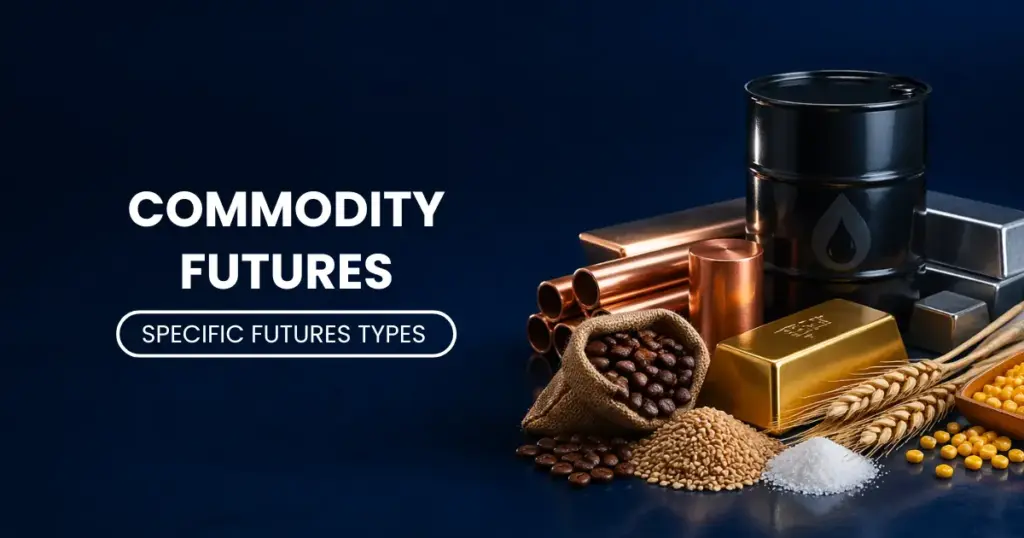
Commodity Futures What Are Commodity Futures? A Comprehensive Guide for Investors Whether you are looking at the price of gold in your portfolio or noticing the changing cost of fuel, commodities drive the global economy. For investors and businesses alike, navigating the price changes of these physical goods is essential. One of the primary ways to manage this exposure or seek potential returns is through commodity futures. This guide breaks down the mechanics of these financial instruments, helping you understand how they work, who uses them, and what to consider before participating in the market. Table of Contents What Exactly Are Commodity Futures? How Do Commodity Futures Work in the Market? Who Trades Commodity Futures and Why? What Are the Different Types of Commodities Available? What Are the Key Risks and Benefits? Conclusion: Key Takeaways What Exactly Are Commodity Futures? At their core, commodity futures are legally binding agreements to buy or sell a specific quantity of a physical raw material—like crude oil, gold, or wheat—at a predetermined price on a set date in the future. Instead of buying a physical barrel of oil and figuring out where to store it, investors and businesses use these standardized contracts on regulated exchanges. The standardization ensures that every contract has the exact same quantity and quality rules. Because the value of the contract is entirely dependent on the underlying physical good, commodity futures are a type of derivative instrument. This means you do not need to own the physical asset to participate in its price movements. Ready to Explore Derivatives? Discover the foundational concepts of derivatives and how they fit into a global investment strategy. Learn the Essentials of Derivatives Trading How Do Commodity Futures Work in the Market? When you trade a futures contract, you are not paying the full value of the physical goods upfront. Instead, you deposit a fraction of the total contract value, known as an initial margin. This acts as a performance bond to ensure you can cover potential losses. Because of this margin system, commodity futures involve leverage. This means a relatively small amount of capital can control a large amount of a commodity. Throughout the trading day, the exchange monitors the fluctuating value of the contract. At the end of the day, your account is credited with profits or debited for losses—a process known as being “marked-to-market.” It is also important to understand the pricing relationship between the immediate physical market and the futures market. The price you pay for immediate delivery is the spot price, whereas the futures price accounts for the cost of holding the asset over time, such as storage and insurance. Understanding the dynamic between the spot price vs futures price is essential for making informed trading decisions. Every contract eventually reaches an expiration date. While some physical businesses will actually deliver or receive the raw materials upon expiration, most financial investors simply close out their positions in cash before the deadline. Who Trades Commodity Futures and Why? The commodity futures market is primarily driven by two types of participants with entirely different goals: hedgers and speculators. Hedgers are individuals or businesses that produce or consume the physical commodity. Their primary goal is risk management. For example, a commercial airline knows it will need millions of gallons of jet fuel in six months. If they fear oil prices will spike, they can buy crude oil futures today. This locks in a set price, protecting their profit margins from unexpected surges. Similarly, a wheat farmer might sell futures contracts before the harvest to guarantee a selling price, protecting themselves in case agricultural prices crash. Speculators, on the other hand, usually have no interest in ever taking delivery of the physical asset. These are investors, portfolio managers, and institutional traders who study market trends, supply constraints, and global economics to forecast price movements. By taking calculated risks, they aim to generate a profit from the price fluctuations. Speculators provide the market with necessary liquidity, ensuring that hedgers can always find a buyer or seller when they need one. Grasping these roles is a core component of futures fundamentals, as the balance between these two groups keeps the global markets functioning efficiently. Master Markets with Institutional-Grade Tools & Access Leverage deep liquidity, advanced platforms, and dedicated support designed for professional futures and options traders in the UAE. Explore Institutional Trading Solutions What Are the Different Types of Commodities Available? The global markets offer a wide variety of commodities, generally categorized into two main groups: hard commodities and soft commodities. Hard Commodities are natural resources that must be mined, extracted, or processed. Energy: This is one of the most actively traded sectors globally and includes crude oil, natural gas, and heating oil. Energy prices are highly sensitive to geopolitical events and global supply chain shifts. Metals: This category includes precious metals like gold, silver, and platinum, which are often used as safe-haven investments during economic uncertainty. It also covers industrial metals like copper and aluminum, whose demand is closely tied to global infrastructure and manufacturing growth. Soft Commodities are agricultural products or livestock that are grown and nurtured. Agriculture: This includes crops such as wheat, corn, soybeans, coffee, sugar, and cotton. Soft commodities are heavily influenced by weather patterns, climate change, and seasonal harvest cycles. Livestock: Products like live cattle and lean hogs fall into this category, driven by consumer food demand and agricultural supply. What Are the Key Risks and Benefits? As with any financial instrument, commodity futures come with a unique set of advantages and challenges. The Benefits: Diversification: Commodities often move independently of traditional stock and bond markets. Adding them to an investment portfolio can provide balance during periods of high inflation or stock market downturns. Capital Efficiency: Because futures are traded on margin, investors do not need to tie up the full cash value of the asset. This allows for greater flexibility in capital allocation. High Liquidity: Major commodity futures markets are heavily traded globally, making it relatively easy to