Contango & Backwardation Explained
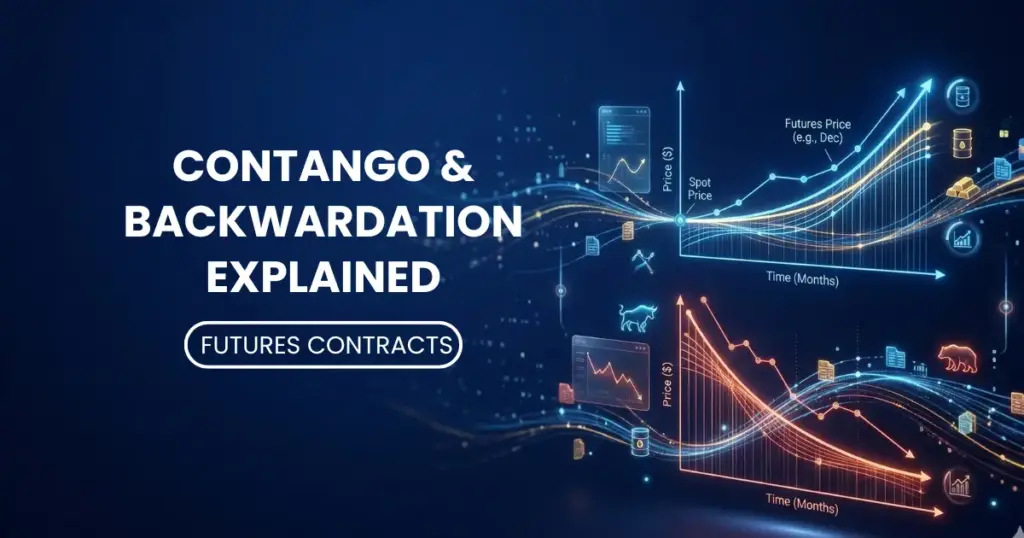
Contango and Backwardation Explained Contango and Backwardation Explained: Navigating Futures Market Curves In the intricate landscape of global capital markets, institutional and sophisticated retail investors rely heavily on derivative instruments to hedge risks, discover prices, and deploy capital efficiently. Among the most critical concepts for anyone trading in these markets are contango and backwardation. These terms describe the shape of the forward curve—the relationship between the current spot price of an asset and its price for future delivery dates. Correctly interpreting whether a market is in contango or backwardation offers profound insights into global supply and demand dynamics, carrying costs, and market sentiment. This comprehensive guide delves into the mechanics of these market states, exploring what drives them and how professional traders navigate their complexities to optimize portfolio performance. Table of Contents What is the Forward Curve in Futures Trading? What Does Contango Mean in Financial Markets? What Causes a Market to Enter Backwardation? How Do Cost of Carry and Yield Impact Contango and Backwardation? How Can Investors Utilize Contango and Backwardation Strategies? What is the Convergence of Spot and Futures Prices at Expiration? Conclusion What is the Forward Curve in Futures Trading? The forward curve is a graphical representation that plots the prices of futures contracts against their respective expiration dates. Rather than looking at a single price point for an asset like crude oil or a stock index, the forward curve provides a multi-dimensional view of how the market values that asset over time. On the x-axis, you have the maturity timeline (ranging from the nearest expiration date to several months or years into the future), while the y-axis represents the contract price. For professional investors, the shape of this curve is a vital diagnostic tool. It rarely forms a perfectly flat line. Instead, it slopes either upward or downward depending on the aggregate expectations of market participants, prevailing interest rates, and the fundamental supply and demand mechanics of the underlying asset. By analyzing the slope of the forward curve, traders can deduce the market’s implied forecast for future price environments and measure the actual costs associated with holding physical or financial assets over time. What Does Contango Mean in Financial Markets? Contango is widely considered the normal, or standard, state of the futures market. A market is in contango when the futures price of an asset is higher than its current spot price, creating an upward-sloping forward curve. As you look further into the future on the expiration timeline, the contracts become progressively more expensive. This premium on future delivery is not arbitrary. It is heavily driven by the mathematical realities of time-valued money and logistical expenses. When an investor purchases a physical asset today, they incur immediate holding costs, such as warehousing fees, insurance premiums, and the opportunity cost of tying up capital (the risk-free interest rate). Therefore, understanding the relationship between the spot price vs futures price is essential. Buyers in the futures market are willing to pay a premium to lock in a price today while shifting the burden of storing and insuring the asset onto the seller until the future delivery date arrives. In a contango environment, the market is adequately supplied in the short term, and the price curve cleanly reflects the compounded “cost of carry.” Ready to Access Global Futures Markets? Trade international commodities, equities, and FX through a fully regulated platform Explore Futures & Options What Causes a Market to Enter Backwardation? Backwardation is the inverse of contango and is generally considered a rarer, structurally stressed market state. A market falls into backwardation when the futures price is lower than the current spot price, resulting in a downward-sloping forward curve. In this scenario, market participants are paying a heavy premium for immediate possession of the asset rather than waiting for future delivery. This phenomenon is almost exclusively driven by an immediate, urgent imbalance in supply and demand. Severe supply chain disruptions, unexpected geopolitical shocks, or extreme weather events can trigger critical shortages of physical commodities. For example, if a global crisis threatens oil production, refineries cannot wait six months for a futures contract to settle; they need the physical oil immediately to keep operations running. This desperation drives the spot price drastically higher than the deferred futures contracts. Actively calculating the forward-looking basis in futures trading allows investors to detect these supply squeezes early, enabling them to adjust their risk exposure ahead of major macroeconomic adjustments. How Do Cost of Carry and Yield Impact Contango and Backwardation? The concepts of contango and backwardation are fundamentally anchored in two opposing forces: the “cost of carry” and the “convenience yield.” Cost of carry encompasses the explicit expenses required to hold a physical or financial asset. For commodities like gold or wheat, this includes storage space, transit insurance, and financing rates. For financial derivatives, such as equity indices, it primarily involves the prevailing interest rates used to finance the position. These elements form the core of futures fundamentals, dictating how premiums are calculated across different time horizons. When the cost of carry is the dominant force, the market naturally slopes into contango. Conversely, the convenience yield represents the non-financial, operational benefit of physically holding an asset right now. If a manufacturer holds physical copper inventory during a severe supply drought, the convenience yield of keeping their production line open far outweighs the storage costs. When the perceived convenience yield spikes and eclipses the cost of carry, the market is aggressively pushed into backwardation. Additionally, in financial futures, high dividend payouts from underlying stocks can artificially push the curve into backwardation, as futures holders do not receive dividend payments prior to expiration. Master Advanced Derivative Strategies Speak with our institutional trading desk to optimize your portfolio using global derivatives. Contact Our Desk How Can Investors Utilize Contango and Backwardation Strategies? Understanding the shape of the forward curve is paramount for executing long-term trading strategies, particularly those involving the rolling of contracts. When a trader wants to maintain a continuous position in the