Derivatives

Contango & Backwardation Explained

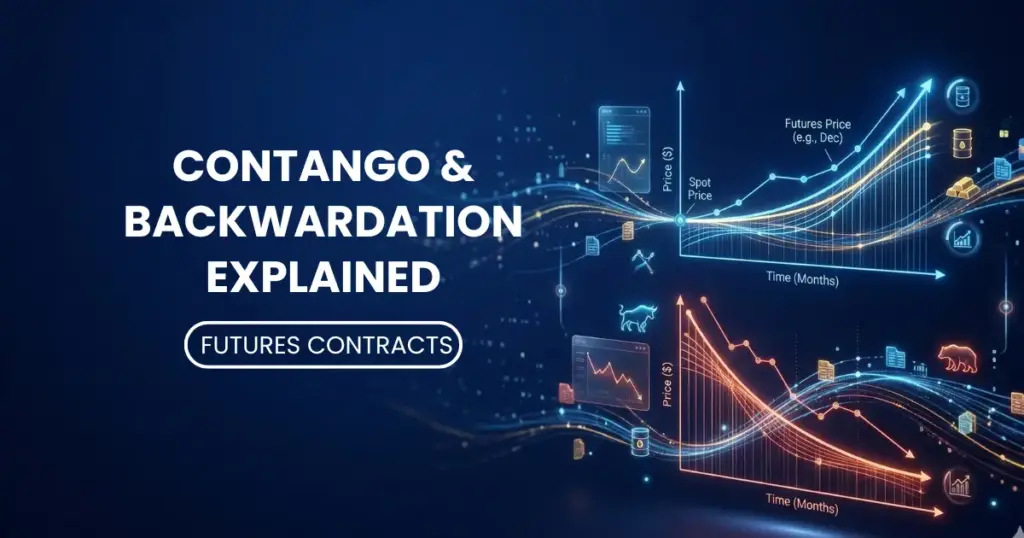
Contango and Backwardation Explained Contango and Backwardation Explained: Navigating Futures Market Curves In the intricate landscape of global capital markets, institutional and sophisticated retail investors rely heavily on derivative instruments to hedge risks, discover prices, and deploy capital efficiently. Among the most critical concepts for anyone trading in these markets are contango and backwardation. These terms describe the shape of the forward curve—the relationship between the current spot price of an asset and its price for future delivery dates. Correctly interpreting whether a market is in contango or backwardation offers profound insights into global supply and demand dynamics, carrying costs, and market sentiment. This comprehensive guide delves into the mechanics of these market states, exploring what drives them and how professional traders navigate their complexities to optimize portfolio performance. Table of Contents What is the Forward Curve in Futures Trading? What Does Contango Mean in Financial Markets? What Causes a Market to Enter Backwardation? How Do Cost of Carry and Yield Impact Contango and Backwardation? How Can Investors Utilize Contango and Backwardation Strategies? What is the Convergence of Spot and Futures Prices at Expiration? Conclusion What is the Forward Curve in Futures Trading? The forward curve is a graphical representation that plots the prices of futures contracts against their respective expiration dates. Rather than looking at a single price point for an asset like crude oil or a stock index, the forward curve provides a multi-dimensional view of how the market values that asset over time. On the x-axis, you have the maturity timeline (ranging from the nearest expiration date to several months or years into the future), while the y-axis represents the contract price. For professional investors, the shape of this curve is a vital diagnostic tool. It rarely forms a perfectly flat line. Instead, it slopes either upward or downward depending on the aggregate expectations of market participants, prevailing interest rates, and the fundamental supply and demand mechanics of the underlying asset. By analyzing the slope of the forward curve, traders can deduce the market’s implied forecast for future price environments and measure the actual costs associated with holding physical or financial assets over time. What Does Contango Mean in Financial Markets? Contango is widely considered the normal, or standard, state of the futures market. A market is in contango when the futures price of an asset is higher than its current spot price, creating an upward-sloping forward curve. As you look further into the future on the expiration timeline, the contracts become progressively more expensive.   This premium on future delivery is not arbitrary. It is heavily driven by the mathematical realities of time-valued money and logistical expenses. When an investor purchases a physical asset today, they incur immediate holding costs, such as warehousing fees, insurance premiums, and the opportunity cost of tying up capital (the risk-free interest rate). Therefore, understanding the relationship between the spot price vs futures price is essential. Buyers in the futures market are willing to pay a premium to lock in a price today while shifting the burden of storing and insuring the asset onto the seller until the future delivery date arrives. In a contango environment, the market is adequately supplied in the short term, and the price curve cleanly reflects the compounded “cost of carry.” Ready to Access Global Futures Markets? Trade international commodities, equities, and FX through a fully regulated platform Explore Futures & Options What Causes a Market to Enter Backwardation? Backwardation is the inverse of contango and is generally considered a rarer, structurally stressed market state. A market falls into backwardation when the futures price is lower than the current spot price, resulting in a downward-sloping forward curve. In this scenario, market participants are paying a heavy premium for immediate possession of the asset rather than waiting for future delivery. This phenomenon is almost exclusively driven by an immediate, urgent imbalance in supply and demand. Severe supply chain disruptions, unexpected geopolitical shocks, or extreme weather events can trigger critical shortages of physical commodities. For example, if a global crisis threatens oil production, refineries cannot wait six months for a futures contract to settle; they need the physical oil immediately to keep operations running. This desperation drives the spot price drastically higher than the deferred futures contracts. Actively calculating the forward-looking basis in futures trading allows investors to detect these supply squeezes early, enabling them to adjust their risk exposure ahead of major macroeconomic adjustments. How Do Cost of Carry and Yield Impact Contango and Backwardation? The concepts of contango and backwardation are fundamentally anchored in two opposing forces: the “cost of carry” and the “convenience yield.” Cost of carry encompasses the explicit expenses required to hold a physical or financial asset. For commodities like gold or wheat, this includes storage space, transit insurance, and financing rates. For financial derivatives, such as equity indices, it primarily involves the prevailing interest rates used to finance the position. These elements form the core of futures fundamentals, dictating how premiums are calculated across different time horizons. When the cost of carry is the dominant force, the market naturally slopes into contango. Conversely, the convenience yield represents the non-financial, operational benefit of physically holding an asset right now. If a manufacturer holds physical copper inventory during a severe supply drought, the convenience yield of keeping their production line open far outweighs the storage costs. When the perceived convenience yield spikes and eclipses the cost of carry, the market is aggressively pushed into backwardation. Additionally, in financial futures, high dividend payouts from underlying stocks can artificially push the curve into backwardation, as futures holders do not receive dividend payments prior to expiration. Master Advanced Derivative Strategies Speak with our institutional trading desk to optimize your portfolio using global derivatives. Contact Our Desk How Can Investors Utilize Contango and Backwardation Strategies? Understanding the shape of the forward curve is paramount for executing long-term trading strategies, particularly those involving the rolling of contracts. When a trader wants to maintain a continuous position in the
Contango & Backwardation Explained Read More »

Forward-Looking Basis

Forward-Looking Basis in Futures Trading Table of Contents Introduction What Exactly is the Forward-Looking Basis in Futures Contracts? How is the Basis Calculated and Why Does it Change? What is the Difference Between Contango and Backwardation? How Do Professional Traders Use Basis for Hedging? Can Arbitrageurs Profit from a Forward-Looking Basis? How Does the Cost of Carry Influence Futures Pricing? Conclusion Understanding Forward-Looking Basis in Futures Contracts: A Comprehensive Guide In the dynamic landscape of global capital markets, institutional investors and sophisticated retail traders rely heavily on derivatives to forecast price movements and manage risk. One of the most critical concepts for anyone trading these instruments is the “basis”—specifically, the forward-looking basis. This metric serves as the financial pulse of the market, revealing the true cost of holding an asset over time and the market’s aggregate expectation of future supply and demand. Understanding this complex mechanism is essential for executing advanced hedging strategies, maximizing capital efficiency, and identifying pricing inefficiencies across global exchanges. What Exactly is the Forward-Looking Basis in Futures Contracts? The basis, in its purest mathematical form, represents the numerical difference between the current cash (or spot) price of an underlying asset and its corresponding futures contract price. When we refer to a “forward-looking basis,” we are analyzing the market’s premium or discount priced into the future delivery of that specific asset. Because the spot market reflects immediate supply and demand, and the futures market reflects anticipated valuations at a specific expiration date, the two prices rarely align perfectly until the contract matures. This dynamic spread is heavily influenced by carrying costs, interest rates, and dividend yields. For institutional traders, dissecting this spread is vital, as it dictates the viability of entering a trade. Grasping the intricate relationship between the spot and futures price ensures that investors are not merely guessing directional movement, but actively calculating the mathematical realities of time-valued money. How is the Basis Calculated and Why Does it Change? Calculating the basis is straightforward in theory: Basis = Spot Price – Futures Price. However, interpreting its continuous fluctuation requires a deep understanding of macroeconomic variables. The basis changes continually—often referred to as “basis risk” when the spread widens or narrows unexpectedly—due to shifts in the underlying costs associated with the asset. If a central bank suddenly hikes interest rates, the cost of financing the underlying asset increases, which immediately alters the forward-looking basis. Similarly, an unexpected shortage in a physical commodity, such as crude oil or wheat, will drive the spot price up faster than the futures price, shifting the basis dramatically. Traders must continually monitor these fluctuations. A widening basis might indicate supply chain bottlenecks, whereas a narrowing basis as the contract approaches maturity demonstrates the inevitable mathematical phenomenon of “convergence,” where the futures price and spot price become identical on the final delivery date. Those committed to understanding futures contracts know that mastering basis calculation is non-negotiable for long-term strategic profitability. Master Global Derivatives Trading Access global exchanges and trade futures with precision using our advanced platforms. Explore Futures Trading What is the Difference Between Contango and Backwardation? The forward-looking basis visually manifests as the “forward curve,” which typically assumes one of two primary market states: contango or backwardation. Contango occurs when the futures price is higher than the current spot price, resulting in a negative basis (Spot – Futures < 0). This is the standard, expected state for most non-perishable commodities and financial assets. The premium paid on the futures contract accounts for the cost of carry—which includes storage, insurance, and interest rates incurred by the seller to hold the asset until the expiration date. Backwardation, conversely, happens when the futures price is lower than the spot price, creating a positive basis (Spot – Futures > 0). This relatively rare phenomenon signals an immediate, urgent demand for the underlying asset, often driven by severe supply shocks, geopolitical crises, or extreme weather events. Investors are willing to pay a heavy premium to secure the asset now rather than wait for a future delivery. Identifying these structural shifts is a core component of the purpose of derivatives in modern portfolio theory, allowing traders to position themselves ahead of macroeconomic adjustments. How Do Professional Traders Use Basis for Hedging? Hedging is not about generating massive speculative profits; it is fundamentally about securing price certainty. Commercial entities, producers, and portfolio managers use the forward-looking basis to lock in profit margins and protect against adverse market volatility. When a corporation hedges its exposure, it faces “basis risk”—the risk that the value of the futures contract will not move perfectly in tandem with the underlying asset’s spot price. For example, a commercial airline utilizing crude oil futures to stabilize jet fuel costs will continuously analyze the basis to ensure their hedge ratio is optimized. If the basis unexpectedly widens, the hedge may become less effective, potentially leading to unforeseen financial exposure. By systematically rolling contracts forward and calculating the exact cost of carry, professional hedgers mitigate this operational risk. Developing these specialized strategies is one of the foundational essentials of derivatives trading for institutional risk managers. Protect Your Portfolio from Volatility Discover robust risk management tools and hedge against adverse price movements today. Learn About Hedging Can Arbitrageurs Profit from a Forward-Looking Basis? Yes, arbitrageurs play a vital, often unseen role in maintaining the efficiency of the forward-looking basis. An arbitrage strategy known as “cash and carry” exploits moments when the basis misprices the actual, real-world cost of carry. If a futures contract is trading at an unjustifiably high premium to the spot price (an abnormally steep contango), an arbitrageur will simultaneously buy the physical asset in the spot market and sell (short) the overpriced futures contract. By holding the physical asset and delivering it upon the contract’s expiration, the trader locks in a risk-free profit—the difference between the inflated futures premium and the actual carrying costs. This continuous buying and selling pressure from arbitrageurs forces the basis back into equilibrium. Understanding how futures exchanges work is

Forward-Looking Basis Read More »

How Futures Exchanges Work

How Futures Exchanges Work Understanding the Mechanics of Global Futures Exchanges As the global financial landscape becomes increasingly sophisticated, futures exchanges remain the bedrock of price discovery and risk management. For investors looking to hedge exposure or capitalize on market volatility, understanding the structural “engine room” of these marketplaces is essential. Table of Contents What is a Futures Exchange and its Primary Role? How is Trade Execution Standardized? What is the Role of the Clearinghouse in Risk Mitigation? How Does Margin and Daily Mark-to-Market Work? Who are the Primary Participants in a Futures Exchange? Conclusion: The Strategic Value of Exchange-Traded Derivatives What is a Futures Exchange and its Primary Role? A futures exchange is a central financial marketplace where participants buy and sell standardized futures contracts and options on futures. Unlike the decentralized over-the-counter (OTC) markets, an exchange acts as a highly regulated ecosystem that ensures transparency, liquidity, and efficiency. The primary role of the exchange is to provide a platform for price discovery. By bringing together a vast pool of buyers and sellers, the exchange reflects the real-time equilibrium price of assets ranging from gold and crude oil to equity indices. For those exploring diversified investment products in Dubai, the exchange serves as the gateway to global macro trends. It eliminates the need for traders to find a specific counterparty manually, as the exchange’s automated matching engines pair buy and sell orders in milliseconds. How is Trade Execution Standardized? One of the defining features of a futures exchange is standardization. In a private contract, two parties might disagree on quality or delivery dates; however, an exchange removes this ambiguity by pre-defining every variable of a contract except for the price. When you trade through a regulated futures and options broker, you are dealing with contracts that specify the underlying asset, contract size, and fixed expiry dates. This uniformity allows for high-frequency trading and deep liquidity, making it easier for investors to enter and exit positions without significant slippage. This system is what distinguishes these products from more flexible instruments like OTC derivatives and CFDs, which can be tailored to specific needs. Navigate Global Markets with Precision Access world-class exchanges with a trusted, DFSA-regulated partner. Explore Our Futures & Options What is the Role of the Clearinghouse in Risk Mitigation? Perhaps the most critical “hidden” component of a futures exchange is the Clearinghouse. Once a trade is executed between a buyer and a seller, the clearinghouse steps in to become the buyer to every seller and the seller to every buyer. This process is known as novation. By acting as the central counterparty (CCP), the clearinghouse effectively eliminates counterparty risk. If one trader fails to meet their financial obligations, the clearinghouse uses its default fund and margin requirements to ensure the other party is still paid. This institutional guarantee is a core part of futures fundamentals and is why professional traders often prefer accessing international futures markets through regulated entities. How Does Margin and Daily Mark-to-Market Work? To maintain the integrity of the market, futures exchanges operate on a margin system. Unlike equities, where margin is a loan, futures margin is a “performance bond” or good faith deposit. At the end of every trading day, the exchange calculates the gain or loss on your position based on the closing price—a process called Mark-to-Market. This daily settlement prevents the buildup of massive unpaid losses. However, because these products are leveraged, it is crucial to understand the differences between notional and market value. While your deposited margin might be small, your notional exposure to price fluctuations remains at the full contract size, meaning losses can theoretically exceed your initial deposit. Who are the Primary Participants in a Futures Exchange? The ecosystem of a futures exchange is fueled by two main groups whose opposing goals create a balanced market: Hedgers: These are often producers or consumers of physical commodities. They use DGCX futures and gold products to lock in prices and protect themselves against adverse price movements in the local and global markets. Speculators and Investors: This group provides the liquidity that hedgers need. By analyzing long vs short trading strategies, they accept price risk in pursuit of profit, ensuring that there is always a counterparty available for every trade. Tailored Investment Solutions Connect with our experts to align your trading strategy with global benchmarks Contact PhillipCapital DIFC Conclusion: The Strategic Value of Exchange-Traded Derivatives Futures exchanges are far more than just “trading floors”; they are sophisticated regulatory and technological hubs that facilitate global commerce. By providing a standardized environment, eliminating counterparty risk through clearinghouses, and ensuring daily financial transparency, these exchanges allow for efficient capital allocation. For the modern investor, the exchange offers a transparent window into the future value of assets. Whether you are seeking to hedge a corporate currency risk or diversify a retail portfolio, choosing a trusted and regulated broker ensures that you are supported by world-class infrastructure and regulatory oversight throughout your investment journey. Frequently Asked Questions (FAQs) Do I have to take physical delivery of the goods? No, the vast majority of traders never see a physical barrel of oil. Most contracts are either cash-settled or closed out before the expiration date by taking an offsetting position. Only a tiny fraction of participants, typically large industrial hedgers, engage in the actual physical delivery process. Can I lose more than my initial deposit? Yes. Because futures utilize leverage, you are controlling a large contract value with a relatively small amount of capital. If the market moves sharply against you, your losses can exceed your initial margin. This is why strict risk management and maintaining a sufficient account balance are critical. What is the difference between a futures contract and an option? The main difference is obligation. In a futures contract, both the buyer and seller are legally obligated to fulfill the trade at the set price upon expiration. An option, however, gives the buyer the right, but not the obligation, to trade. Why do futures prices differ

How Futures Exchanges Work Read More »

Futures Fundamentals

Futures Fundamentals A Strategic Guide to Capital Markets Table of Contents What Are Futures Contracts and How Do They Work? Why Do Investors Trade Futures? Hedging vs. Speculation What Are the Key Mechanics of a Futures Trade? What Types of Futures Markets Can I Access? How Does Leverage Impact Futures Trading? Conclusion: Navigating the Futures Landscape What Are Futures Contracts and How Do They Work? At its core, a futures contract is a legally binding agreement to buy or sell a standardized asset at a predetermined price on a specific future date. Unlike “spot” trading, where assets are exchanged immediately for cash, futures allow participants to lock in prices today for transactions that will occur weeks or months down the line. These instruments are standardized by exchange regulations, meaning every contract for a specific asset (like Gold or the S&P 500) has the same quantity, quality, and expiration rules. This standardization ensures high liquidity, allowing traders to enter and exit positions seamlessly on regulated exchanges like the CME, ICE, or DGCX. For investors seeking to understand the broader derivatives landscape, it is helpful to grasp the distinction between different position types. You can explore our deep dive on Long vs Short Positions in Derivatives to see how these contracts allow for profit potential in both rising and falling markets. Why Do Investors Trade Futures? Hedging vs. Speculation Futures markets generally serve two primary types of market participants: hedgers and speculators. Understanding which category you fall into is the first step in building a robust trading strategy. Hedgers: These are often institutions, corporations, or portfolio managers using futures to manage price risk. For example, an airline might buy crude oil futures to protect against rising fuel costs, or a portfolio manager might sell equity index futures to protect a stock portfolio during a downturn. This aligns closely with sophisticated Sector Rotation Strategies, where protecting capital is as vital as growing it. Speculators: These traders accept price risk in pursuit of profit. They analyze market data to predict price movements. Because futures allow for short selling as easily as buying, speculators can capitalize on market volatility in either direction without ever owning the physical asset. Start Your Trading Journey Unlock Global Markets Access 250+ futures products across US, Europe, and Asian exchanges. Open An Account What Are the Key Mechanics of a Futures Trade? Successful futures trading requires mastering specific terminology and mechanics that differ from traditional equity investing. Expiration Date: Every futures contract has a finite lifespan. Traders must either close their position before this date or, in some cases, prepare for physical delivery (though most financial futures are cash-settled). Initial Margin: This is the capital required to open a position. Unlike buying a stock where you pay the full value, futures require a performance bond—often just 3-10% of the contract’s total notional value. Mark-to-Market: Futures accounts are settled daily. If your position gains value, the profit is added to your account balance at the end of the trading day. Conversely, losses are deducted immediately, which is why maintaining sufficient liquidity is crucial. What Types of Futures Markets Can I Access? One of the greatest advantages of futures is the sheer diversity of asset classes available from a single trading account. Equity Indices: Trade the aggregate performance of entire economies, such as the S&P 500, NASDAQ 100, or the Nikkei 225. This provides broad market exposure without selecting individual stocks. Commodities: This includes Hard Commodities like Gold, Silver, and Copper, and Soft Commodities like Coffee, Sugar, or Wheat. Energy markets (Crude Oil and Natural Gas) are particularly popular for their volatility. Currencies (FX): Futures contracts on major currency pairs (EUR/USD, JPY/USD) offer a regulated alternative to spot forex. For those new to currency markets, our guide to Forex Basics provides essential context on how currency pairs move. Interest Rates: These allow institutions to hedge against changes in bond prices or central bank rates, a critical component of fixed-income valuation. How Does Leverage Impact Futures Trading? Leverage is a double-edged sword in futures trading. It allows you to control a large contract value with a relatively small amount of capital (margin). For instance, if a crude oil contract is valued at $70,000, you might only be required to post $7,000 as margin. If the price of oil rises by 10%, your $7,000 investment could effectively double (a 100% return on margin). However, if the price drops by 10%, you could lose your entire initial deposit. Because of this, risk management is non-negotiable. Professional traders utilize stop-loss orders and strictly limit the percentage of capital allocated to any single trade. Access Expert Insights Stay Ahead of the Curve Read daily technical analysis and fundamental market updates from our desk. View Daily Market Updates Conclusion: Navigating the Futures Landscape Futures fundamentals encompass more than just buying and selling contracts; they represent a sophisticated approach to capital efficiency and risk management. Whether you are looking to hedge an existing portfolio against volatility or speculate on global macroeconomic trends, futures offer the liquidity and flexibility required by modern investors. However, the power of leverage demands respect and education. By understanding the mechanics of expiration, margin, and asset classes, you can position yourself to navigate these markets effectively. At Phillip Capital DIFC, we provide the regulated infrastructure and global market access necessary for you to trade with confidence. Frequently Asked Questions (FAQs) What is the main difference between Futures and Options? The key difference lies in obligation versus right. A futures contract is an obligation to buy or sell the asset at the expiration date, meaning the trade must be settled. An options contract gives you the right (but not the obligation) to buy or sell. Consequently, futures prices move linearly with the asset, while options are affected by time decay and volatility. Will I actually receive 1,000 barrels of oil if I hold a contract? This is a common myth. While futures can result in physical delivery, the vast majority of traders are “speculators” who

Futures Fundamentals Read More »

How Structured Products Work

How Structured Products Work A Complete Guide for Investors Table of Contents What Is a Structured Product and How Is It Created? What Are the Key Components of a Structured Note? How Do Structured Products Protect Capital or Enhance Yields? What Are the Most Common Types of Structured Products? What Are the Main Risks Investors Should Be Aware Of? Who Should Invest in Structured Products? Conclusion What Is a Structured Product and How Is It Created? A structured product is a pre-packaged investment strategy that typically combines two distinct financial instruments into a single unit. Unlike buying a standard stock or bond, where your returns are directly tied to the asset’s price movement, a structured product essentially “engineers” a specific risk-return payoff. These products are created by investment banks to meet specific investor needs that traditional markets cannot satisfy alone. For example, an investor might want the growth potential of the S&P 500 but with the safety of a government bond. To achieve this, the issuer combines a zero-coupon bond (for capital protection) with an option component (for market participation). By customizing these elements, issuers can create products that offer capital protection, yield enhancement, or access to hard-to-reach asset classes. For a foundational understanding of these instruments and how we approach them at Phillip Capital, you can review our introduction to structured products. What Are the Key Components of a Structured Note? To understand how these products work, it helps to deconstruct them into their two primary “building blocks.” The Note (Debt Component): This is the “safe” part of the structure. It is essentially a bond issued by a financial institution. Its primary job is to protect your principal. In a capital-protected product, the issuer invests a large portion of your capital (e.g., 80-90%) into a zero-coupon bond that will mature at the full face value of your investment after a set period. The Derivative (Investment Component): The remaining capital is used to purchase a derivative, such as a call or put option. This component is linked to an “underlying asset”—which could be a single stock, a basket of equities, an index like the Nasdaq, or even a currency pair. Understanding what derivatives are and their purpose is crucial, as the performance of this specific component determines the “extra” return or coupon you receive. By adjusting the ratio between the note and the derivative, issuers can tailor the product to be conservative (more bond, less option) or aggressive (less bond, more option). Designed for Your Financial Objectives Get access to global structured notes designed for your risk profile. Learn More How Do Structured Products Protect Capital or Enhance Yields? The “magic” of structured products lies in their ability to reshape risk. They typically fall into two main strategic goals: Capital Protection: In uncertain markets, investors prioritize safety. A capital-protected note guarantees the return of 100% (or a partial percentage) of your initial investment at maturity, provided the issuer remains solvent. Even if the stock market crashes, your principal is safe because it is secured by the bond component. If the market rises, you participate in the gains through the option component. This allows conservative investors to gain exposure to volatile assets like US Equities & ETFs while strictly managing their downside risk. Yield Enhancement: In low-interest-rate environments, traditional bonds may offer unattractive returns. Yield enhancement products, such as Reverse Convertibles, offer significantly higher coupon payments (e.g., 8-12% p.a.). The trade-off is that you take on more risk; if the underlying asset falls below a certain “barrier” level, your capital may be at risk What Are the Most Common Types of Structured Products? While the possibilities are endless, most structured products in the UAE market fall into a few popular categories: Principal Protected Notes (PPNs): Ideal for conservative investors who want exposure to markets like Gold or the S&P 500 without risking their initial capital. Autocallables: These are very popular for generating income. The product has set observation dates. If the underlying asset is above a certain level on that date, the product “automatically calls” (matures early), paying you your capital plus a predefined bonus coupon. Reverse Convertibles: These pay a high fixed coupon regardless of market movement, but your principal repayment depends on the asset not falling below a specific “knock-in” barrier. Participation Notes: These offer 1:1 exposure to an asset (like a foreign index) but without the need for complex foreign exchange accounts or international brokerage setups. You can even structure notes around commodities; checking our available DGCX products can give you an idea of how gold and other local commodities are traded. What Are the Main Risks Investors Should Be Aware Of? Despite their benefits, structured products are not risk-free. It is vital to look beyond the headline return: Credit Risk: This is the most critical risk. When you buy a structured note, you are essentially lending money to the issuing bank (e.g., Goldman Sachs, JP Morgan, or similar). If that bank goes bankrupt, you could lose your entire investment, even if the “underlying asset” performed well. Liquidity Risk: These products are designed to be held until maturity (e.g., 1 to 5 years). While a secondary market often exists, selling early might result in selling at a discount. Market Risk: In yield enhancement products, if the barrier is breached (e.g., the stock drops by 40%), you may lose capital. Complexity: The terms can be complicated. For those who prefer more liquid, transparent trading options without lock-in periods or complex barriers, exchange-traded futures and options might be a more suitable alternative. Navigate Risks with Confidence Expert guidance to help you choose the right issuer with confidence. Contact Now Who Should Invest in Structured Products? Structured products are generally best suited for Sophisticated or Professional Investors who have a clear view of the market and want to express it precisely. The “Range-Bound” Investor: If you think the market will stay flat, a standard stock purchase won’t make money. A structured note can pay a coupon even in a flat

How Structured Products Work Read More »

Components of Structured Products

Components of Structured Products A Detailed Guide for UAE Investors In the diverse landscape of modern investing, structured products have emerged as a powerful tool for portfolio diversification. They bridge the gap between traditional savings and the dynamic world of the stock market. But what exactly goes inside these “pre-packaged” investments? At Phillip Capital DIFC, we believe that transparency is the foundation of wealth management. To help you make informed decisions, we are breaking down the anatomy of a structured product to understand exactly how they function, how they generate returns, and how they manage risk. What is a Structured Product? A structured product is a hybrid investment instrument. Think of it as a pre-packaged investment strategy that combines two distinct financial elements into a single contract. It typically merges a fixed-income security (like a bond) with a derivative (like an option). This combination allows the product to offer a customized risk-return profile that traditional assets cannot achieve on their own. For example, a structured product can be designed to provide capital protection while still offering the potential to profit if the stock market rises. They are “structured” to meet specific investor goals—whether that is capital preservation, yield enhancement, or access to hard-to-reach asset classes. What are the Main Components of a Structured Product? To truly understand a structured product, you must look under the hood. While they can vary in complexity, almost every structured product consists of three primary components: The Bond Component (Capital Protection): This is the safety engine of the product. The Derivative Component (Return Generator): This is the growth engine. The Underlying Asset: This is the reference market (e.g., Gold, S&P 500, or Apple stock) that determines the performance. These components are wrapped together into a single “Note” or “Certificate” issued by a financial institution. How Does the Bond Component Work? The bond component—often a Zero-Coupon Bond—is responsible for the “capital protection” feature found in many structured notes. Unlike a regular bond that pays you interest (coupons) every year, a zero-coupon bond pays no interest. Instead, it is sold at a deep discount. For example, a bank might sell a bond for $80 today, promising to pay back $100 in five years. In a structured product, the issuer uses a large portion of your investment (say, 80% to 90%) to buy this bond. This ensures that, at maturity, the bond will grow back to the original principal amount (subject to the credit risk of the issuer). This mechanism allows the issuer to promise that you will get your initial capital back, regardless of what the stock market does. Capital Protection with Smart Market Exposure Protect your principal while staying invested. Get Expert Investment Advice What is the Role of the Derivative Component? If the bond safeguards your money, the derivative works to grow it. The remaining portion of your investment (the cash left over after buying the bond) is used to purchase a Derivative, usually a Call Option. An option is a financial contract that gives the holder the right to profit from the movement of an asset. If the market goes up: The value of the option increases significantly, providing the “bonus” return or yield on the structured product. If the market goes down: The option may expire worthless. However, because your principal was secured by the bond component, you simply get your original investment back (in a fully capital-protected product) rather than suffering a loss. This clever engineering allows investors to participate in market upside with defined downside risks. What is the “Underlying Asset”? The “Underlying Asset” (or Reference Asset) is the specific financial instrument that the derivative tracks. The performance of your structured product is directly linked to how this asset performs. Common underlying assets include: Equities: Single stocks (like Tesla or Microsoft) or a basket of stocks. Indices: Major market benchmarks like the S&P 500, NASDAQ 100, or Euro Stoxx 50. Commodities: Gold, Silver, or Oil. Currencies: FX pairs like EUR/USD. For example, if you buy a “Gold-Linked Note,” Gold is the underlying asset. If Gold prices rise, your return increases based on the participation rate defined in the note. What is the “Wrapper”? The “Wrapper” is simply the legal form the product takes. In the UAE and global markets, structured products are most commonly issued as EMTN (Euro Medium Term Notes) or Certificates. Think of the wrapper as the box that holds the Bond and the Option together. It defines the legal terms, the maturity date (when the product ends), and the issuer (the bank responsible for paying you). It is crucial to note that because these are legal debts of the issuer, they carry “Counterparty Risk”—meaning if the issuing bank goes bankrupt, the capital protection might fail. This is why choosing a reputable broker and issuer is vital. Why Should UAE Investors Consider Structured Products? Structured products offer a level of customization that buying shares or ETFs directly cannot match. They allow you to say: “I want exposure to US Tech Stocks, but I don’t want to lose more than 10% of my money if the market crashes.” By adjusting the components (Bond vs. Option ratio), Phillip Capital can help you find products that fit your exact risk appetite, whether you are looking for: Yield Enhancement: Generating higher coupons in sideways markets. Participation: capturing market growth. Protection: Prioritizing the safety of your principal. Ready to Diversify Your Portfolio? Access bespoke structured notes—designed for yield enhancement or capital protection—guided by regulated experts at Phillip Capital DIFC. Open an account Contact us Disclaimer: Trading foreign exchange and/or contracts for difference on margin carries a high level of risk, and may not be suitable for all investors as you could sustain losses in excess of deposits. The products are intended for retail, professional and eligible counterparty clients. Before deciding to trade any products offered by PhillipCapital (DIFC) Private Limited you should carefully consider your objectives, financial situation, needs and level of experience. You should be aware of all the risks associated with

Components of Structured Products Read More »

Types of Derivatives: Futures, Options, Swaps, and Forwards

Types of Derivatives Futures, Options, Swaps, and Forwards In the dynamic financial landscape of the UAE, understanding the instruments at your disposal is the first step toward building a resilient portfolio. Derivatives are powerful financial contracts that derive their value from an underlying asset—be it stocks, commodities like Gold, currencies like the AED or USD, or interest rates. As a DFSA-regulated broker, PhillipCapital DIFC is committed to elevating your market knowledge. In this guide, we break down the four pillars of the derivatives market—Futures, Options, Swaps, and Forwards. What are Futures Contracts and how are they used in the UAE? A Future is a standardized contract to buy or sell a specific asset at a predetermined price on a set future date. Unlike “buying the asset now,” you are agreeing to a transaction that will happen later, but the price is locked in today. In the UAE context, Futures are incredibly popular for two main purposes: Speculation and Hedging. Speculation: Traders might buy a DGCX Gold Future if they believe gold prices will rise, allowing them to profit from the price movement without storing physical gold bars. Hedging: A construction company in Dubai might sell Copper Futures to lock in costs, protecting themselves if material prices spike before a project begins. At PhillipCapital DIFC, we provide access to global exchanges (like CME and ICE) and local powerhouses like the Dubai Gold & Commodities Exchange (DGCX), giving you access to liquid markets for currencies (like INR/USD), commodities, and indices. Ready to trade the future? Access global Futures markets including DGCX Gold and S&P 500 contracts with a regulated broker. Open an Account How do Options differ from Futures? While Futures obligate you to fulfill the contract, Options give you the right—but not the obligation—to buy or sell. This key difference makes Options a versatile tool for risk management. Call Option: Gives you the right to buy. You might buy a Call on a US Tech stock if you think it will skyrocket but want to limit your risk to just the “premium” you paid for the option. Put Option: Gives you the right to sell. This is often used as “portfolio insurance.” If you own a portfolio of GCC equities and fear a market downturn, buying Put options can offset potential losses in your stock holdings. Options allow for complex strategies that can profit from volatility itself, not just direction. What are Swaps and are they available to retail investors? Swaps are derivatives where two parties exchange cash flows or liabilities from two different financial instruments. The most common type is an Interest Rate Swap, where one party exchanges a floating interest rate for a fixed one to manage exposure to rate fluctuations. Generally, Swaps are Over-The-Counter (OTC) instruments utilized by institutions, banks, and corporations rather than individual retail traders. For example, a Dubai-based corporation might use a swap to convert a variable-rate loan into a fixed-rate one to predict future expenses accurately. Note: While standard swaps are institutional, retail traders at PhillipCapital often encounter “Swap Points” or “Rollover fees” in FX trading, which function on similar principles of interest rate differentials between two currencies What is a Forward Contract and how is it different from a Future? A Forward is very similar to a Future—it is an agreement to buy/sell at a future date. However, the key difference lies in standardization. Futures are traded on exchanges (like DGCX or CME), meaning they have standardized sizes, expiration dates, and are cleared to remove counterparty risk. Forwards are private, customizable agreements between two parties (OTC). You can customize the exact date and amount. Because they are private, Forwards carry counterparty risk (the risk the other guy doesn’t pay up). For most individual traders, Futures or CFDs (Contracts for Difference) are the preferred route as they offer the liquidity and safety of a regulated exchange environment. Looking for customizable exposure? Experience forward-like flexibility with easy-to-trade CFDs. Explore CFDs Which derivative is right for my strategy? Choosing the right instrument depends on your goal and capital: For pure volume & low cost: Futures are often preferred for their tight spreads and high liquidity, especially on indices and commodities. For strategic flexibility: Options are ideal if you want to define your maximum loss (the premium) upfront while keeping upside potential open. For short-term flexibility: CFDs (offered by PhillipCapital) allow for smaller contract sizes than Futures, making them suitable for traders who want to hedge specific amounts without buying full-sized contracts. Why trade derivatives with a regulated broker like PhillipCapital DIFC? Derivatives involve leverage, which amplifies both gains and risks. Trading with a DFSA-regulated entity ensures: Segregated Accounts: Your funds are kept separate from the company’s operational funds. Transparency: No hidden fees or “phantom” execution. Global Access: One account gives you access to 15+ global exchanges, bridging the gap between Dubai and Wall Street. Conclusion Mastering the mechanics of Futures, Options, Swaps, and Forwards transforms how you approach market volatility—turning potential risks into calculated opportunities. Whether you are a corporate treasurer looking to hedge exposure or a savvy trader seeking leverage on the DGCX, the right infrastructure makes all the difference. As a DFSA-regulated broker, PhillipCapital DIFC offers you the security, technology, and global reach needed to trade these complex instruments effectively. Don’t just watch the markets move; position yourself to profit from them with a partner you can trust. Disclaimer: Trading foreign exchange and/or contracts for difference on margin carries a high level of risk, and may not be suitable for all investors as you could sustain losses in excess of deposits. The products are intended for retail, professional and eligible counterparty clients. Before deciding to trade any products offered by PhillipCapital (DIFC) Private Limited you should carefully consider your objectives, financial situation, needs and level of experience. You should be aware of all the risks associated with trading on margin. The content of the Website must not be construed as personal advice. For retail, professional and eligible counterparty clients. Before deciding to trade

Types of Derivatives: Futures, Options, Swaps, and Forwards Read More »