Bond Yield Vs Interest Rates
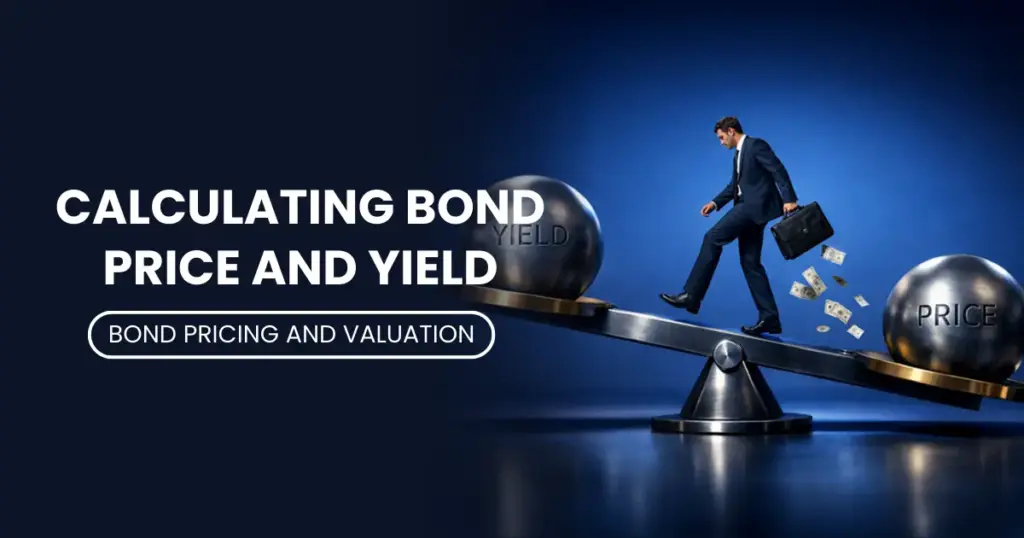
Bond Yield Vs Interest Rates Understanding the Relationship Between Bond Yields and Interest Rates As a cornerstone of the global financial system, the interplay between bond yields and interest rates dictates the flow of capital, influences corporate borrowing, and shapes investor portfolios. For investors navigating the diverse investment services offered in the UAE and international markets, mastering this inverse relationship is essential for effective risk management and capital preservation. Table of Contents How Do Interest Rates Influence Bond Prices and Yields? What Is the Difference Between a Bond’s Coupon Rate and Its Yield? Why Do Bond Yields Move Inversely to Interest Rates? How Does Inflation Impact the Bond Yield-Interest Rate Dynamic? What Should Investors Consider When Rates Are Rising? Conclusion: Strategic Fixed-Income Positioning How Do Interest Rates Influence Bond Prices and Yields? The relationship between interest rates and bond prices is fundamentally inverse. When central banks—such as the Federal Reserve or the Central Bank of the UAE—adjust benchmark interest rates, they effectively reset the “cost of money” for the entire economy. When interest rates rise, newly issued bonds enter the market offering higher coupon payments to attract investors. Consequently, existing bonds with lower fixed coupons become less attractive. To entice buyers, the market price of these older bonds must drop. Conversely, when interest rates fall, existing bonds with higher fixed coupons become highly sought after, driving their market prices upward. Yield, in its simplest form, represents the return an investor realizes on a bond. As the price of a bond falls, its yield rises (because the fixed interest payment now represents a larger percentage of the discounted purchase price). Understanding this mechanism is vital when reviewing your multi-asset portfolio performance, as it explains why fixed-income valuations may fluctuate despite stable interest payments. What Is the Difference Between a Bond’s Coupon Rate and Its Yield? It is a common misconception among retail investors that a bond’s coupon and its yield are the same. The coupon rate is the fixed annual interest payment established when the bond is issued, expressed as a percentage of the face value. The bond yield, specifically the “Yield to Maturity” (YTM), is a more dynamic metric. It accounts for the coupon rate, the current market price, and the time remaining until maturity. If you purchase a bond at a “premium” (above face value), your yield will be lower than the coupon rate. If purchased at a “discount” (below face value), your yield will be higher. For those engaging in global wealth management, distinguishing between these two is critical. The coupon provides the cash flow, but the yield tells the true story of the investment’s total return potential in the current economic climate. Enhance Your Fixed-Income Strategy Access institutional-grade bond market insights today. Access Global Bond Market Why Do Bond Yields Move Inversely to Interest Rates? The inverse movement is driven by the concept of “Opportunity Cost.” Imagine you hold a bond paying 3% interest. If the central bank raises interest rates, new bonds might start paying 5%. No rational investor would buy your 3% bond at face value when they can get 5% elsewhere. To sell your 3% bond, you must lower the price until the total return (the 3% coupon plus the capital gain when the bond matures at full face value) equals the current market rate of 5%. This “price adjustment” is what causes the yield to climb as rates rise. This phenomenon is a primary driver of volatility in fixed income trading, requiring active duration management to protect against interest rate shocks. How Does Inflation Impact the Bond Yield-Interest Rate Dynamic? Inflation is the silent predator of fixed-income returns. When inflation rises, the purchasing power of a bond’s fixed future payments diminishes. To compensate for this loss of value, investors demand higher yields, which exerts upward pressure on interest rates. Central banks typically respond to high inflation by raising interest rates to cool the economy. This creates a “double-whammy” for bondholders: prices fall due to rising rates, and the real value of the coupons falls due to inflation. Professional investors often look toward diversified investment funds that include inflation-protected securities or shorter-duration assets to mitigate these specific risks during inflationary cycles. What Should Investors Consider When Rates Are Rising? In a rising rate environment, “duration” becomes the most important metric. Duration measures a bond’s sensitivity to interest rate changes. Bonds with longer maturities generally have higher duration, meaning their prices will fall more sharply when rates rise. Investors should consider a “laddering” strategy—staggering the maturities of their bond holdings. As shorter-term bonds mature, the principal can be reinvested into new bonds at higher current interest rates. This proactive approach to asset management ensures that the portfolio is not locked into low yields for an extended period, allowing the investor to benefit from the changing interest rate landscape. Optimize Your Global Portfolio Tailored capital market solutions for professional investors. Contact Now Conclusion: Strategic Fixed-Income Positioning The relationship between bond yields and interest rates is a fundamental pillar of finance that every serious investor must respect. While the inverse correlation between price and yield can introduce volatility, it also creates opportunities for those who understand market cycles. By distinguishing between coupon rates and yields, monitoring inflationary trends, and managing portfolio duration, investors can navigate fluctuating rate environments with confidence. At PhillipCapital DIFC, we provide the expertise and financial brokerage services necessary to help you interpret these market signals and align your fixed-income strategy with your long-term capital goals. Frequently Asked Questions (FAQs) Why do bond prices fall when interest rates go up? When market interest rates rise, new bonds are issued with higher coupons. This makes existing bonds with lower rates less attractive. To sell these older bonds, owners must lower their price until the total return matches the current market rates. Is a higher bond yield always better for an investor? Not necessarily. While a higher yield means more potential return, it often signals higher risk—such as the issuer’s creditworthiness or rising inflation. Additionally,