
Online Trading Dubai

Forex Currency Pairs

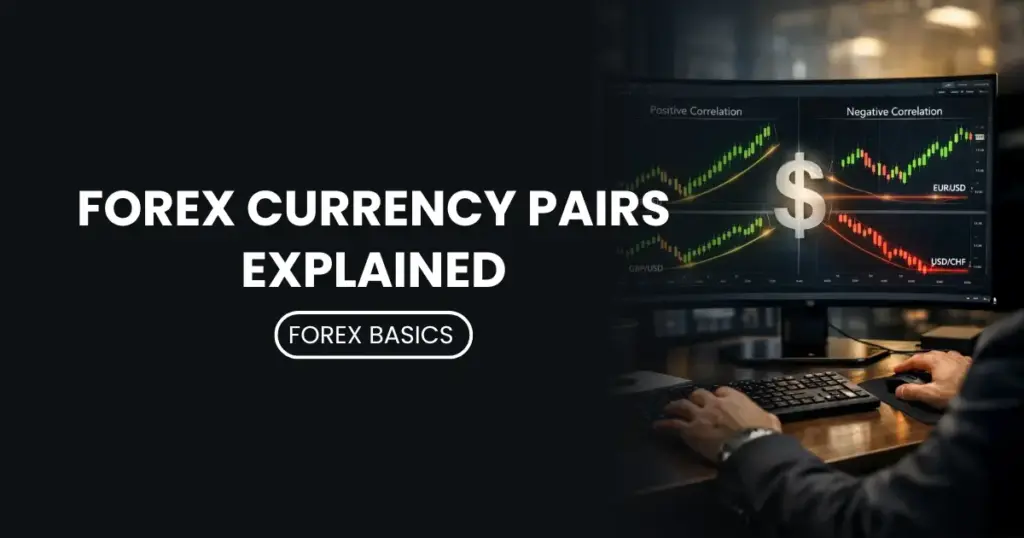
Forex Currency Pairs Explained The Ultimate Guide to Major & Best Pairs The foreign exchange (Forex) market is the largest and most liquid financial market in the world, with trillions of dollars traded daily. For traders in the UAE and across the globe, understanding the foundation of this market—Major Currency Pairs—is the first step toward building a robust trading strategy. At Phillip Capital DIFC, we combine over 45 years of global financial expertise with deep local knowledge to help you navigate these markets. Whether you are a beginner looking to place your first trade or an institutional client seeking deep liquidity, this guide answers the most critical questions about the world’s most traded currencies. Quick Guide to Major Currency Pairs Before diving into the details, here is a quick reference table of the seven major pairs you will likely trade most often. Understanding these nicknames and characteristics is essential for following market news. Currency Pair Common Nickname Key Characteristic Primary Drivers EUR/USD “Fiber” Highest Liquidity ECB vs Fed Interest Rates, Eurozone GDP USD/JPY “Gopher” Asian Market Proxy Bank of Japan Policy, Risk Sentiment GBP/USD “Cable” High Volatility UK Inflation, Bank of England Rate Decisions USD/CHF “Swissie” Safe Haven Global Uncertainty, Swiss National Bank Policy AUD/USD “Aussie” Commodity Linked Gold Prices, China’s Economic Health USD/CAD “Loonie” Commodity Linked Crude Oil Prices (WTI/Brent) NZD/USD Kiwi” Agricultural Link Crude Oil Prices (WTI/Brent) What Are the Major Currency Pairs? In the Forex market, currencies are always traded in pairs. You buy one currency while simultaneously selling another. “Major” currency pairs are defined by one key characteristic: they all include the US Dollar (USD) on one side of the trade, paired with another currency from a powerful, developed economy. These pairs account for the vast majority of daily trading volume globally. Because they are so heavily traded, they typically offer the highest liquidity and the tightest spreads. Why Should I Trade Major Currency Pairs Instead of Minors or Exotics? For most traders, especially those starting out, major pairs offer significant advantages over minor (crosses) or exotic pairs. Liquidity: Because millions of traders, banks, and corporations trade these pairs every second, you can enter and exit positions almost instantly without significant price slippage. Lower Transaction Costs: High volume leads to competition among liquidity providers. This results in tighter spreads (the difference between the buy and sell price). At Phillip Capital DIFC, we offer competitive spreads on major pairs like EUR/USD and USD/JPY to help you maximize your potential returns. Predictability: While no market is perfectly predictable, major pairs tend to respect technical analysis levels and respond logically to economic news more reliably than volatile exotic pairs. Start Trading with Confidence Looking to access deep liquidity and tight spreads on over 40 currency pairs? Explore Spot FX & CFDs Which Major Currency Pair is Best for Beginners? This is one of the most common questions we receive at our Dubai office. While there is no “easy” pair to trade, EUR/USD is widely considered the best starting point for new traders. Why EUR/USD? Stability: It is generally less volatile than pairs like GBP/USD, meaning price swings are often smoother and less erratic. Information Availability: Because it represents the US and Eurozone economies, news flow is constant and transparent. You will never struggle to find analysis or data on this pair. Cost Efficiency: It almost always has the lowest spread of any pair, meaning your cost to enter the trade is lower, which is crucial when you are learning and managing a smaller account. However, if you prefer trading during the UAE morning hours (which overlaps with the Asian session), USD/JPY is also an excellent choice due to its clear trends and high liquidity during that time. How Do Currency Correlations Affect My Trading Risk? Understanding correlations is what separates professional traders from amateurs. Currency pairs do not move in isolation; they often influence each other because they share a common currency (usually the USD). Two Types of Correlation to Watch: Positive Correlation (Moving Together): EUR/USD and GBP/USD often move in the same direction. If the US Dollar weakens, both the Euro and the Pound typically rise against it. If you buy both pairs simultaneously, you are essentially doubling your risk on the US Dollar. Negative Correlation (Moving Opposite): EUR/USD and USD/CHF often have a strong inverse relationship. When EUR/USD goes up, USD/CHF usually goes down. Trading these in the same direction (e.g., buying both) can result in one trade canceling out the profit of the other. Pro Tip: Always check the correlation before opening multiple positions. If you are already long on AUD/USD (which is linked to Gold), be cautious about opening a large position in Gold (XAU/USD) simultaneously, as you might be over-exposed to the same market drivers. What Factors Influence the Price of Major Currency Pairs? Currency prices are a reflection of the economic health of the countries they represent. To trade majors effectively, you need to understand the fundamental drivers behind them: Interest Rates: Central banks, such as the Federal Reserve (Fed) for the USD or the European Central Bank (ECB) for the Euro, set interest rates. Generally, higher interest rates attract foreign capital, strengthening the currency. Economic Data: Reports like Non-Farm Payrolls (US employment data), GDP growth, and inflation (CPI) figures can cause immediate spikes in volatility. Geopolitical Stability: Currencies like the Swiss Franc (CHF) and Japanese Yen (JPY) are often considered “safe havens.” During times of global uncertainty, investors may flock to these currencies, driving their value up against the USD. Commodity Prices: The Australian Dollar (AUD) and Canadian Dollar (CAD) are “commodity currencies.” If the price of Gold rises, AUD/USD often rises. If Oil prices surge, USD/CAD typically falls (meaning the CAD strengthens). When Is the Best Time to Trade Major Currency Pairs? The Forex market is open 24 hours a day, 5 days a week, but not every hour offers the same opportunity. The market is divided into three major sessions: Asian Session (Tokyo): Best for trading USD/JPY and AUD/USD.

Forex Currency Pairs Read More »

Forex Market Structure and Hours

Forex Market Structure and Hours The Complete Guide for UAE Traders The foreign exchange market is unique. Unlike the Dubai Financial Market (DFM) or the New York Stock Exchange (NYSE), it has no central physical location. It is a decentralized, global network that never truly sleeps during the working week. For traders in the UAE, understanding this structure and aligning your schedule with global liquidity centers is the first step toward disciplined trading. In this guide, we break down the invisible architecture of the forex market and map out exactly when you should be watching the charts from your desk in Dubai. How is the Forex Market Structured compared to the Stock Market? The structure of the forex market is often described as “decentralized” or “Over-the-Counter” (OTC). In a traditional stock market, there is a centralized exchange (like the Nasdaq) that acts as the middleman for all transactions, ensuring a standardized price. In Forex, the “exchange” is a tiered network of participants connected electronically. The Top Tier (Interbank Market): This consists of the world’s largest banks (like Citi, Deutsche Bank, Barclays) trading directly with each other. They determine the raw exchange rates. The Middle Tier: This includes hedge funds, commercial companies dealing in import/export, and retail market makers. The Retail Tier: This is where individual traders operate. You trade through a broker—like PhillipCapital DIFC—who provides you access to the interbank liquidity. Because there is no central exchange, the market relies on this network to function 24 hours a day. Prices may vary slightly from broker to broker, which is why choosing a broker with deep liquidity providers is crucial for getting tight spreads. Decode the Global Markets Attend Phillip Focus Event at Dubai and transform how you see the markets. RESERVE YOUR SPOT What are the Key Forex Trading Sessions in UAE Time? Since the market follows the sun, it cycles through four major financial hubs. For a trader based in Dubai (Gulf Standard Time), the schedule is incredibly convenient because the UAE is geographically positioned between the East and West. Here is the breakdown of the major sessions in UAE time (approximate, subject to Daylight Savings changes): Sydney Session: Opens approx. 1:00 AM – Closes 10:00 AM (UAE Time). This is the start of the trading day. Volatility is generally lower here, with a focus on AUD and NZD pairs. Tokyo Session: Opens approx. 3:00 AM – Closes 12:00 PM (UAE Time). The Asian session picks up momentum. JPY pairs see the most action here. London Session: Opens approx. 11:00 AM – Closes 8:00 PM (UAE Time). This is the heavyweight session. London is the financial capital of the forex world, handling roughly 43% of all global transactions. Trends often begin here. New York Session: Opens approx. 4:00 PM – Closes 1:00 AM (UAE Time). The US dollar is involved in 90% of all trades, making this a highly volatile and liquid session. Why is the market open 24/5, and does it ever close? The market stays open 24 hours a day during the week because as one financial hub closes, another opens. However, it does close for the weekend. Market Open: Monday morning in New Zealand (which is roughly roughly roughly Sunday late night/Monday early morning in Dubai). Market Close: Friday afternoon in New York (which is roughly Saturday very early morning in Dubai). It is important to note that while you can trade at 3:00 AM on a Tuesday in Dubai, liquidity might be thinner compared to the afternoon. Thin liquidity can sometimes lead to “slippage” or wider spreads, which is why understanding market structure is vital for risk management. How do Public Holidays affect the Market Structure? Since the market is decentralized, a public holiday in the UAE does not stop the global forex market. However, if it is a bank holiday in London (UK) or New York (USA), liquidity will drop drastically, and the market may become “rangy” (moving sideways). Conversely, if it is a holiday in Japan but not in Europe, the JPY pairs might be quiet, but the EUR and GBP pairs will trade normally. A smart trader checks the economic calendar daily to see which centers are offline. Does PhillipCapital DIFC offer access to all these sessions? Yes. As a broker regulated by the DFSA (Dubai Financial Services Authority), PhillipCapital DIFC provides you with the infrastructure to trade major, minor, and exotic currency pairs 24 hours a day, 5 days a week. Whether you are an early riser trading the Tokyo breakout or an evening trader focusing on the US heavy hitters, our servers are connected to the global grid. We combine this global access with local security. Your funds are segregated, and you are trading with a broker that has a physical presence right here in the Dubai International Financial Centre. Frequently Asked Questions (FAQs) US Market Hours in UAE Time (GST) Session Timing (Nov – March) Timing (March – Nov) Market Opens 6:30 PM 5:30 PM Market Closes 1:00 AM 12:00 AM (Midnight) Why does the US market opening time change in the UAE? The shift happens because the United States observes Daylight Saving Time (moving clocks forward in March and back in November), while the UAE maintains Gulf Standard Time (GST) all year round. This creates a one-hour difference in the local opening time between the summer and winter months. London Forex Session Timing (UAE Time – GST) Season Timing (Nov – March) Timing (March – Oct) Session Opens 12:00 PM 11:00 AM Session Closes 9:00 PM 8:00 PM When is the best time to trade the London session from the UAE? The most active period is during the London and New York overlap, which currently occurs from 5:00 PM to 9:00 PM GST. This is when trading volume is at its peak, providing the highest liquidity and tightest spreads for major currency pairs like GBP/USD and EUR/USD. What is the best time to trade Forex in the UAE? The most optimal time to trade is usually during

Forex Market Structure and Hours Read More »

Essentials of Derivatives Trading

Mastering Market Moves: The Essentials of Derivatives Trading The financial world is vast, and for many investors, “derivatives” can sound like a complex buzzword reserved for Wall Street elites. However, derivatives are powerful tools that, when understood, can help manage risk and uncover new opportunities in global markets. At PhillipCapital DIFC, we believe in empowering our clients with knowledge. Whether you are an institutional investor, a family office, or a retail trader looking to diversify, this guide breaks down the basics of derivatives. What exactly is a financial “derivative,” and why is it called that? A derivative is a financial contract between two or more parties that derives its value from an underlying asset, group of assets, or benchmark. Think of it as a side agreement about the future price of something else. This “underlying” asset can be almost anything: a stock (like Apple or Reliance Industries), a commodity (like Gold or Crude Oil), a currency pair (like USD/AED), or even an interest rate. It is called a “derivative” because the instrument itself has no intrinsic value; its worth is entirely derived from the fluctuations of that underlying asset. If the price of gold goes up, the value of a gold derivative will change accordingly, depending on the type of contract you hold. Investors typically use them for two main reasons: Hedging (protecting against price drops) or Speculation (betting on price movements to make a profit). What are the different types of derivatives available to traders? While there are many complex variations, the derivatives market is primarily built on four pillars. At PhillipCapital DIFC, we specialize in providing access to the most liquid and popular of these: Futures Contracts: These are standardized agreements to buy or sell an asset at a predetermined price at a specific time in the future. They are traded on exchanges. For example, you might buy a crude oil future contract expecting the price to rise next month. Options: These contracts give you the right, but not the obligation, to buy (Call Option) or sell (Put Option) an asset at a specific price. This is great for traders who want to limit their downside risk while keeping the upside open. Forwards: Similar to futures but are private, customizable agreements between two parties (Over-the-Counter). They aren’t traded on exchanges. Swaps: These involve exchanging cash flows with another party. For example, a company might swap a variable interest rate loan for a fixed interest rate to gain stability. Trade on 15+ global exchanges Explore our range of Global Futures & Options to see which instruments fit your portfolio View F&O Markets How can derivatives be used for both risk management (Hedging) and profit generation (Speculation)? These are the two distinct “personalities” of derivative trading. The Hedger (The Insurer): Imagine you are a jeweler holding a large inventory of gold. You are worried the price of gold might drop next week, devaluing your stock. You can “hedge” this risk by selling gold futures contracts. If the market price drops, your inventory loses value, but your short position in the futures market makes a profit, balancing out the loss. It acts like an insurance policy.   The Speculator (The Trader): You don’t own the gold, but you study the charts and believe gold prices are about to skyrocket. You can buy a futures contract or a Call Option. You don’t intend to ever take delivery of the physical gold; you are simply planning to sell the contract later at a higher price to generate a return on your capital. Can I trade global markets like the US S&P 500 or Commodities from Dubai? Absolutely. One of the greatest advantages of derivatives is that they erase geographical borders. You don’t need to be on Wall Street to trade American markets, nor do you need to be in London to trade Brent Crude Oil. Through PhillipCapital DIFC, you gain access to over 15 global exchanges, including the CME (Chicago Mercantile Exchange), ICE (Intercontinental Exchange), and DGCX (Dubai Gold & Commodities Exchange). This means you can trade futures and options on major global indices like the S&P 500, NASDAQ 100, or Dow Jones. This is particularly powerful for portfolio diversification. If you believe the US tech sector is going to rally, you can buy a NASDAQ future. If you want to hedge against rising energy costs, you can trade Oil futures—all from a single, regulated account here in the UAE. What is the benefit of trading derivatives on an exchange like Chicago Mercantile Exchange (CME) versus Over-the-Counter (OTC)? Trading on a regulated exchange like the Chicago Mercantile Exchange (CME) , which PhillipCapital provides access to, offers significantly higher safety and transparency compared to OTC trading. No Counterparty Risk: In an OTC trade, if the other guy goes bankrupt, you might not get paid. On an exchange, the Clearing House guarantees the trade. Liquidity: Exchanges bring together thousands of buyers and sellers, making it easier to enter and exit positions instantly. Price Transparency: You can see exactly what price the market is trading at in real-time, ensuring you get a fair deal. Is derivatives trading risky? How can I manage it? It is important to be transparent: yes, derivatives involve risk, primarily due to leverage. Leverage allows you to control a large contract value with a relatively small amount of capital (margin). While this can magnify your profits, it can also magnify your losses if the market moves against you. However, risk can be managed. Successful traders use “Stop-Loss” orders to automatically exit a bad trade before losses spiral. They also limit the amount of capital they risk on any single trade. At PhillipCapital DIFC, we provide institutional-grade tools and risk management support to help you navigate these waters safely. We believe in “educated trading”—understanding the instrument before you invest. Disclaimer: Trading foreign exchange and/or contracts for difference on margin carries a high level of risk, and may not be suitable for all investors as you could sustain losses in excess of deposits. The

Essentials of Derivatives Trading Read More »
