Yield Curve

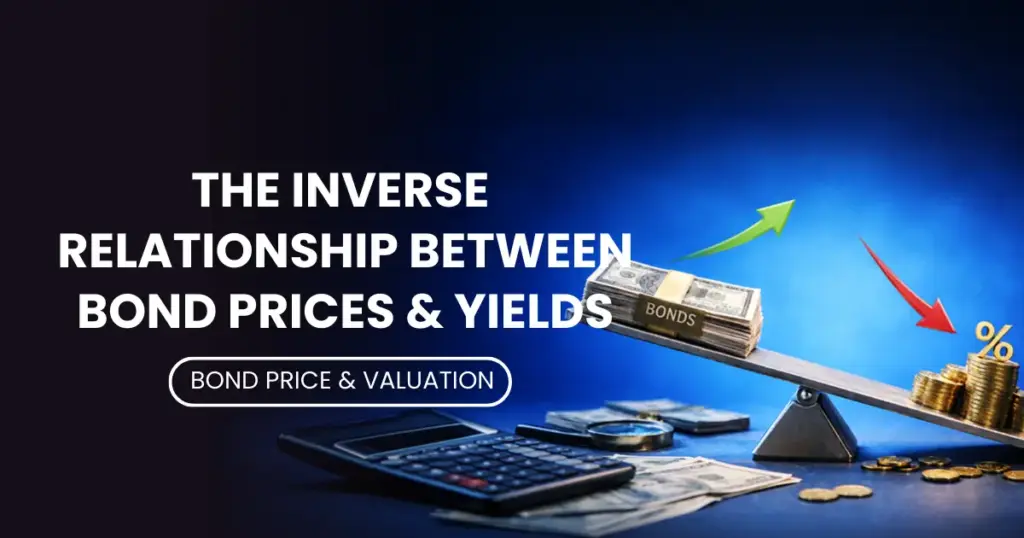
The Inverse Relationship Between Bond Prices and Yields

The Inverse Relationship Between Bond Prices and Yields Table of Contents Understanding the Fundamentals of Fixed Income Why Do Bond Prices and Yields Move in Opposite Directions? The Role of Central Banks and Interest Rates Duration and Convexity: Measuring Sensitivity Strategic Implications for Investors Conclusion Understanding the Fundamentals of Fixed Income What is the core definition of a bond yield compared to its price? To navigate the fixed-income markets effectively, investors must first distinguish between the face value of a bond and its market price. When you purchase a bond, you are essentially lending capital to an issuer—whether a government or a corporation. The price is the amount you pay for that bond today, which can fluctuate based on market demand. The yield, specifically the Yield to Maturity (YTM), is the total return anticipated on a bond if the bond is held until it matures. It is expressed as an annual percentage. While the coupon rate (the interest paid) typically remains fixed, the yield fluctuates dynamically. This distinction is critical because, in the secondary market, bonds rarely trade at their exact face value (par). They trade at a premium or a discount, and this price variance directly dictates the yield an investor effectively locks in. For a deeper dive into the mechanics of these instruments, you can explore our detailed guide on what a bond is and how it works, which breaks down the terminology of coupons, principal, and maturity dates for new investors. Why Do Bond Prices and Yields Move in Opposite Directions? What is the mathematical and logical reasoning behind the “Seesaw Effect”? The inverse relationship between bond prices and yields is often described as a “seesaw.” When prices go up, yields go down, and vice versa. This is not merely a market anomaly; it is a mathematical certainty required to keep the bond competitive with newer issues. Imagine a scenario where you hold a bond issued five years ago with a fixed coupon of 5%. If prevailing interest rates in the economy rise to 6%, no rational investor would pay full price for your 5% bond when they can buy a new one paying 6%. To sell your existing bond, you must lower its price (sell it at a discount) until its effective yield matches the new 6% market rate. Conversely, if market rates fall to 4%, your 5% bond becomes highly valuable. Investors will bid up its price (trading at a premium) until the yield compresses down to match the 4% environment. This dynamic ensures that older bonds remain liquid and tradable against new government and corporate bond issues, maintaining equilibrium in the global capital markets. Master the Fixed Income Market Access Global Bonds & Debentures with PhillipCapital DIFC Explore Bond Trading Products The Role of Central Banks and Interest Rates How do Federal Reserve and Central Bank policies impact this relationship? Central banks, such as the Federal Reserve or the ECB, exert a gravitational pull on bond markets. When a central bank raises its benchmark interest rate to combat inflation, the immediate effect is a reset in the cost of borrowing. New bonds are issued with higher coupons to reflect this higher base rate. As a result, the prices of existing bonds—which carry lower, older coupon rates—must fall significantly to align with the new, higher-yield environment. This period is often characterized by capital depreciation for holders of long-term debt. Conversely, when central banks cut rates to stimulate the economy, existing bonds with higher coupons become prized assets, seeing their prices appreciate. Investors monitoring these macroeconomic shifts often look at Investment Grade vs. Non-Investment Grade bonds to decide where to position their capital, as different credit ratings react with varying volatility to interest rate announcements. Duration and Convexity: Measuring Sensitivity Why does the maturity of a bond amplify price volatility? Not all bonds react to yield changes with the same intensity. This sensitivity is measured by a concept called Duration. In simple terms, duration estimates how much a bond’s price will change for a 1% change in interest rates. Long-term bonds generally have a higher duration than short-term bonds. For instance, a 30-year Treasury bond will see a much sharper price decline than a 2-year Treasury note if interest rates rise by the same amount. This is because the cash flows (coupons) of the long-term bond are further in the future, making them more vulnerable to the eroding effects of inflation and opportunity cost. For professional investors managing complex portfolios, understanding duration (and the curvature of this relationship, known as Convexity) is essential for hedging risk, especially when trading derivatives and futures alongside cash bonds. Strategic Implications for Investors How can investors turn this inverse relationship into an opportunity? Understanding that prices and yields move inversely allows investors to employ specific strategies based on their economic outlook: Riding the Yield Curve: In a stable interest rate environment, investors might buy longer-term bonds to capture higher yields, profiting as the bond rolls down the yield curve closer to maturity. Defensive Positioning: If an investor anticipates a rate hike (which hurts bond prices), they may shorten the duration of their portfolio. This involves shifting capital into short-term bills or notes that are less sensitive to price drops. Capital Appreciation: If an economic slowdown is forecast and rate cuts are expected, investors might lock in long-term bonds. As rates fall, the prices of these bonds will rise, offering significant capital gains on top of the coupon income. Diversification is key here. Integrating fixed income alongside global equities and ETFs ensures that a portfolio can withstand volatility in any single asset class. Expert Guidance for Your Portfolio Speak to our desk for personalized market insights Contact Now Conclusion The inverse relationship between bond prices and yields is the foundational gravity of the fixed-income universe. Whether you are a retail investor seeking stable coupons or a professional trader managing duration risk, acknowledging that higher yields equate to lower prices (and vice versa) is the first step toward clearer market analysis.

The Inverse Relationship Between Bond Prices and Yields Read More »
Short-Term, Intermediate, and Long-Term Bonds

Bond Maturities Short-Term, Intermediate, and Long-Term Bonds Table of Contents What Are Bond Maturities and Why Do They Matter? What Defines a Short-Term Bond? How Do Intermediate-Term Bonds Balance Risk and Reward? When Should Investors Consider Long-Term Bonds? How Does the Yield Curve Impact Bond Maturity Choices? Which Bond Duration Fits Your Investment Portfolio? Conclusion What Are Bond Maturities and Why Do They Matter? In the world of fixed-income investing, maturity is more than just a date on a calendar; it is the primary driver of a bond’s risk profile and potential return. When you purchase a bond, you are essentially lending capital to an issuer—be it a government or a corporation—for a specific period. The “maturity date” is the deadline by which that issuer must repay your principal investment. Understanding maturity is crucial because it dictates how sensitive your investment is to interest rate fluctuations and inflation. A well-structured fixed income portfolio often utilizes a mix of maturities to smooth out volatility. Whether you are preserving wealth through sovereign debt or seeking higher yields in the corporate sector, the timeline of your bond investment defines your liquidity and expected cash flow. What Defines a Short-Term Bond? Short-term bonds are generally defined as debt securities with maturities ranging from one to three years. These instruments are often favored by conservative investors or those managing near-term liquidity needs. Because the capital is tied up for a relatively brief period, the risk of default and the impact of interest rate changes are significantly lower compared to longer-dated securities. Key Characteristics: Lower Volatility: Short-term bonds are less sensitive to interest rate hikes. If rates rise, the price of a short-term bond drops less than that of a long-term bond. High Liquidity: These assets can often be converted to cash quickly with minimal price impact, making them a staple in wealth management strategies for holding operating cash. Modest Yields: In exchange for safety and liquidity, investors typically accept lower yields compared to longer-term options. Who is this for? Short-term bonds are ideal for investors who need to access their funds in the near future or those who wish to “park” capital safely while waiting for market volatility to settle. Secure Your Liquidity Explore Short-Term Opportunities Discover stable, high-quality fixed-income assets tailored for capital preservation. Explore Global Bonds How Do Intermediate-Term Bonds Balance Risk and Reward? Intermediate-term bonds typically have maturities between three and ten years. They serve as the “middle ground” in a portfolio, offering a compelling compromise between the low yields of short-term debt and the high volatility of long-term debt. For many sophisticated investors, this category represents the core of a diversified income strategy. Intermediate bonds usually capture a significant portion of the yield available in the market without exposing the investor to extreme duration risk. If interest rates rise, these bonds will experience moderate price fluctuations, but the higher coupon payments can help cushion the blow over time. Investors utilizing our global markets trading platforms often allocate to intermediate treasuries or investment-grade corporate bonds to anchor their portfolios. This “laddering” approach allows them to lock in respectable rates while maintaining a degree of flexibility. When Should Investors Consider Long-Term Bonds? Long-term bonds are securities that mature in 10 to 30 years (or more). These are the heavyweights of the fixed-income world, offering the highest potential yields to compensate investors for locking away their capital for decades. The Duration Factor: The defining feature of long-term bonds is their high duration. Duration measures a bond’s sensitivity to interest rate changes. A 30-year bond will see its price swing dramatically if interest rates move even a small amount. This makes long-term bonds a tool for investors with a strong conviction about the future direction of the economy—specifically, those who believe inflation and interest rates will decline. The Role in a Portfolio: While volatile, long-term bonds often have a low correlation with equities. During periods of economic deflation or recession, when stock markets may struggle, high-quality long-term government bonds often rally, providing a critical hedge. Accessing these specific durations requires a robust partner capable of navigating complex global bond markets. Optimize Your Yield Plan for Long-Term Growth Access premium long-term sovereign and corporate bonds to boost your portfolio yield. Contact Now How Does the Yield Curve Impact Bond Maturity Choices? The yield curve is a graphical representation of the interest rates on debt for a range of maturities. In a healthy economy, the curve slopes upward, meaning long-term bonds yield more than short-term bonds. This “term premium” rewards investors for the risk of holding debt over time. However, the shape of the curve changes. Steep Curve: Suggests rapid economic growth; long-term bonds offer much higher yields. Flat Curve: Suggests uncertainty; yields are similar across maturities. Inverted Curve: Occurs when short-term rates are higher than long-term rates, historically a signal of an impending recession. Monitoring the yield curve is essential for tactical asset allocation. For instance, if the curve is inverted, an investor might prefer structured investment solutions or short-term notes rather than locking in lower rates for the long haul. Which Bond Duration Fits Your Investment Portfolio? Selecting the right maturity is not a binary choice; it is a strategic decision based on your financial horizon and risk tolerance. For Capital Preservation: If your goal is to protect principal for a purchase in the next 12-24 months, focus on short-term government securities. For Income Generation: If you need a steady income stream to fund living expenses or other liabilities, an intermediate-term ladder provides a reliable blend of yield and stability. For Aggressive Total Return: If you are managing a long-horizon fund or family office capital and anticipate a drop in interest rates, long-term bonds offer significant capital appreciation potential. Investors should also consider the tax implications and currency exposure when trading international debt. Utilizing institutional brokerage services can provide the necessary access to diverse markets, ensuring that your duration strategy is executed efficiently across different jurisdictions. Conclusion The distinction between short-term, intermediate, and long-term

Short-Term, Intermediate, and Long-Term Bonds Read More »

What is a Bond and How Does It Work?

What is a Bond and How Does It Work? A Complete Guide for Investors In the world of investing, diversifying your portfolio is key to managing risk and ensuring long-term financial health. While stocks often grab the headlines, bonds play a critical, stabilizing role in the global financial markets. But what exactly is a bond, and why do sophisticated investors rely on them to preserve capital and generate steady income? As a leading financial broker in the UAE regulated by the DFSA, PhillipCapital DIFC brings you this comprehensive guide to understanding the mechanics of bonds. Whether you are looking to balance a high-risk equity portfolio or seeking predictable cash flow, this  guide covers everything you need to know. What exactly is a bond in simple terms? Think of a bond as a formal IOU (I Owe You). When you purchase a bond, you are essentially lending money to an entity—typically a corporation or a government—for a defined period. In exchange for this loan, the borrower (the issuer) promises to pay you interest at regular intervals and return the original amount you lent (the principal) once the bond reaches the end of its term (maturity). Unlike stocks, where you buy an ownership stake in a company, buying a bond makes you a creditor. You don’t own a piece of the entity; rather, the entity owes you a debt. This distinction is crucial because, in the event of bankruptcy, bondholders are prioritized over stockholders for repayment, making bonds generally less risky than equities. How does a bond actually work? Can you break down the mechanics? To understand how a bond works, you need to know three key components: Principal (Face Value): This is the amount of money the bond will be worth at maturity. It is also the amount the issuer uses to calculate interest payments. Coupon Rate: This is the interest rate the issuer agrees to pay the bondholder. For example, a bond with a $1,000 face value and a 5% coupon rate will pay you $50 annually. Maturity Date: This is the date when the bond expires, and the issuer must pay back the principal amount to the investor. Here is a practical example: Imagine you buy a 10-year bond from a company with a face value of $10,000 and a coupon rate of 4%. The Investment: You pay $10,000 to the company. The Income: The company pays you $400 every year (usually in two installments of $200) for 10 years. The Return: At the end of the 10 years, the company returns your original $10,000. Ready to start building a stable income stream? Explore our diverse range of global bonds available for trading. Explore Global Bonds What are the different types of bonds available to investors? Bonds are generally categorized by who issues them. The three most common types are: Government Bonds (Sovereign Debt): Issued by national governments. These are often considered the safest investments because they are backed by the “full faith and credit” of the government. For example, U.S. Treasury bonds are a global benchmark for safety. Corporate Bonds: Issued by companies to fund operations, expansion, or research. Because companies are more likely to default than stable governments, corporate bonds typically offer higher interest rates (yields) to attract investors. Municipal Bonds: Issued by local governments (like cities or states) to fund public projects such as schools, highways, and hospitals. In many jurisdictions, the interest earned on these bonds is tax-free.At PhillipCapital DIFC, we provide access to a wide array of these instruments, allowing you to tailor your portfolio’s risk and return profile. Are bonds completely risk-free? What risks should I be aware of? While bonds are generally safer than stocks, they are not without risk. A sophisticated investor must be aware of the following: Credit Risk (Default Risk): The risk that the issuer usually a company—will run out of money and fail to make interest payments or repay the principal. Credit rating agencies (like Moody’s or S&P) assign ratings (e.g., AAA, BBB, Junk) to help you gauge this risk. Interest Rate Risk: Bond prices and interest rates have an inverse relationship. When central banks raise interest rates, the value of existing bonds with lower coupon rates falls. If you need to sell your bond before maturity, you might have to sell it for less than you paid. Inflation Risk: If inflation rises significantly, the fixed income you receive from a bond might lose its purchasing power over time. Unsure which bonds fit your risk appetite? Our experts in Dubai simplify the fixed-income market for you. Contact Now Why should I include bonds in my investment portfolio? Bonds serve several vital functions in a well-rounded investment strategy: Capital Preservation: For investors approaching retirement or those who cannot afford large losses, high-quality bonds offer a way to protect your principal investment. Predictable Income: Unlike the uncertain dividends of stocks, bonds provide a fixed, predictable schedule of cash payments. This is ideal for planning cash flow needs. Diversification: Bonds often behave differently than stocks. When stock markets are volatile or falling, investors often flock to bonds as a “safe haven,” which can help stabilize your overall portfolio value. How do I actually buy a bond? Buying bonds has historically been more complex than buying stocks, often requiring large minimum investments. However, modern platforms have democratized access. You can buy bonds in two main ways: Primary Market: Buying new bonds directly from the issuer when they are first offered. Secondary Market: Buying existing bonds from other investors after they have been issued. As a DFSA-regulated broker, PhillipCapital DIFC offers a seamless, secure platform to access both sovereign and corporate bonds globally. We provide the transparency and execution speed you need to trade effectively. Open Your Account Today Take the next step in your financial journey Open an account Bonds are a cornerstone of the global financial system, offering a balance of safety and income that pure equity portfolios cannot match. By understanding the relationship between issuers, interest rates, and maturity,

What is a Bond and How Does It Work? Read More »