Interest Rate Futures Mastering Interest Rate Futures: A Strategic Guide...
Read MoreInterest Rate Futures
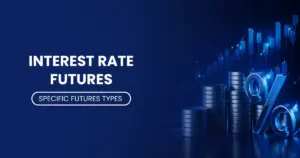
Mastering Interest Rate Futures: A Strategic Guide for Investors
Whether you are an individual retail investor or a professional managing a large institutional portfolio, changes in global interest rates can dramatically impact your capital. When central banks adjust rates to control inflation or stimulate economic growth, the ripple effects are felt across all asset classes. This is where interest rate futures become an invaluable financial instrument.
Historically viewed as tools exclusively for large-scale banks, these derivatives are now widely utilized by savvy investors to protect their assets from unpredictable economic shifts and to capitalize on shifting market trends. In this comprehensive guide, we will break down exactly how these financial tools operate, why they hold strategic value, and how you can seamlessly integrate them into your global trading approach.
Table of Contents
- What Are Interest Rate Futures?
- How Do Interest Rate Futures Actually Work?
- Why Should Investors Trade Interest Rate Futures?
- How Can You Hedge Against Rising Interest Rates?
- What Are the Key Risks Involved?
- How Do Central Bank Decisions Affect These Futures?
- How to Start Trading Interest Rate Futures?
- Conclusion & Key Takeaways
What Are Interest Rate Futures?
Interest rate futures are legally binding financial contracts between a buyer and a seller, who agree to the future delivery of an interest-bearing asset at a price determined today. The underlying assets for these specific contracts are typically government bonds, treasury notes, or treasury bills.
Instead of purchasing a physical bond and holding it in your portfolio for years, you can use these futures to speculate on, or protect against, changes in the interest rate itself. Because these contracts are strictly regulated, understanding futures contracts and their standardized nature is the first step toward effective portfolio management. They act as a direct reflection of where the market believes interest rates are heading over a specified timeframe.
How Do Interest Rate Futures Actually Work?
To understand how these instruments function, it is essential to remember the golden rule of fixed-income investing: the inverse relationship between interest rates and bond prices.
When you trade an interest rate future, you are essentially taking a position on the future price of the underlying bond. If you forecast that interest rates are going to fall, you expect the price of the underlying bonds to rise. In this scenario, you would buy (go long) an interest rate future. Conversely, if you expect interest rates to rise, you know bond prices will likely fall. Therefore, you would sell (go short) the contract. Evaluating the immediate spot price vs futures price helps traders accurately calculate the cost of holding these positions over time.
Deepen Your Trading Knowledge
Master the basics of global derivatives with our comprehensive resources.
Why Should Investors Trade Interest Rate Futures?
Investors and financial managers turn to these instruments for two primary, yet distinct, reasons: speculation and hedging.
For speculators, these markets offer tremendous liquidity and transparency. Traders can profit from their macroeconomic predictions without tying up vast amounts of capital. If a trader accurately forecasts an upcoming central bank policy shift, they can position their futures contracts to capture the resulting price movement.
For hedgers, the primary goal is strict risk mitigation. Businesses with large variable-rate loans or institutional investors holding massive bond portfolios face immense financial risk if interest rates move against their favor. By utilizing these futures, they can effectively lock in a specific rate today, neutralizing the threat of future rate fluctuations.

How Can You Hedge Against Rising Interest Rates?
Imagine you hold a substantial portfolio of government bonds. If global inflation spikes and central banks decide to aggressively raise interest rates, the market value of your existing physical bonds will inevitably drop.
To protect your portfolio, you can execute a “short hedge.” By selling interest rate futures, you create a protective financial barrier. When interest rates rise, the value of your physical bond portfolio drops, but the value of your short futures position simultaneously increases, generating a profit. This profit directly offsets the losses in your physical portfolio, stabilizing your overall net worth.
What Are the Key Risks Involved?
While highly advantageous, trading these contracts carries distinct risks that require careful, disciplined management. The most prominent is the risk associated with leverage. Because you are only required to post a fraction of the contract’s total value as a margin deposit, even a slight market movement against your position can result in losses that exceed your initial capital.
Additionally, traders face “basis risk.” This occurs when the futures contract and the actual physical asset you are trying to hedge do not move in perfect alignment. Strong risk management practices, including strict stop-loss orders and continuous market monitoring, are absolutely essential.
How Do Central Bank Decisions Affect These Futures?
Interest rate futures are remarkably sensitive to macroeconomic data and central bank announcements. Institutions like the U.S. Federal Reserve, the European Central Bank, and the Bank of England are the primary architects of global interest rate trends.
When a central bank announces a rate hike, it immediately depresses the price of the corresponding futures. However, financial markets are forward-looking. Often, the mere expectation of a policy change—sparked by a strong jobs report or higher-than-expected consumer inflation—will cause futures prices to shift weeks before an official announcement is ever made.

How to Start Trading Interest Rate Futures?
Entering this market requires preparation, robust education, and the right technological infrastructure.
First, you must thoroughly educate yourself on macroeconomic indicators and how global yield curves function. Next, you need a reliable, regulated broker that provides direct access to global marketplaces. Having a clear understanding of how futures exchanges work ensures that you can execute your trades securely, utilizing centralized clearinghouses that eliminate counterparty risk.
Once your trading account is active and funded, it is highly recommended to start with a simulated environment. This allows you to practice placing complex orders, calculating margin requirements, and executing hedging strategies before committing real capital to the live markets.
Ready to Secure Your Portfolio?
Speak with our specialists to design a risk management strategy tailored to your assets.
Conclusion & Key Takeaways
Interest rate futures are highly sophisticated instruments that serve as a critical bridge between macroeconomic policy and practical, day-to-day portfolio management. While they involve a learning curve and require strict risk parameters, mastering them unlocks a new tier of financial agility.
Key Takeaways:
- Core Mechanic: These contracts allow you to speculate on or hedge against the future direction of interest rates based on the inverse relationship between rates and bond prices.
- Dual Purpose: They are equally valuable for active traders seeking to profit from macroeconomic trends and for long-term investors looking to protect their fixed-income portfolios.
- Leverage Demands Caution: The capital efficiency of futures is a massive advantage, but the use of margin means risk management must remain your top priority at all times.
- Stay Informed: Long-term success in this specific market is heavily dependent on monitoring central bank policies, inflation data, and overall global economic health.
By understanding how to effectively deploy these contracts, you can navigate fluctuating economic cycles with confidence, precision, and strategic foresight.
Frequently Asked Questions (FAQs)
Yes, retail investors can absolutely trade them. While these markets were historically dominated by large institutions, modern brokers now offer access to smaller “micro” contracts. This allows individual traders to speculate on rate changes or hedge their portfolios without needing millions in upfront capital.
Because bond prices and interest rates move in opposite directions, a rate cut usually causes the underlying bond’s price to rise. If you bought an interest rate future (going “long”), your contract’s value would likely increase. If you sold the future (going “short”), your position would lose value.
Yes. Futures trading utilizes strong leverage, meaning you only pay a small margin percentage to control a much larger asset. While this can amplify your profits, it also amplifies your risk. If the market swings sharply against your prediction, your losses can quickly exceed your initial deposit.
They serve completely different purposes. Buying physical bonds is typically for earning a steady, long-term yield. Interest rate futures, on the other hand, do not pay out regular interest; they are strictly used for short-term speculation on market directions or to protect an existing portfolio from sudden rate fluctuations.
Disclaimer:
Trading foreign exchange and/or contracts for difference on margin carries a high level of risk, and may not be suitable for all investors as you could sustain losses in excess of deposits. The products are intended for retail, professional and eligible counterparty clients. Before deciding to trade any products offered by PhillipCapital (DIFC) Private Limited you should carefully consider your objectives, financial situation, needs and level of experience. You should be aware of all the risks associated with trading on margin. The content of the Website must not be construed as personal advice. For retail, professional and eligible counterparty clients. Before deciding to trade any products offered by PhillipCapital (DIFC) Private Limited you should carefully consider your objectives, financial situation, needs and level of experience. You should be aware of all the risks associated with trading on margin.
Rolling Spot Contracts and CFDs are complex instruments and come with a high risk of losing money rapidly due to leverage. 78% of our retail client accounts lose money while trading with us. You should consider whether you understand how Rolling Spot Contracts and CFDs work, and whether you can afford to take the high risk of losing your money.
Cash Settlement vs Physical Delivery
Cash Settlement vs Physical Delivery in Trading Cash Settlement vs...
Read MoreFutures Settlement Methods
Futures Settlement Methods Introduction Navigating the financial markets requires a...
Read MoreMargin Calls & Mark-to-Market
Margin Calls & Mark-to-Market Table of Contents Introduction to Futures...
Read MoreInitial vs. Maintenance Margin
Initial vs. Maintenance Margin Understanding Initial and Maintenance Margins: A...
Read MoreContango & Backwardation Explained
Contango and Backwardation Explained Contango and Backwardation Explained: Navigating Futures...
Read MoreForward-Looking Basis
Forward-Looking Basis in Futures Trading Table of Contents Introduction What...
Read MoreFutures Pricing And Valuation

Futures Pricing And Valuation Table of Contents What is the...
Read MoreHow Futures Exchanges Work
How Futures Exchanges Work Understanding the Mechanics of Global Futures...
Read MoreUnderstanding Futures Contracts
Understanding Futures Contracts Understanding Futures Contracts in Global Markets In...
Read MoreLong vs Short Positions in Derivatives
Long vs Short Positions in Derivatives A Complete Guide for...
Read MoreOver-the-Counter (OTC) vs Exchange-Traded Derivatives
Over-the-Counter (OTC) vs Exchange-Traded Derivatives A Complete Guide for UAE...
Read MoreTypes of Derivatives: Futures, Options, Swaps, and Forwards
Types of Derivatives Futures, Options, Swaps, and Forwards In the...
Read MoreWhat are Derivatives and Their Purpose
What are Derivatives and Their Purpose The financial world is...
Read MoreEssentials of Derivatives Trading
Mastering Market Moves: The Essentials of Derivatives Trading The financial...
Read More