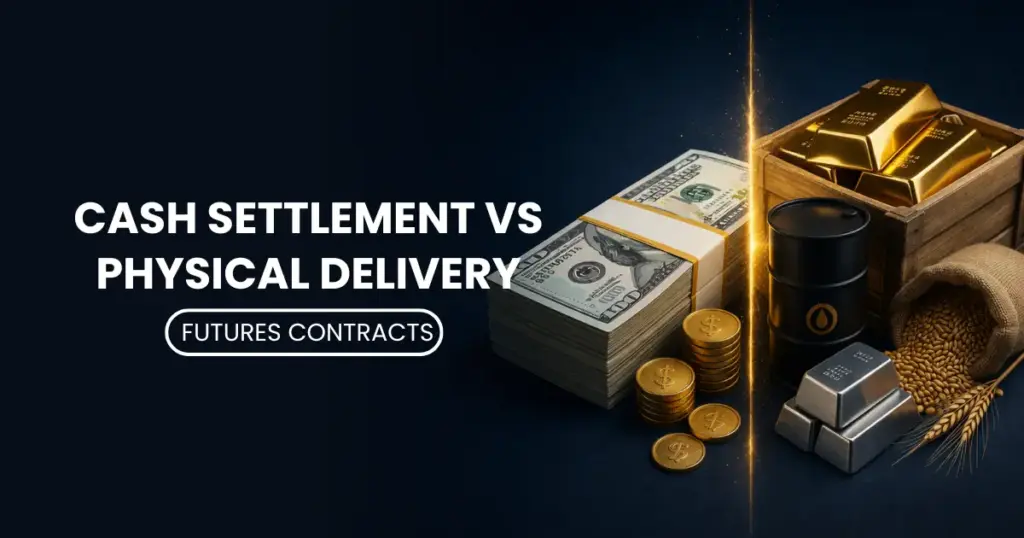
Cash Settlement vs Physical Delivery
Cash Settlement vs Physical Delivery in Trading Cash Settlement vs Physical Delivery: Understanding Futures Contracts If you are exploring the world of futures and derivatives trading, you will quickly encounter two crucial terms: cash settlement and physical delivery. Every futures contract has an expiration date. When that date arrives, the buyer and the seller must fulfill their obligations. How they do this depends entirely on the settlement method outlined in the contract. Understanding how your trades will conclude is vital for managing risk and planning your market strategy. In this guide, we will explore exactly how these two settlement methods work, why they matter, and which one aligns best with your investment goals. Table of Contents What Does “Settlement” Mean in Trading? What is Physical Delivery? How Does Physical Delivery Work in Practice? What is Cash Settlement? Why Do Traders Prefer Cash Settlement? Cash Settlement vs Physical Delivery: The Main Differences Conclusion: Key Takeaways What Does “Settlement” Mean in Trading? Whenever you buy or sell a futures contract, you are entering into a legally binding agreement to buy or sell a specific asset at a predetermined price on a set date in the future. Settlement is simply the final step of this process. It is the mechanism through which the contract is closed out upon its expiration. Depending on the rules of the specific exchange and the asset being traded, the contract will be settled either by actually handing over the underlying asset (physical delivery) or by paying the net financial difference (cash settlement). What is Physical Delivery? Physical delivery is the traditional way futures contracts were settled. Just as the name suggests, it involves the actual, physical transfer of the underlying asset from the seller to the buyer. If you hold a physically delivered contract until expiration, you are legally required to either deliver the goods (if you sold the contract) or take possession of the goods (if you bought the contract). This method is most common in agricultural, energy, and precious metals markets. For example, commercial businesses rely heavily on understanding futures contracts to secure the raw materials they need, such as barrels of crude oil, tons of wheat, or gold bars, at a predictable price to protect their supply chains. How Does Physical Delivery Work in Practice? Let’s say a bakery chain buys a futures contract for 5,000 bushels of wheat to protect against rising flour prices. When the contract expires, the seller must deliver those 5,000 bushels to an exchange-approved warehouse, and the bakery must arrange for the transportation and storage of the actual wheat. Because taking physical possession involves complex logistics, storage costs, and transportation, this method is primarily used by institutional hedgers and commercial producers rather than individual speculators. Access Global Commodities and Futures Trade energy, metals, and agriculture on world-class regulated exchanges. Explore Futures & Options Trading What is Cash Settlement? Cash settlement is a much simpler, more modern approach to closing out a futures contract. Instead of transferring a physical commodity, the buyer and seller simply exchange cash based on the price difference between the original contract price and the final market price at expiration. No physical goods ever change hands. If your trade is profitable at expiration, the exchange credits your account with the cash equivalent of your profits. If the trade is at a loss, the cash difference is deducted from your account. This method was created to allow trading on assets that cannot be physically delivered. For instance, it is impossible to physically deliver the S&P 500 index or an interest rate. Therefore, participating in global stock markets via index futures or trading currency pairs relies entirely on cash settlement. Why Do Traders Prefer Cash Settlement? The vast majority of retail investors and day traders strongly prefer cash settlement. The primary reason is convenience. Trading cash-settled contracts completely removes the logistical nightmare of having to accept delivery of physical goods. You do not need to worry about renting warehouse space for crude oil or hiring trucks for agricultural products. Furthermore, cash settlement provides higher market liquidity. It allows investors to speculate purely on price movements and easily hedge their portfolios using the essentials of derivatives trading without any intention of ever owning the underlying physical asset. Elevate Your Trading Strategy Today Connect with our dealing desk to navigate global markets with confidence. Contact Us to Get Started Cash Settlement vs Physical Delivery: The Main Differences To choose the right approach, it is helpful to look at the direct differences between the two methods: The Final Exchange: Physical delivery requires the actual transfer of physical goods (like gold, oil, or grain). Cash settlement only requires the transfer of money reflecting the profit or loss. Typical Users: Physical delivery is mostly utilized by commercial entities, farmers, and manufacturers who actually need the raw materials. Cash settlement is heavily favored by retail investors, speculators, and institutional funds looking to profit from price changes. Asset Types: Tangible commodities usually offer physical delivery. Intangible assets (like stock indices, interest rates, and certain foreign exchange contracts) are strictly cash-settled. Logistical Costs: Physical delivery involves extra costs for storage, insurance, and transportation. Cash settlement carries zero physical logistical costs, involving only standard trading commissions and fees. Most speculative traders who happen to trade physically delivered commodities simply close out or “roll over” their positions before the expiration date to avoid accidental delivery. Conclusion: Key Takeaways Understanding the difference between cash settlement and physical delivery ensures you are never caught off guard when a contract expires. Here are the core points to remember: Settlement is the final execution of a futures contract at its expiration. Physical Delivery means the actual asset is delivered to the buyer. It is vital for businesses hedging real-world supply chains. Cash Settlement involves paying or receiving the net cash difference of the trade. It is the standard for indices and financial derivatives. Speculators and retail investors generally trade cash-settled contracts or exit physically delivered contracts before expiration to avoid logistical burdens.