Cash Settlement vs Physical Delivery in Trading Cash Settlement vs...
Read MoreFutures Settlement Methods

Introduction
Navigating the financial markets requires a solid understanding of how different instruments operate from the moment you open a position to the moment it closes. In the world of futures, every contract has a specific lifespan. Unlike stocks, which you can hold indefinitely, futures contracts have predetermined expiration dates. When a contract reaches this final date, it must be resolved or “settled.”
Understanding how this resolution happens is crucial for anyone participating in the market, whether you are hedging against price movements or speculating on future trends. Failing to understand the settlement process can lead to unexpected obligations, such as taking delivery of a physical commodity you do not actually want. This comprehensive guide explores exactly what happens when a contract expires, the different ways obligations are met, and how to navigate these final stages seamlessly.
Table of Contents

What Does Settlement Mean in Futures Trading?
In the capital markets, settlement refers to the final step in the lifecycle of a contract. When you enter into a futures agreement, you are legally bound to either buy or sell a specific asset at a predetermined price on a set date in the future.
Settlement is simply the process of fulfilling that legal obligation once the expiration date arrives. Because the futures market caters to a wide variety of participants—from farmers and oil producers to retail speculators and institutional hedge funds—the market provides different mechanisms to close out these agreements. Before you begin trading derivatives, it is vital to check the contract specifications provided by the exchange, as these rules dictate exactly how the final transfer of value will take place.
How Does Cash Settlement Work?
Cash settlement is the most common method used by modern retail and institutional traders. Under this mechanism, no physical goods ever change hands. Instead, the contract is settled purely through a financial transaction.
When a cash-settled contract expires, the clearinghouse compares the original price at which you entered the contract to the final settlement price on the expiration day. If the market moved in your favor, the exchange credits your brokerage account with the profit in cash. If the market moved against you, the loss is deducted from your account balance.
This method is incredibly efficient and is the standard for financial futures, such as stock index futures (like the S&P 500) or interest rate futures. Since it is impossible to physically deliver a “stock index,” these contracts rely entirely on cash transfers. This approach provides immense liquidity and allows participants to speculate on broad market movements without worrying about the logistics of handling underlying assets.
Ready to Explore Cash-Settled Markets?
Access global futures and trade with an award-winning platform
What is Physical Delivery in Futures?
Physical delivery is exactly what it sounds like: the actual exchange of the underlying commodity. If you hold a physically settled contract until expiration, you are obligated to deliver (if you are the seller) or receive (if you are the buyer) the physical asset.
This method is typically associated with agricultural products (like wheat, corn, or soybeans), energy products (like crude oil), and precious metals (like gold or silver). For example, if a commercial bakery buys wheat futures to lock in the price of flour for the coming year, they may hold the contract to expiration and take physical delivery of the grain.
However, for the average investor, taking delivery of 1,000 barrels of crude oil is neither practical nor desired. Therefore, brokers usually have strict risk management protocols in place to prevent retail clients from holding these contracts into the delivery phase.

Cash Settlement vs. Physical Delivery: What is the Difference?
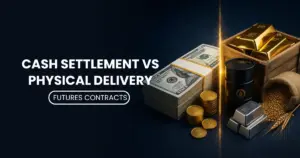
The primary difference lies in the final exchange. Cash settlement requires only the transfer of money to satisfy the contract, making it highly accessible for pure investors and speculators. Physical delivery requires logistical coordination, including transportation, storage, and insurance for physical goods, making it suitable primarily for commercial entities that actually use the commodities in their daily operations.
Another major difference is market participation. Cash-settled markets often see higher daily trading volumes and liquidity because participants do not have to worry about complex delivery logistics. Physical markets are closely tied to real-world supply chains, meaning prices are heavily influenced by physical storage capacities, weather conditions, and global shipping lanes.
Why Do Traders Choose Specific Settlement Methods?
The choice of settlement method is largely dictated by the trader’s ultimate goal in the market.
Speculators and day traders almost exclusively prefer cash-settled contracts. Their goal is to profit from price fluctuations, not to acquire raw materials. Even when speculators trade physically settled commodities like gold or oil, they typically close out their positions before the expiration date to avoid delivery, effectively turning it into a cash-settled trade.
On the other hand, commercial hedgers rely on physical delivery. A jewelry manufacturer needs actual physical gold to create their products. By using physically delivered futures, they can secure their inventory months in advance at a predictable price, completely insulating their business from sudden spikes in commodity costs. When choosing your approach, consulting with experienced financial professionals can help ensure your trading strategy aligns with your logistical capabilities.
What Happens on the Expiration Date?
As the expiration date approaches, trading volume in that specific contract month will begin to drop as participants move their positions to a future month—a process known as “rolling over.”
On the actual expiration day, trading ceases. For cash-settled contracts, a final mark-to-market calculation is performed, and final profits or losses are instantly realized in your account. The contract then ceases to exist.
For physically settled contracts, the exchange initiates the delivery process. The seller is paired with a buyer, and warehouse receipts or shipping certificates are transferred. Because the rules surrounding expiration can be rigid, it is highly recommended that traders keep a close eye on the market calendar and manage their positions well before the final bell rings.
Need Assistance Managing Your Portfolio?
Speak with our experts to navigate market expirations smoothly.
Conclusion & Key Takeaways
Understanding futures settlement methods is a fundamental part of risk management and strategic trading. Whether you are trading digital assets, broad market indices, or physical commodities, knowing how your contract resolves ensures you are never caught off guard.
Key Takeaways:
- Settlement is Mandatory: Every futures contract must be resolved at expiration, either through cash or physical goods.
- Cash Settlement is for Convenience: It involves only the transfer of financial gains or losses, making it ideal for speculators and index traders.
- Physical Delivery is for Commercial Use: It requires the actual transfer of commodities and is primarily used by commercial hedgers who need the raw materials.
- Manage Your Expirations: Retail traders should always close or roll over physically settled contracts before the “first notice date” to avoid accidental delivery obligations.
- Know Your Contract: Always read the exchange specifications to understand exactly how your chosen instrument settles before placing a trade.
Frequently Asked Questions (FAQs)
No. Only a very small percentage (typically around 1% to 2%) of futures contracts ever result in physical delivery. The vast majority of market participants are speculators or financial hedgers who close or “roll over” their positions before the expiration date to avoid handling the physical asset.
You will not wake up with barrels of crude oil or tons of corn delivered to your front door. Modern retail brokers have strict risk management protocols. They will typically issue warnings and automatically liquidate (close) your open positions days before the exchange’s “First Notice Date” to prevent any physical delivery obligations.
No, you cannot choose the settlement method. The settlement type is strictly predetermined by the exchange and is written into the contract’s specifications. For example, E-mini S&P 500 futures are always cash-settled, while standard NYMEX Crude Oil futures are always physically settled.
The final settlement price is calculated by the exchange. Depending on the specific contract, it is usually based on the official closing price of the underlying asset on the expiration date, or a volume-weighted average price (VWAP) calculated over a specific time window just before the market closes.
Disclaimer:
Trading foreign exchange and/or contracts for difference on margin carries a high level of risk, and may not be suitable for all investors as you could sustain losses in excess of deposits. The products are intended for retail, professional and eligible counterparty clients. Before deciding to trade any products offered by PhillipCapital (DIFC) Private Limited you should carefully consider your objectives, financial situation, needs and level of experience. You should be aware of all the risks associated with trading on margin. The content of the Website must not be construed as personal advice. For retail, professional and eligible counterparty clients. Before deciding to trade any products offered by PhillipCapital (DIFC) Private Limited you should carefully consider your objectives, financial situation, needs and level of experience. You should be aware of all the risks associated with trading on margin.
Rolling Spot Contracts and CFDs are complex instruments and come with a high risk of losing money rapidly due to leverage. 78% of our retail client accounts lose money while trading with us. You should consider whether you understand how Rolling Spot Contracts and CFDs work, and whether you can afford to take the high risk of losing your money.
Futures Settlement Methods
Futures Settlement Methods Introduction Navigating the financial markets requires a...
Read MoreMargin Calls & Mark-to-Market
Margin Calls & Mark-to-Market Table of Contents Introduction to Futures...
Read MoreInitial vs. Maintenance Margin
Initial vs. Maintenance Margin Understanding Initial and Maintenance Margins: A...
Read MoreContango & Backwardation Explained
Contango and Backwardation Explained Contango and Backwardation Explained: Navigating Futures...
Read MoreForward-Looking Basis

Forward-Looking Basis in Futures Trading Table of Contents Introduction What...
Read MoreFutures Pricing And Valuation

Futures Pricing And Valuation Table of Contents What is the...
Read MoreHow Futures Exchanges Work

How Futures Exchanges Work Understanding the Mechanics of Global Futures...
Read MoreUnderstanding Futures Contracts
Understanding Futures Contracts Understanding Futures Contracts in Global Markets In...
Read MoreLong vs Short Positions in Derivatives

Long vs Short Positions in Derivatives A Complete Guide for...
Read MoreOver-the-Counter (OTC) vs Exchange-Traded Derivatives
Over-the-Counter (OTC) vs Exchange-Traded Derivatives A Complete Guide for UAE...
Read MoreTypes of Derivatives: Futures, Options, Swaps, and Forwards
Types of Derivatives Futures, Options, Swaps, and Forwards In the...
Read MoreWhat are Derivatives and Their Purpose

What are Derivatives and Their Purpose The financial world is...
Read MoreEssentials of Derivatives Trading

Mastering Market Moves: The Essentials of Derivatives Trading The financial...
Read More