

Convexity in Bond Pricing Explained Master the Basics: What is...
Read MoreModified Duration and Its Impact on Bond Prices
Introduction
Navigating the fixed-income market requires a solid understanding of how external economic factors influence your investments. For bond investors, interest rates act as an invisible hand, constantly pushing and pulling on the value of their portfolios. But how do you measure exactly how much a bond’s price will change when central banks adjust their rates?
Enter the concept of modified duration. While it may sound like complex financial engineering, it is simply a practical tool that investors use to measure risk. Understanding this metric allows you to anticipate market movements, protect your capital, and make informed decisions about your wealth. In this comprehensive guide, we will break down what modified duration is, how it works in simple terms, and why it is a critical component of successful investing.
Table of Contents

What is Modified Duration in Simple Terms?
Whenever you invest in bonds, you face an undeniable reality: bond prices and interest rates move in opposite directions. When interest rates rise, the prices of existing bonds fall, and vice versa.
Modified duration is a specific mathematical measurement that tells you exactly how sensitive a bond’s price is to these interest rate changes. Think of it as a risk indicator. It provides a straightforward estimate of how much a bond’s price will drop or increase for every 1% change in interest rates.
For example, if you are analyzing the broader mechanics of understanding bond duration, knowing the modified duration helps you gauge whether a particular bond is a safe harbor or a highly volatile asset during periods of shifting monetary policy.
How Does Modified Duration Differ from Macaulay Duration?
If you have spent any time reading about bonds, you might have also encountered the term “Macaulay duration.” While they are closely related, they serve two different purposes for an investor.
Macaulay duration measures time. It calculates the weighted average number of years it will take for an investor to get back the original cost of the bond through its cash flows (interest payments and principal return).
Modified duration, on the other hand, takes that time measurement and translates it into price sensitivity. While knowing how long it takes to recoup your money is helpful, modified duration answers the more immediate question: “If the central bank raises rates tomorrow, how much money will my bond lose in value?”
Enhance Your Bond Portfolio Today
Discover tailored fixed-income strategies and global bond options designed to weather market volatility.
How Exactly Does Modified Duration Impact Bond Prices?
The impact of modified duration on price is straightforward once you know the rule of thumb. The modified duration number directly represents the percentage change in the bond’s price for a 1% change in interest rates.
Let’s look at a practical, real-world example using basic bond valuation methods:
Imagine you own a bond with a modified duration of 5 years.
- If interest rates rise by 1%: The price of your bond is expected to fall by approximately 5%.
- If interest rates fall by 1%: The price of your bond is expected to rise by approximately 5%.
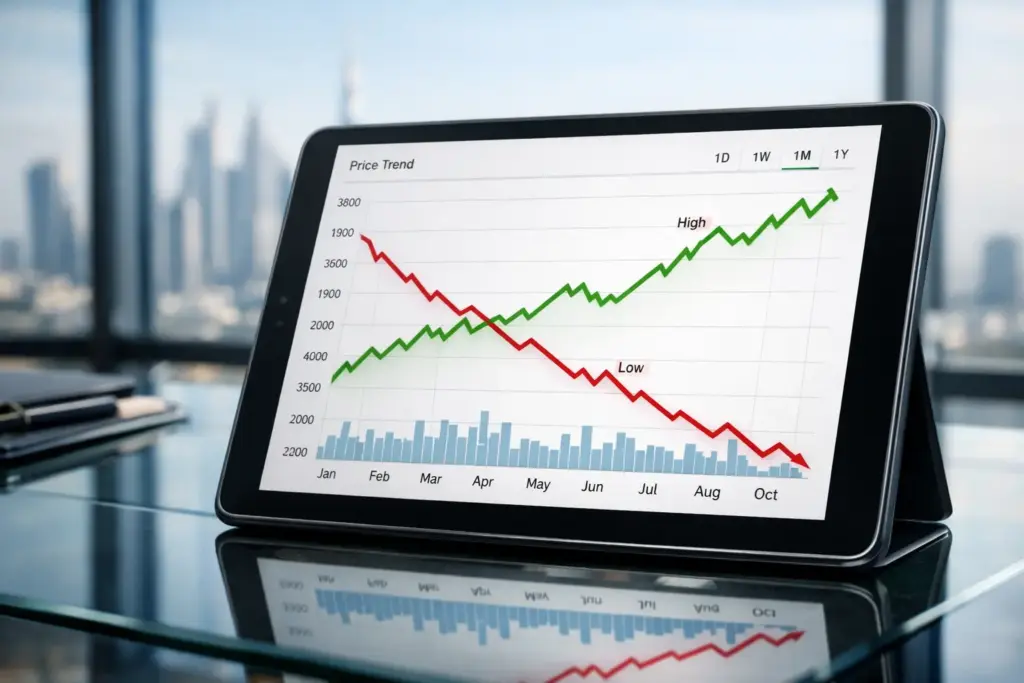
If you hold a bond with a modified duration of 10 years, it will be twice as sensitive. A 1% rise in rates would cause a 10% drop in price. This illustrates why longer-term bonds are generally considered riskier in a rising-rate environment. By keeping an eye on these metrics, investors can better predict how macroeconomic announcements will immediately impact their portfolio’s net asset value.
Why Should Investors Care About Interest Rate Risk?
Interest rate risk is arguably the most significant threat to a fixed-income investor’s capital. Even if you buy a bond from a highly secure government or a blue-chip corporation with zero risk of default, you are still exposed to interest rate risk.
If you plan to hold a bond until it matures, daily price fluctuations might not bother you, as you will still receive your principal back at the end. However, if you need to sell the bond before maturity to free up capital or rebalance your assets, selling during a high-interest-rate period could result in a noticeable loss.
Understanding this dynamic prevents investors from being blindsided by portfolio drawdowns when central banks pivot their policies to combat inflation or stimulate economic growth.
How Can You Use Modified Duration to Build a Better Portfolio?
Savvy investors use modified duration as a steering wheel to navigate changing economic climates. Here is how you can apply this concept strategically:
- In a Rising Rate Environment
If inflation is high and central banks are hiking rates, bond prices will drop. To protect your capital, you should lower the overall modified duration of your portfolio. You can achieve this by shifting capital into short-term bonds. Because they have a lower duration, their prices will barely flinch when rates go up.
- In a Falling Rate Environment
If the economy is slowing down and central banks are cutting rates to encourage borrowing, bond prices will rise. To maximize your capital gains, you would want to increase the modified duration of your portfolio by investing in longer-term bonds. A higher duration means your bonds will experience a larger price jump as rates decline.
By actively adjusting your duration exposure, you transform a passive investment into a strategic asset class that works in tandem with global economic cycles.
Ready to Master Your Investments?
Connect with our experts to proactively manage your portfolio's interest rate risk and discover secure trading solutions.
Conclusion and Key Takeaways
Modified duration is not just a theoretical concept; it is a highly practical tool that brings clarity to the often unpredictable world of investing. By understanding how sensitive your assets are to interest rate changes, you can shift from a reactive investor to a proactive wealth builder.
Key Takeaways:
- Modified duration measures how much a bond’s price will change when interest rates change.
- The relationship is inverse: as rates go up, bond prices go down.
- A modified duration of 6 means a bond will lose roughly 6% of its value if interest rates rise by 1%.
- Lower duration bonds are safer during rising interest rates, while higher duration bonds offer better capital appreciation when rates are falling.
- Monitoring this metric is essential for effective risk management and capital preservation in any fixed-income strategy.
Understanding the mechanics behind market movements is the first step toward long-term financial success. By keeping an eye on modified duration, you ensure your portfolio remains resilient, no matter what direction the market takes next.
Frequently Asked Questions (FAQs)
Is modified duration the same as a bond's maturity date?
No. Maturity is simply the calendar date when the bond issuer pays back your original investment. Modified duration, however, is a measure of price sensitivity—it tells you how much the bond’s value will fluctuate when interest rates change. For most bonds, duration is shorter than the actual time to maturity.
What does a modified duration of "5" actually mean for my bond ETF?
It means that if overall interest rates go up by 1%, the value of your bond ETF will drop by approximately 5%. Conversely, if interest rates fall by 1%, your ETF’s value will increase by roughly 5%. It is essentially a quick cheat sheet for predicting price volatility.
Should I choose high or low duration bonds right now?
It depends on your outlook for interest rates. If you expect central banks to cut rates, higher duration bonds are favorable because their prices will rise more significantly. If you believe rates will go up, sticking to low duration bonds is safer, as they will protect your capital from large price drops.
Does modified duration matter if I hold an individual bond until it matures?
Not really. If you buy an individual bond, hold it to maturity, and the issuer doesn’t default, you will receive your full principal back regardless of what happens to interest rates in the meantime. Modified duration matters most if you plan to sell the bond early or if you invest in bond funds that constantly buy and sell assets.
Disclaimer:
Trading foreign exchange and/or contracts for difference on margin carries a high level of risk, and may not be suitable for all investors as you could sustain losses in excess of deposits. The products are intended for retail, professional and eligible counterparty clients. Before deciding to trade any products offered by PhillipCapital (DIFC) Private Limited you should carefully consider your objectives, financial situation, needs and level of experience. You should be aware of all the risks associated with trading on margin. The content of the Website must not be construed as personal advice. For retail, professional and eligible counterparty clients. Before deciding to trade any products offered by PhillipCapital (DIFC) Private Limited you should carefully consider your objectives, financial situation, needs and level of experience. You should be aware of all the risks associated with trading on margin.
Rolling Spot Contracts and CFDs are complex instruments and come with a high risk of losing money rapidly due to leverage. 78% of our retail client accounts lose money while trading with us. You should consider whether you understand how Rolling Spot Contracts and CFDs work, and whether you can afford to take the high risk of losing your money.

Bond Duration & Interest Rate Risk Explained
Bond Duration & Interest Rate Risk Explained Table of Contents...
Read More
Macaulay Duration Explained
Macaulay Duration Explained Macaulay Duration Explained: A Comprehensive Guide for...
Read More
Modified Duration and Its Impact on Price
Modified Duration and Its Impact on Bond Prices Introduction Navigating...
Read More
Understanding Bond Duration
Understanding Bond Duration Introduction When stepping into the fixed-income market,...
Read More