Asset Allocation

Rebalancing Strategy

Rebalancing Strategy Mastering Portfolio Rebalancing: A Strategic Approach to Risk Management Maintaining a successful investment portfolio requires more than just picking the right assets; it requires the discipline to manage those assets as market conditions evolve. Over time, market fluctuations can cause your original asset allocation—for instance, a balanced 60% stocks and 40% bonds split—to drift. Without intervention, a bull market in equities could inadvertently increase your risk exposure, leaving you vulnerable to sudden downturns. Portfolio rebalancing is the systematic process of bringing these weights back to their original target. By periodically selling assets that have outperformed and reinvesting in those that have lagged, investors can lock in gains and maintain a consistent risk profile. This guide explores the nuances of rebalancing and how it serves as a cornerstone of institutional-grade wealth management. Table of Contents What is portfolio rebalancing and why is it essential for risk management? How does a big market move affect my target asset allocation? What are the primary methods used to trigger a rebalance? Is rebalancing a form of “selling winners and buying losers”? How often should an investor review their portfolio for adjustments? Conclusion: The Long-Term Value of Disciplined Rebalancing What is portfolio rebalancing and why is it essential for risk management? At its core, portfolio rebalancing is the practice of adjusting the weights of an investment portfolio back to its original desired level of diversification. When you first establish an investment strategy, you select an asset allocation based on your risk tolerance and financial goals. For many, this might be a blend of equities and fixed-income instruments designed to weather different economic cycles. Rebalancing is essential because it prevents “style drift.” If stocks perform exceptionally well, they may eventually account for 80% of your portfolio instead of the intended 60%. While this looks good during a rally, it means your portfolio is now significantly riskier than you intended. By rebalancing, you ensure that your emotional response to market volatility does not override your long-term financial plan. How does a big market move affect my target asset allocation? Large market movements create a divergence between your current portfolio value and your strategic intent. For example, during a significant equity market surge, the value of your stock holdings rises faster than your bonds. This naturally increases your exposure to market volatility. Conversely, during a market crash, your equity portion shrinks, potentially leaving you “under-invested” just when future expected returns might be at their highest. When these moves occur, the internal balance of your strategy is disrupted. Without rebalancing, a portfolio originally designed to be “Moderate” can slowly transform into an “Aggressive” portfolio without the investor realizing it. Rebalancing acts as a corrective mechanism, stripping away the excess risk accumulated during a run-up and redeploying capital into undervalued sectors to preserve the integrity of your sector rotation strategy. Professional Wealth Management Navigate the markets with expert guidance Explore Services What are the primary methods used to trigger a rebalance? Professional investors typically utilize two main strategies to determine when to take action: Time-based rebalancing and Threshold-based rebalancing. Time-based rebalancing involves reviewing the portfolio at set intervals—such as quarterly or annually. Threshold-based rebalancing is triggered when an asset class deviates from its target by a specific percentage (e.g., +/- 5%). If your target for derivatives is 10% and it grows to 15% due to a massive move, a rebalance is triggered regardless of how much time has passed. Many sophisticated investors use a hybrid approach, checking the portfolio on a schedule but only executing trades if the deviation exceeds a certain “drift” limit. This minimizes transaction costs while ensuring the portfolio never strays too far from its risk-adjusted path. Is rebalancing a form of “selling winners and buying losers”? While it may feel counterintuitive to sell an asset that is performing well, rebalancing is not about “punishing” winners. Instead, it is about “harvesting” gains. When you sell a portion of an asset that has run up, you are realizing profits at higher valuations. Reinvesting those proceeds into assets that have lagged—which are often trading at more attractive valuations—is a classic technique often used in dividend growth investing. By selling high and buying low, you are effectively positioning the portfolio to benefit from the eventual “mean reversion” of asset prices. It ensures that you are not over-concentrated in a single sector that might be reaching a peak, thereby protecting your capital from the inevitable market correction. Open Your Global Trading Account Trade across global markets with a DFSA-regulated broker. Open An Account How often should an investor review their portfolio for adjustments? The frequency of rebalancing depends on the investor’s specific goals and the volatility of the assets held. For most retail and professional investors, a semi-annual or annual review is sufficient. This timeframe allows you to account for bond yield vs interest rates fluctuations without incurring excessive costs. However, in years characterized by extreme market volatility, more frequent monitoring may be required. The goal is to find the “sweet spot” where the benefits of risk reduction outweigh the costs of execution. Accessing a wide range of global investment products through a professional platform allows for more seamless transitions between positions. Conclusion: The Long-Term Value of Disciplined Rebalancing Portfolio rebalancing is the unsung hero of a successful long-term investment strategy. It is the mechanism that keeps your financial ship on course, ensuring that your risk exposure remains aligned with your personal or institutional tolerance. By systematically selling assets that have surged and buying those that have lagged, you remove the emotional bias that often leads to poor investment decisions during market extremes. For investors seeking to implement these strategies within the world-class regulatory framework of the Dubai International Financial Centre, partnering with an experienced firm is key. At PhillipCapital DIFC, we provide the tools and expertise necessary to manage complex portfolios with precision and professional oversight. Frequently Asked Questions (FAQs) Does rebalancing mean I am selling my best-performing stocks? Technically, yes, but it is a strategic move

Rebalancing Strategy Read More »

Contrarian Investing /Dip Buying

Contrarian Investing / Dip buying Mastering the Art of Contrarian Investing: Strategic “Buy the Dip” Opportunities The financial markets are often driven by two powerful emotions: fear and greed. While most investors flock toward assets reaching new highs, seasoned market participants often look in the opposite direction. Contrarian investing—specifically the “buy the dip” approach—is a sophisticated strategy that involves acquiring high-quality assets when their prices have fallen sharply and market sentiment is overwhelmingly negative. This philosophy assumes that markets frequently overreact to short-term news, creating a disconnect between an asset’s intrinsic value and its current market price. At PhillipCapital, we believe that understanding the mechanics of market rebounds is essential for building a resilient, long-term portfolio. This guide explores the depths of contrarianism, providing the clarity needed to distinguish between a temporary setback and a fundamental decline. Table of Contents What defines a true contrarian investment strategy? Why do markets often overreact to negative news cycles? How can investors distinguish between a “dip” and a “falling knife”? What role does fundamental analysis play in buying the dip? How should risk management be structured in a contrarian portfolio? Conclusion: The Path to Disciplined Contrarianism What defines a true contrarian investment strategy? Contrarianism is not merely about being stubborn or “going against the grain” for the sake of it. It is a disciplined investment framework centered on the belief that the crowd is most wrong at the points of maximum optimism and maximum pessimism. A true contrarian seeks out investment opportunities where the consensus view has pushed prices to an extreme that is no longer supported by economic reality. When you “buy the dip,” you are essentially providing liquidity when others are panicking. This requires a deep understanding of global market trends and the patience to wait for the market to correct its own irrationality. The goal is to accumulate positions in robust assets at a discount, positioning the portfolio for significant capital appreciation when the sentiment eventually shifts back toward the mean. Why do markets often overreact to negative news cycles? Behavioral finance teaches us that humans are prone to cognitive biases, such as “loss aversion” and “herding.” When negative news breaks—be it a geopolitical event or a disappointing earnings report—investors often rush to the exits simultaneously. This mass exodus creates a “liquidity vacuum,” driving prices far below what the actual data justifies. For those engaging in professional wealth management, these overreactions are viewed as temporary “noise.” Markets are reflexive; the lower the price goes due to panic, the higher the eventual expected return becomes for the patient investor. By filtering through the noise, one can identify when a price drop is an emotional response rather than a structural change in the asset’s viability. Secure Your Financial Future Explore bespoke strategies tailored to your risk profile View Our Services How can investors distinguish between a “dip” and a “falling knife”? The most significant risk in contrarian investing is the “falling knife”—an asset whose price is dropping because its fundamental value has been permanently impaired. To distinguish a profitable dip from a value trap, investors must look at the “why” behind the move. A healthy dip is typically characterized by a broad market sell-off where even high-quality equities and derivatives are dragged down by macro sentiment. Conversely, a falling knife often involves a specific internal failure, such as a breach of governance or a redundant business model. Utilizing advanced trading platforms can help investors monitor technical support levels and volume indicators to confirm if a floor is being established before committing capital. What role does fundamental analysis play in buying the dip? Without fundamental analysis, buying a falling asset is nothing more than gambling. A contrarian must be able to calculate the “intrinsic value” of an asset. This involves analyzing balance sheets, cash flow stability, and the competitive landscape. If the intrinsic value remains unchanged despite a 20% drop in share price, the “margin of safety” has increased, making it a textbook “buy the dip” candidate. For investors focused on commodities and currencies, this might mean looking at supply-demand imbalances that the market has temporarily ignored. Fundamental strength provides the conviction necessary to hold a position when the rest of the market is still selling, ensuring that the entry is based on data rather than hope. How should risk management be structured in a contrarian portfolio? Buying assets under pressure requires a rigorous risk management protocol. One should never “go all in” at the first sign of a decline. Instead, a “scaling-in” or dollar-cost averaging approach allows the investor to lower their average entry price if the dip continues. Furthermore, diversification remains paramount. Even the most compelling contrarian play can take longer to rebound than anticipated. By maintaining a balanced portfolio through diversified asset classes, investors ensure that their total capital is not held hostage by a single sector’s recovery timeline. Setting “mental stops” or hard stop-losses based on a change in the fundamental thesis—rather than just price—is what separates successful contrarians from those who hold losing positions indefinitely. Partner with PhillipCapital DIFC Leverage our global expertise to navigate volatile markets. Contact Our Experts Conclusion: The Path to Disciplined Contrarianism Contrarian investing and “buying the dip” are powerful tools for capital growth, provided they are executed with clinical precision and emotional detachment. By recognizing that markets often overreact to short-term stimuli, investors can capitalize on the gap between price and value. The key takeaways for any aspiring contrarian include: Distinguish Sentiment from Reality: Look for price drops driven by panic rather than structural decay. Prioritize Quality: Only buy the dip on assets with strong fundamentals and proven resilience. Exercise Patience: Market rebounds rarely happen overnight; a long-term horizon is your greatest ally. Manage Risk: Use scaling-in techniques and maintain diversification to protect against extended volatility. At PhillipCapital, we provide the institutional-grade insights and robust platforms necessary to execute these sophisticated strategies. Whether you are navigating global equities or looking for value in fixed income, a disciplined approach to market dips can

Contrarian Investing /Dip Buying Read More »

Partial Capital Protection

Partial Capital Protection Partial Capital Protection: The Strategic Bridge Between Security and Growth In the current global financial landscape, investors often face a binary choice: accept the low yields of fixed deposits to ensure safety, or exposure their capital to the full volatility of equity markets to chase growth. However, sophisticated portfolio management rarely deals in absolutes. Partial Capital Protection offers a “middle path”—a structural innovation that allows investors to define their maximum risk tolerance while significantly amplifying their potential returns. This strategy is not merely about “hedging”; it is about optimizing the efficiency of your capital. By agreeing to risk a small, predefined portion of principal (typically 5% to 15%), investors can unlock participation rates that often exceed the performance of the underlying asset itself. In this in-depth guide, we analyze the mechanics, strategic trade-offs, and portfolio applications of partial capital protection. Table of Contents How does Partial Capital Protection function at a structural level? Why choose Partial Protection over 100% Capital Guarantees? Which investor profiles benefit most from this risk-reward profile? What asset classes and indices can be linked to these structures? How do interest rate cycles and volatility impact pricing and returns? Conclusion: Engineering a Resilient Portfolio How does Partial Capital Protection function at a structural level? At its core, a Partially Capital Protected Note (PCPN) is a hybrid financial instrument. It combines the safety of a fixed-income security with the upside potential of a derivative. The “thickness” of this strategy lies in how the internal funding is engineered. When you invest, your capital is essentially split into two distinct buckets: The Zero-Coupon Bond (The Anchor): The majority of your investment (e.g., 85-90%) is used to purchase a zero-coupon bond. Over the investment term, this bond accrues interest and matures at the “protected” value (e.g., returning 90% or 95% of your original capital). This provides the mathematical floor below which your investment cannot fall, barring issuer default. The Option Component (The Engine): The remaining capital is used to purchase call options on a specific underlying asset (like the S&P 500 or Euro Stoxx 50). Because you are accepting a small risk to your principal (Partial Protection), the issuer has more budget to purchase these options compared to a 100% protected product. Why choose Partial Protection over 100% Capital Guarantees? The decision to move from 100% protection to, say, 95% or 90% protection is fundamentally a decision about Opportunity Cost and Participation Rates. In a 100% Capital Protected product, the issuer must use almost all available funds to secure the bond floor, leaving very little cash to buy the growth options. This often results in a low “Participation Rate”—perhaps only capturing 40% or 50% of the market’s rise. If the market goes up 10%, you might only make 4%. However, by accepting just 5% risk (Partial Protection), you drastically increase the budget available for the option component. This creates a leverage effect. Instead of 40% participation, a partially protected note might offer 120% or 150% participation. Scenario A (100% Protection): Market rises 20% → Investor earns 8%. Scenario B (90% Protection): Market rises 20% → Investor earns 30% (assuming 150% participation). For professional investors, risking 10% of the principal to potentially triple the return profile is often considered a highly efficient trade. It transforms the investment from a defensive savings substitute into a genuine growth engine comparable to direct equity trading enhance Your Market Exposure Discover how soft protection floors can double your upside potential. View Investment Solutions Which investor profiles benefit most from this risk-reward profile? Partial Capital Protection is not a “one-size-fits-all” solution; it is engineered for specific stages of the wealth lifecycle and specific market views. The “Cash-Plus” Seeker: High Net Worth Individuals (HNWIs) holding large cash reserves often find that inflation erodes their purchasing power. They are willing to risk a small fraction (e.g., 5%) to aim for double-digit returns, which is impossible with standard deposits. The Tactical Hedger: Professional clients often use these structures to stay invested during uncertain times (e.g., elections or geopolitical tension). They know that exiting the market completely risks missing a rebound, but staying fully invested is too dangerous. Partial protection offers the mathematical middle ground. The Transitioning Investor: For clients moving from a savings-only mindset to an investment mindset, the leap to 100% risk is terrifying. Partial protection acts as a psychological and financial bridge, allowing them to experience global equities with a defined safety net. What asset classes and indices can be linked to these structures? One of the most powerful features of Partial Capital Protection is its versatility. Because the protection is derived from the bond component, the growth component can be linked to almost any liquid asset class. Global Indices: The most common underlying assets are major indices like the S&P 500, NASDAQ 100, or Nikkei 225. These offer broad diversification. Thematic Baskets: Investors can target niche growth areas without taking on stock-specific risk. For example, a note could be linked to an “AI & Robotics” basket. If the sector crashes, your capital is protected. If it booms, you participate. Commodities & Currencies: For those looking to hedge against inflation or currency devaluation, notes can be linked to the price of Gold, Oil, or specific currency pairs available via our trading products. How do interest rate cycles and volatility impact pricing and returns? Understanding the macroeconomic environment is crucial for timing entry into these products. Two main factors drive the attractiveness of Partial Capital Protection: Interest Rates: These products generally offer better terms in a high-interest-rate environment. When rates are high, the zero-coupon bond (the safety floor) costs less to buy. This leaves a larger surplus of cash to buy the growth options, allowing issuers to offer higher participation rates or higher protection levels. Volatility: High market volatility usually makes options more expensive (due to higher premiums). However, for a partial protection investor, volatility can be a double-edged sword. While it makes the “upside” costlier to buy, it also increases the chance of the

Partial Capital Protection Read More »

Risk and Return Profile

Understanding the Risk and Return Profile A Guide for Strategic Investing Table of Contents What Exactly Is a Risk and Return Profile? How Do Different Asset Classes Compare in Terms of Risk? Why Is Standard Deviation Critical for Measuring Volatility? How Does Diversification Alter an Investor’s Risk Profile? What Role Do Risk-Adjusted Ratios Play in Portfolio Selection? How Can Structured Products Engineer a Custom Risk-Return Outcome? Conclusion: Building a Resilient Portfolio Investing is rarely a linear path to profit; it is a calculated negotiation between the desire for growth and the tolerance for uncertainty. For investors in the Dubai International Financial Centre (DIFC) and the broader UAE, distinguishing between “risk” and “return” is not enough. One must understand the Risk and Return Profile—the unique behavioral signature of an investment that dictates how it is likely to perform under various market conditions. Whether you are an institutional client managing family office funds or an individual exploring global equities, defining this profile is the first step toward aligning your capital with your financial goals. What Exactly Is a Risk and Return Profile? A Risk and Return Profile is a comprehensive evaluation of an investment’s potential for financial loss against its potential for gain. It is not merely a label of “high” or “low” risk; it is a spectrum that considers the probability of negative outcomes, the magnitude of potential volatility, and the time horizon required to achieve expected returns. In professional wealth management, this profile serves as a blueprint. It helps investors determine if the “price” of an investment—in terms of sleepless nights or potential capital erosion—is worth the expected reward. For instance, a government bond typically has a conservative profile: low volatility and modest returns. In contrast, emerging market derivatives may offer a high-octane profile with significant upside but equally substantial downside exposure. How Do Different Asset Classes Compare in Terms of Risk? Every asset class carries a distinct DNA regarding how it reacts to economic shifts. Understanding this hierarchy is essential for constructing a balanced portfolio. Fixed Income (Bonds): generally sits at the lower end of the risk spectrum. Sovereign debt from stable economies is often used for capital preservation, though corporate bonds can introduce credit risk in exchange for higher yields. Equities (Stocks): occupy the middle-to-high ground. Owning shares in blue-chip US companies or growth-focused sectors involves accepting market fluctuations. The return potential is theoretically unlimited, but the investor absorbs the full volatility of the market. Derivatives (Futures & Options): are often at the higher end due to leverage. Instruments like Global Futures & Options allow traders to hedge or speculate, but the use of margin can amplify both gains and losses, significantly altering the risk profile. Forex (FX): The currency market is highly liquid but volatile. Trading Spot FX & CFDs involves navigating geopolitical events and central bank policies, creating a profile suited for active traders rather than passive “buy-and-hold” investors. Ready to Diversify Your Portfolio? Explore our range of global asset classes View Trading Products Why Is Standard Deviation Critical for Measuring Volatility? When analysts discuss “risk,” they are often referring to volatility—the degree to which an asset’s price swings around its average. Standard deviation is the statistical tool used to quantify this swing. If an investment has a high standard deviation, its price moves erratically. This erratic behavior defines a “high-risk” profile because the probability of needing to exit the investment during a downturn is higher. For investors managing Institutional Services or family offices, keeping standard deviation within acceptable limits is often more important than chasing the highest possible raw return. It ensures that the portfolio’s value remains relatively stable, facilitating liquidity needs and long-term planning. How Does Diversification Alter an Investor’s Risk Profile? Diversification is the only “free lunch” in finance because it can lower a portfolio’s overall risk profile without necessarily sacrificing expected returns. This works through correlation—or rather, the lack of it. By combining assets that do not move in perfect lockstep, such as US Stocks, ETFs & ADRs with commodities like Gold or Silver, investors can smooth out the ride. When equities dip due to economic cooling, commodities might rise as a hedge against inflation. This interplay reduces the aggregate standard deviation of the portfolio, creating a more efficient risk and return profile than holding any single asset in isolation. What Role Do Risk-Adjusted Ratios Play in Portfolio Selection? Raw returns can be deceptive. A 20% return sounds excellent, but if it required risking a 50% drawdown, the trade-off may not be favorable. This is where risk-adjusted metrics like the Sharpe Ratio come into play. The Sharpe Ratio measures the excess return generated for every unit of risk taken. A higher ratio indicates a more efficient investment. For sophisticated investors, calculating these ratios is vital when comparing Wealth Management strategies. It answers the critical question: “Am I being adequately compensated for the anxiety and uncertainty I am enduring?” If two funds offer the same return, but one has half the volatility, the latter has a superior risk and return profile. How Can Structured Products Engineer a Custom Risk-Return Outcome? One of the most powerful ways to modify a risk profile is through financial engineering. Structured Notes allow investors to reshape the standard payoff of an asset to fit specific views. For example, an investor might desire exposure to the S&P 500 but fears a market correction. A standard equity investment offers no safety net. However, a Capital Protected Note can change this profile entirely, offering participation in the upside while guaranteeing the principal amount at maturity (subject to issuer credit risk). Alternatively, Yield Enhancement notes can generate income in flat markets where traditional equities might stagnate. These tools essentially “bend” the risk-return line to suit the investor’s unique tolerance Customize Your Market Exposure Discover how Structured Notes can protect your capital. Learn About Structured Notes Conclusion: Building a Resilient Portfolio The search for the perfect investment is a myth; the search for the optimal Risk and Return Profile is the reality

Risk and Return Profile Read More »

Sector Rotation Strategy

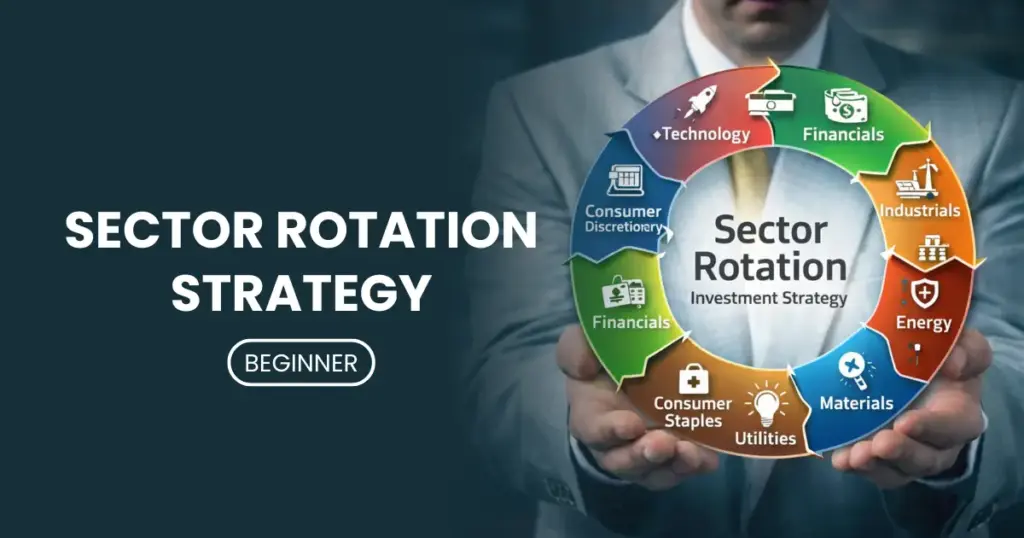
Sector Rotation A Strategic Guide to Investing Through Economic Cycles Table of Contents What is Sector Rotation and why is it a critical strategy for professional investors? How does the Economic Business Cycle dictate market performance? The Early Cycle (Recovery) The Mid Cycle (Expansion) The Late Cycle (Moderation) The Recession Phase (Contraction) What are the most effective instruments for executing Sector Rotation? How can investors mitigate the specific risks associated with Sector Rotation? Conclusion What is Sector Rotation and why is it a critical strategy for professional investors? Sector rotation is an active investment strategy that involves moving capital from one industry sector to another in anticipation of the next stage of the economic cycle. Unlike a passive “buy and hold” strategy, sector rotation assumes that the economy moves in predictable patterns—and that specific sectors perform better during different phases of those patterns. For investors utilizing global market access, the primary objective is to capture “alpha”—excess returns above a benchmark—by overweighting sectors expected to outperform and underweighting those expected to lag. For instance, holding high-growth technology stocks during an economic boom and shifting toward defensive utilities during a slowdown. This strategy requires a “top-down” approach. Investors must first analyze macroeconomic indicators—such as interest rates, inflation data, and GDP growth—before selecting individual equities. By leveraging the research and analysis available through sophisticated trading platforms, investors can identify which sectors are gaining momentum and which are losing steam, allowing for more dynamic portfolio management. How does the Economic Business Cycle dictate market performance? The premise of sector rotation relies heavily on the four distinct stages of the business cycle. Understanding where the global economy sits within this cycle is paramount for successful execution. The Early Cycle (Recovery) The early cycle marks the turnaround from a recession. Economic activity picks up, credit conditions loosen, and consumer confidence begins to rebound. Historically, this is often the most robust phase for equity performance. During this phase, interest rates are typically low, encouraging borrowing and expansion. Investors often find that Consumer Discretionary and Financials outperform, as banks benefit from increased lending and consumers return to spending on non-essential goods. The Mid Cycle (Expansion) This is typically the longest phase of the business cycle. Growth is consistent, but the explosive momentum of the recovery phase stabilizes. The economy is healthy, but inflation may start creeping up, prompting central banks to consider tightening monetary policy. In this environment, market leadership often shifts toward Information Technology and Industrials. These sectors thrive on consistent corporate spending and global demand. Investors utilizing Contracts for Difference (CFDs) can effectively trade the volatility that often accompanies the transition from early to mid-cycle. The Late Cycle (Moderation) As the economy overheats, inflation pressures rise, and growth rates slow. Central banks usually raise interest rates to cool the economy, which tightens liquidity. This environment favors inflation-sensitive sectors. Energy and Materials often outperform here, as commodity prices tend to peak late in the cycle. Conversely, high-valuation growth stocks may suffer as the cost of capital increases. The Recession Phase (Contraction) Economic activity shrinks, corporate profits decline, and the market often enters a bearish trend. The goal here is capital preservation. Investors typically flock to “defensive” sectors—industries that provide essential services regardless of the economic climate. Consumer Staples, Health Care, and Utilities become the safe havens of choice. Because demand for food, medicine, and electricity remains constant, these sectors tend to offer dividends and stability when the broader market falls. Align Your Portfolio with Market Cycles Access global exchanges and trade diverse sectors with Phillip Capital’s advanced platforms. Contact Now What are the most effective instruments for executing Sector Rotation? Executing a sector rotation strategy requires instruments that offer liquidity, low transaction costs, and broad exposure. Exchange Traded Funds (ETFs): For most investors, ETFs are the primary vehicle for sector rotation. Rather than buying 20 different utility companies, an investor can purchase a single Utilities Select Sector ETF. This provides instant diversification within the specific sector. Individual Equities: For those seeking higher potential returns, selecting top-performing stocks within a favored sector is a viable approach. This requires deeper fundamental analysis but allows for greater precision. Futures and Options: Sophisticated investors often use Futures to hedge exposure or bet on the direction of a sector index without owning the underlying assets. This is particularly useful during the recession phase to hedge against downside risk. CFDs (Contracts for Difference): CFDs allow traders to speculate on the price movements of sector indices or specific stocks without owning the asset. This is crucial for sector rotation because it allows for short-selling. If an investor believes the Tech sector is overvalued, they can short a Tech CFD to profit from the decline. Investors trading through Phillip Capital DIFC gain access to these diverse asset classes, ensuring they have the right tools to execute a rotation strategy efficiently across US, Asian, and European markets. Trade Global ETFs and CFDs Get competitive spreads and institutional-grade execution on sector-specific instruments Explore How can investors mitigate the specific risks associated with Sector Rotation? While sector rotation offers the potential for significant returns, it is an active strategy that carries inherent risks, primarily centered around timing and transaction costs. Timing Risk: The market looks forward, while economic data looks backward. If an investor waits for official GDP data to confirm a recession, the market may have already priced it in. Successful rotation requires analyzing leading indicators. False Signals: Economic cycles do not always follow a smooth sine wave. A “soft landing” (where the economy slows but avoids recession) can catch defensive investors off guard as growth stocks rally unexpectedly. Transaction Costs: unlike a buy-and-hold strategy, frequent rotation incurs trading fees and spreads. It is vital to use a broker that offers competitive pricing structures to ensure that transaction costs do not erode the alpha generated by the strategy. Over-concentration: Shifting too heavily into a single sector violates the principles of diversification. Even if the macro analysis is correct, a regulatory change or natural disaster could impact

Sector Rotation Strategy Read More »

Components of Structured Products

Components of Structured Products A Detailed Guide for UAE Investors In the diverse landscape of modern investing, structured products have emerged as a powerful tool for portfolio diversification. They bridge the gap between traditional savings and the dynamic world of the stock market. But what exactly goes inside these “pre-packaged” investments? At Phillip Capital DIFC, we believe that transparency is the foundation of wealth management. To help you make informed decisions, we are breaking down the anatomy of a structured product to understand exactly how they function, how they generate returns, and how they manage risk. What is a Structured Product? A structured product is a hybrid investment instrument. Think of it as a pre-packaged investment strategy that combines two distinct financial elements into a single contract. It typically merges a fixed-income security (like a bond) with a derivative (like an option). This combination allows the product to offer a customized risk-return profile that traditional assets cannot achieve on their own. For example, a structured product can be designed to provide capital protection while still offering the potential to profit if the stock market rises. They are “structured” to meet specific investor goals—whether that is capital preservation, yield enhancement, or access to hard-to-reach asset classes. What are the Main Components of a Structured Product? To truly understand a structured product, you must look under the hood. While they can vary in complexity, almost every structured product consists of three primary components: The Bond Component (Capital Protection): This is the safety engine of the product. The Derivative Component (Return Generator): This is the growth engine. The Underlying Asset: This is the reference market (e.g., Gold, S&P 500, or Apple stock) that determines the performance. These components are wrapped together into a single “Note” or “Certificate” issued by a financial institution. How Does the Bond Component Work? The bond component—often a Zero-Coupon Bond—is responsible for the “capital protection” feature found in many structured notes. Unlike a regular bond that pays you interest (coupons) every year, a zero-coupon bond pays no interest. Instead, it is sold at a deep discount. For example, a bank might sell a bond for $80 today, promising to pay back $100 in five years. In a structured product, the issuer uses a large portion of your investment (say, 80% to 90%) to buy this bond. This ensures that, at maturity, the bond will grow back to the original principal amount (subject to the credit risk of the issuer). This mechanism allows the issuer to promise that you will get your initial capital back, regardless of what the stock market does. Capital Protection with Smart Market Exposure Protect your principal while staying invested. Get Expert Investment Advice What is the Role of the Derivative Component? If the bond safeguards your money, the derivative works to grow it. The remaining portion of your investment (the cash left over after buying the bond) is used to purchase a Derivative, usually a Call Option. An option is a financial contract that gives the holder the right to profit from the movement of an asset. If the market goes up: The value of the option increases significantly, providing the “bonus” return or yield on the structured product. If the market goes down: The option may expire worthless. However, because your principal was secured by the bond component, you simply get your original investment back (in a fully capital-protected product) rather than suffering a loss. This clever engineering allows investors to participate in market upside with defined downside risks. What is the “Underlying Asset”? The “Underlying Asset” (or Reference Asset) is the specific financial instrument that the derivative tracks. The performance of your structured product is directly linked to how this asset performs. Common underlying assets include: Equities: Single stocks (like Tesla or Microsoft) or a basket of stocks. Indices: Major market benchmarks like the S&P 500, NASDAQ 100, or Euro Stoxx 50. Commodities: Gold, Silver, or Oil. Currencies: FX pairs like EUR/USD. For example, if you buy a “Gold-Linked Note,” Gold is the underlying asset. If Gold prices rise, your return increases based on the participation rate defined in the note. What is the “Wrapper”? The “Wrapper” is simply the legal form the product takes. In the UAE and global markets, structured products are most commonly issued as EMTN (Euro Medium Term Notes) or Certificates. Think of the wrapper as the box that holds the Bond and the Option together. It defines the legal terms, the maturity date (when the product ends), and the issuer (the bank responsible for paying you). It is crucial to note that because these are legal debts of the issuer, they carry “Counterparty Risk”—meaning if the issuing bank goes bankrupt, the capital protection might fail. This is why choosing a reputable broker and issuer is vital. Why Should UAE Investors Consider Structured Products? Structured products offer a level of customization that buying shares or ETFs directly cannot match. They allow you to say: “I want exposure to US Tech Stocks, but I don’t want to lose more than 10% of my money if the market crashes.” By adjusting the components (Bond vs. Option ratio), Phillip Capital can help you find products that fit your exact risk appetite, whether you are looking for: Yield Enhancement: Generating higher coupons in sideways markets. Participation: capturing market growth. Protection: Prioritizing the safety of your principal. Ready to Diversify Your Portfolio? Access bespoke structured notes—designed for yield enhancement or capital protection—guided by regulated experts at Phillip Capital DIFC. Open an account Contact us Disclaimer: Trading foreign exchange and/or contracts for difference on margin carries a high level of risk, and may not be suitable for all investors as you could sustain losses in excess of deposits. The products are intended for retail, professional and eligible counterparty clients. Before deciding to trade any products offered by PhillipCapital (DIFC) Private Limited you should carefully consider your objectives, financial situation, needs and level of experience. You should be aware of all the risks associated with

Components of Structured Products Read More »

What is a Bond and How Does It Work?

What is a Bond and How Does It Work? A Complete Guide for Investors In the world of investing, diversifying your portfolio is key to managing risk and ensuring long-term financial health. While stocks often grab the headlines, bonds play a critical, stabilizing role in the global financial markets. But what exactly is a bond, and why do sophisticated investors rely on them to preserve capital and generate steady income? As a leading financial broker in the UAE regulated by the DFSA, PhillipCapital DIFC brings you this comprehensive guide to understanding the mechanics of bonds. Whether you are looking to balance a high-risk equity portfolio or seeking predictable cash flow, this  guide covers everything you need to know. What exactly is a bond in simple terms? Think of a bond as a formal IOU (I Owe You). When you purchase a bond, you are essentially lending money to an entity—typically a corporation or a government—for a defined period. In exchange for this loan, the borrower (the issuer) promises to pay you interest at regular intervals and return the original amount you lent (the principal) once the bond reaches the end of its term (maturity). Unlike stocks, where you buy an ownership stake in a company, buying a bond makes you a creditor. You don’t own a piece of the entity; rather, the entity owes you a debt. This distinction is crucial because, in the event of bankruptcy, bondholders are prioritized over stockholders for repayment, making bonds generally less risky than equities. How does a bond actually work? Can you break down the mechanics? To understand how a bond works, you need to know three key components: Principal (Face Value): This is the amount of money the bond will be worth at maturity. It is also the amount the issuer uses to calculate interest payments. Coupon Rate: This is the interest rate the issuer agrees to pay the bondholder. For example, a bond with a $1,000 face value and a 5% coupon rate will pay you $50 annually. Maturity Date: This is the date when the bond expires, and the issuer must pay back the principal amount to the investor. Here is a practical example: Imagine you buy a 10-year bond from a company with a face value of $10,000 and a coupon rate of 4%. The Investment: You pay $10,000 to the company. The Income: The company pays you $400 every year (usually in two installments of $200) for 10 years. The Return: At the end of the 10 years, the company returns your original $10,000. Ready to start building a stable income stream? Explore our diverse range of global bonds available for trading. Explore Global Bonds What are the different types of bonds available to investors? Bonds are generally categorized by who issues them. The three most common types are: Government Bonds (Sovereign Debt): Issued by national governments. These are often considered the safest investments because they are backed by the “full faith and credit” of the government. For example, U.S. Treasury bonds are a global benchmark for safety. Corporate Bonds: Issued by companies to fund operations, expansion, or research. Because companies are more likely to default than stable governments, corporate bonds typically offer higher interest rates (yields) to attract investors. Municipal Bonds: Issued by local governments (like cities or states) to fund public projects such as schools, highways, and hospitals. In many jurisdictions, the interest earned on these bonds is tax-free.At PhillipCapital DIFC, we provide access to a wide array of these instruments, allowing you to tailor your portfolio’s risk and return profile. Are bonds completely risk-free? What risks should I be aware of? While bonds are generally safer than stocks, they are not without risk. A sophisticated investor must be aware of the following: Credit Risk (Default Risk): The risk that the issuer usually a company—will run out of money and fail to make interest payments or repay the principal. Credit rating agencies (like Moody’s or S&P) assign ratings (e.g., AAA, BBB, Junk) to help you gauge this risk. Interest Rate Risk: Bond prices and interest rates have an inverse relationship. When central banks raise interest rates, the value of existing bonds with lower coupon rates falls. If you need to sell your bond before maturity, you might have to sell it for less than you paid. Inflation Risk: If inflation rises significantly, the fixed income you receive from a bond might lose its purchasing power over time. Unsure which bonds fit your risk appetite? Our experts in Dubai simplify the fixed-income market for you. Contact Now Why should I include bonds in my investment portfolio? Bonds serve several vital functions in a well-rounded investment strategy: Capital Preservation: For investors approaching retirement or those who cannot afford large losses, high-quality bonds offer a way to protect your principal investment. Predictable Income: Unlike the uncertain dividends of stocks, bonds provide a fixed, predictable schedule of cash payments. This is ideal for planning cash flow needs. Diversification: Bonds often behave differently than stocks. When stock markets are volatile or falling, investors often flock to bonds as a “safe haven,” which can help stabilize your overall portfolio value. How do I actually buy a bond? Buying bonds has historically been more complex than buying stocks, often requiring large minimum investments. However, modern platforms have democratized access. You can buy bonds in two main ways: Primary Market: Buying new bonds directly from the issuer when they are first offered. Secondary Market: Buying existing bonds from other investors after they have been issued. As a DFSA-regulated broker, PhillipCapital DIFC offers a seamless, secure platform to access both sovereign and corporate bonds globally. We provide the transparency and execution speed you need to trade effectively. Open Your Account Today Take the next step in your financial journey Open an account Bonds are a cornerstone of the global financial system, offering a balance of safety and income that pure equity portfolios cannot match. By understanding the relationship between issuers, interest rates, and maturity,

What is a Bond and How Does It Work? Read More »