
Trading Strategies

Sector Rotation Strategy

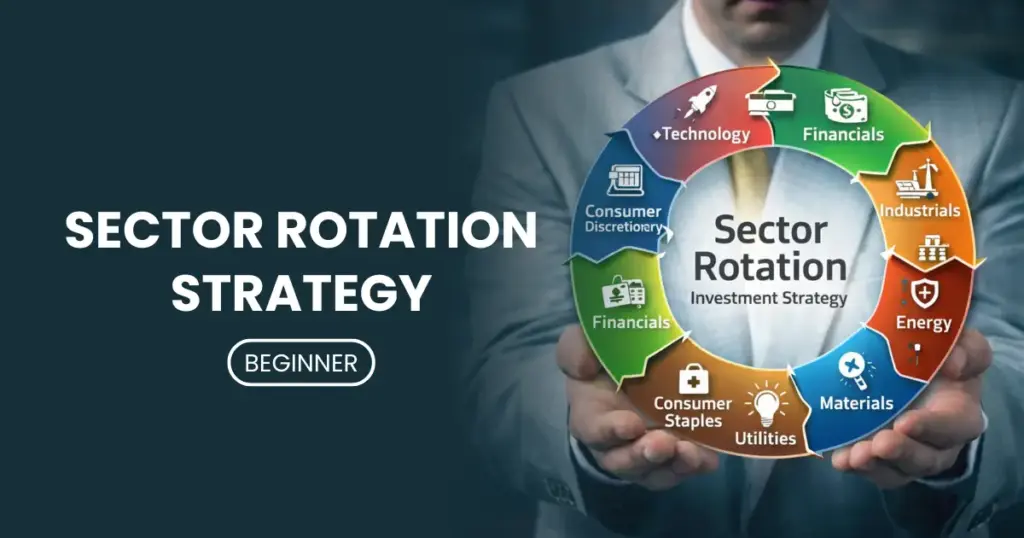
Sector Rotation A Strategic Guide to Investing Through Economic Cycles Table of Contents What is Sector Rotation and why is it a critical strategy for professional investors? How does the Economic Business Cycle dictate market performance? The Early Cycle (Recovery) The Mid Cycle (Expansion) The Late Cycle (Moderation) The Recession Phase (Contraction) What are the most effective instruments for executing Sector Rotation? How can investors mitigate the specific risks associated with Sector Rotation? Conclusion What is Sector Rotation and why is it a critical strategy for professional investors? Sector rotation is an active investment strategy that involves moving capital from one industry sector to another in anticipation of the next stage of the economic cycle. Unlike a passive “buy and hold” strategy, sector rotation assumes that the economy moves in predictable patterns—and that specific sectors perform better during different phases of those patterns. For investors utilizing global market access, the primary objective is to capture “alpha”—excess returns above a benchmark—by overweighting sectors expected to outperform and underweighting those expected to lag. For instance, holding high-growth technology stocks during an economic boom and shifting toward defensive utilities during a slowdown. This strategy requires a “top-down” approach. Investors must first analyze macroeconomic indicators—such as interest rates, inflation data, and GDP growth—before selecting individual equities. By leveraging the research and analysis available through sophisticated trading platforms, investors can identify which sectors are gaining momentum and which are losing steam, allowing for more dynamic portfolio management. How does the Economic Business Cycle dictate market performance? The premise of sector rotation relies heavily on the four distinct stages of the business cycle. Understanding where the global economy sits within this cycle is paramount for successful execution. The Early Cycle (Recovery) The early cycle marks the turnaround from a recession. Economic activity picks up, credit conditions loosen, and consumer confidence begins to rebound. Historically, this is often the most robust phase for equity performance. During this phase, interest rates are typically low, encouraging borrowing and expansion. Investors often find that Consumer Discretionary and Financials outperform, as banks benefit from increased lending and consumers return to spending on non-essential goods. The Mid Cycle (Expansion) This is typically the longest phase of the business cycle. Growth is consistent, but the explosive momentum of the recovery phase stabilizes. The economy is healthy, but inflation may start creeping up, prompting central banks to consider tightening monetary policy. In this environment, market leadership often shifts toward Information Technology and Industrials. These sectors thrive on consistent corporate spending and global demand. Investors utilizing Contracts for Difference (CFDs) can effectively trade the volatility that often accompanies the transition from early to mid-cycle. The Late Cycle (Moderation) As the economy overheats, inflation pressures rise, and growth rates slow. Central banks usually raise interest rates to cool the economy, which tightens liquidity. This environment favors inflation-sensitive sectors. Energy and Materials often outperform here, as commodity prices tend to peak late in the cycle. Conversely, high-valuation growth stocks may suffer as the cost of capital increases. The Recession Phase (Contraction) Economic activity shrinks, corporate profits decline, and the market often enters a bearish trend. The goal here is capital preservation. Investors typically flock to “defensive” sectors—industries that provide essential services regardless of the economic climate. Consumer Staples, Health Care, and Utilities become the safe havens of choice. Because demand for food, medicine, and electricity remains constant, these sectors tend to offer dividends and stability when the broader market falls. Align Your Portfolio with Market Cycles Access global exchanges and trade diverse sectors with Phillip Capital’s advanced platforms. Contact Now What are the most effective instruments for executing Sector Rotation? Executing a sector rotation strategy requires instruments that offer liquidity, low transaction costs, and broad exposure. Exchange Traded Funds (ETFs): For most investors, ETFs are the primary vehicle for sector rotation. Rather than buying 20 different utility companies, an investor can purchase a single Utilities Select Sector ETF. This provides instant diversification within the specific sector. Individual Equities: For those seeking higher potential returns, selecting top-performing stocks within a favored sector is a viable approach. This requires deeper fundamental analysis but allows for greater precision. Futures and Options: Sophisticated investors often use Futures to hedge exposure or bet on the direction of a sector index without owning the underlying assets. This is particularly useful during the recession phase to hedge against downside risk. CFDs (Contracts for Difference): CFDs allow traders to speculate on the price movements of sector indices or specific stocks without owning the asset. This is crucial for sector rotation because it allows for short-selling. If an investor believes the Tech sector is overvalued, they can short a Tech CFD to profit from the decline. Investors trading through Phillip Capital DIFC gain access to these diverse asset classes, ensuring they have the right tools to execute a rotation strategy efficiently across US, Asian, and European markets. Trade Global ETFs and CFDs Get competitive spreads and institutional-grade execution on sector-specific instruments Explore How can investors mitigate the specific risks associated with Sector Rotation? While sector rotation offers the potential for significant returns, it is an active strategy that carries inherent risks, primarily centered around timing and transaction costs. Timing Risk: The market looks forward, while economic data looks backward. If an investor waits for official GDP data to confirm a recession, the market may have already priced it in. Successful rotation requires analyzing leading indicators. False Signals: Economic cycles do not always follow a smooth sine wave. A “soft landing” (where the economy slows but avoids recession) can catch defensive investors off guard as growth stocks rally unexpectedly. Transaction Costs: unlike a buy-and-hold strategy, frequent rotation incurs trading fees and spreads. It is vital to use a broker that offers competitive pricing structures to ensure that transaction costs do not erode the alpha generated by the strategy. Over-concentration: Shifting too heavily into a single sector violates the principles of diversification. Even if the macro analysis is correct, a regulatory change or natural disaster could impact
Sector Rotation Strategy Read More »

Buy and Hold vs. Active Trading

Buy and Hold vs. Trading Understanding the difference in mindset and tax implications The Tortoise or the Hare? Deciding Between Buy and Hold vs. Active Trading When you finally decide to put your money to work in the financial markets, you are immediately faced with a fork in the road. Do you buy a stock, lock it away, and forget about it for ten years? or do you watch the charts like a hawk, looking for quick profits from daily price movements? Neither path is “wrong,” but they are completely different disciplines. It is a bit like the difference between being a landlord collecting rent (investing) and a house flipper selling properties for a markup (trading). At PhillipCapital DIFC, we see clients succeed with both approaches, but usually, the ones who fail are the ones who don’t know which game they are playing. Let’s break down the differences in mindset, lifestyle, and the all-important tax implications for investors here in the UAE. What is the fundamental difference in how I should view the market for these two strategies? The biggest difference isn’t the charts you look at; it’s your relationship with “value” versus “price.” If you adopt a Buy and Hold strategy, you are essentially thinking like a business owner. You don’t care much if the stock price drops 2% tomorrow. You care about whether the company is profitable, has good management, and will be bigger in five years than it is today. You are banking on the compound growth of the company itself. You are looking to capture the long-term upward drift of the economy. Trading, on the other hand, is a relationship with price action and volatility. As a trader, you might not care if a company is “good” or “bad.” You only care if the price is moving. You are looking for inefficiencies—moments where a stock is temporarily overbought or oversold—and you capitalize on that snap-back. A trader can make money even when the market is crashing (by short selling), whereas a buy-and-hold investor usually needs the market to go up to profit. Not sure which asset class suits your style? Explore our full range of Global Products & Services to see where you fit in. View All Products How does the “Mindset” differ? Do I need a specific personality type for each? Absolutely. This is where most people trip up—they try to trade with an investor’s personality, or invest with a trader’s impatience. The Trading Mindset requires: Emotional Iron: You will take losses. It’s unavoidable. A trader has to treat a loss like a business expense—just the cost of buying inventory. If you panic when you see red on your screen, trading will be psychologically exhausting for you. Discipline and Agility: You need to stick to a strict set of rules. If a trade goes wrong, you cut it immediately. You can’t “hope” it comes back. Hope is a dangerous emotion in trading. High Focus: This is active work. You are analyzing technical indicators, news flow, and volume data. The Buy and Hold Mindset requires: Patience (The “Boring” Factor): Doing nothing is harder than it looks. When the market drops 20% in a correction, your brain will scream at you to sell. The buy-and-hold mindset requires you to ignore the noise and trust your original thesis. Optimism: You generally need to believe that the global economy will improve over time. Detachment: You shouldn’t be checking your portfolio app every hour. Once a month is plenty. Living in the UAE, how do the tax implications differ between Trading and Long-Term Investing? This is the “golden question” for our clients in Dubai and the wider UAE. We are in a unique position compared to investors in Europe or the US.In many Western jurisdictions, the taxman treats “Capital Gains” (long-term holding) very differently from “Income” (active trading). Usually, active traders get taxed at a much higher rate because their profits are viewed as a salary.  However, for individual investors in the UAE: Currently, the UAE does not levy personal income tax on individuals for earnings derived from investing in stocks, bonds, or mutual funds in their personal capacity. Whether you buy a stock and sell it ten minutes later (Trading) or ten years later (Buy and Hold), there is generally 0% Capital Gains Tax for individuals. This is a massive advantage. It means your “compounding” happens faster because you aren’t paying a 20% or 30% cut to the government every time you close a winning position. A Note on “Business Activity”: While personal investment is tax-free, if you are trading with such high frequency and volume that it resembles a commercial business operation (managing others’ money or proprietary trading as a corporation), you might fall under the Corporate Tax regime. However, for many retail clients managing their own savings, the tax efficiency remains one of the biggest perks of living here. Note: Always consult with a qualified tax advisor in the UAE to understand your specific liability, especially if you hold US citizenship or are a tax resident of another country. Ready to take advantage of the UAE’s tax-efficient environment? Open Your Account Today Open an account Which strategy is riskier? The standard answer is “Trading is riskier,” but the real answer is nuanced. Trading Risk: The risk here is volatility and leverage. Traders often use margin (borrowed money) to amplify returns. If you use leverage incorrectly, a small move against you can wipe out your account. The risk is immediate and sharp. Buy and Hold Risk: The risk here is time and opportunity cost. If you buy a stock and hold it for 10 years, and that company goes bankrupt (think Kodak or Nokia), you have lost 10 years of capital usage. You can’t just “set it and forget it” blindly; you still need to ensure the company remains fundamentally strong. However, historically speaking, a diversified Buy and Hold portfolio (like holding a global index tracker) has a much higher success rate for the average person than

Buy and Hold vs. Active Trading Read More »

Essentials of Derivatives Trading

Mastering Market Moves: The Essentials of Derivatives Trading The financial world is vast, and for many investors, “derivatives” can sound like a complex buzzword reserved for Wall Street elites. However, derivatives are powerful tools that, when understood, can help manage risk and uncover new opportunities in global markets. At PhillipCapital DIFC, we believe in empowering our clients with knowledge. Whether you are an institutional investor, a family office, or a retail trader looking to diversify, this guide breaks down the basics of derivatives. What exactly is a financial “derivative,” and why is it called that? A derivative is a financial contract between two or more parties that derives its value from an underlying asset, group of assets, or benchmark. Think of it as a side agreement about the future price of something else. This “underlying” asset can be almost anything: a stock (like Apple or Reliance Industries), a commodity (like Gold or Crude Oil), a currency pair (like USD/AED), or even an interest rate. It is called a “derivative” because the instrument itself has no intrinsic value; its worth is entirely derived from the fluctuations of that underlying asset. If the price of gold goes up, the value of a gold derivative will change accordingly, depending on the type of contract you hold. Investors typically use them for two main reasons: Hedging (protecting against price drops) or Speculation (betting on price movements to make a profit). What are the different types of derivatives available to traders? While there are many complex variations, the derivatives market is primarily built on four pillars. At PhillipCapital DIFC, we specialize in providing access to the most liquid and popular of these: Futures Contracts: These are standardized agreements to buy or sell an asset at a predetermined price at a specific time in the future. They are traded on exchanges. For example, you might buy a crude oil future contract expecting the price to rise next month. Options: These contracts give you the right, but not the obligation, to buy (Call Option) or sell (Put Option) an asset at a specific price. This is great for traders who want to limit their downside risk while keeping the upside open. Forwards: Similar to futures but are private, customizable agreements between two parties (Over-the-Counter). They aren’t traded on exchanges. Swaps: These involve exchanging cash flows with another party. For example, a company might swap a variable interest rate loan for a fixed interest rate to gain stability. Trade on 15+ global exchanges Explore our range of Global Futures & Options to see which instruments fit your portfolio View F&O Markets How can derivatives be used for both risk management (Hedging) and profit generation (Speculation)? These are the two distinct “personalities” of derivative trading. The Hedger (The Insurer): Imagine you are a jeweler holding a large inventory of gold. You are worried the price of gold might drop next week, devaluing your stock. You can “hedge” this risk by selling gold futures contracts. If the market price drops, your inventory loses value, but your short position in the futures market makes a profit, balancing out the loss. It acts like an insurance policy.   The Speculator (The Trader): You don’t own the gold, but you study the charts and believe gold prices are about to skyrocket. You can buy a futures contract or a Call Option. You don’t intend to ever take delivery of the physical gold; you are simply planning to sell the contract later at a higher price to generate a return on your capital. Can I trade global markets like the US S&P 500 or Commodities from Dubai? Absolutely. One of the greatest advantages of derivatives is that they erase geographical borders. You don’t need to be on Wall Street to trade American markets, nor do you need to be in London to trade Brent Crude Oil. Through PhillipCapital DIFC, you gain access to over 15 global exchanges, including the CME (Chicago Mercantile Exchange), ICE (Intercontinental Exchange), and DGCX (Dubai Gold & Commodities Exchange). This means you can trade futures and options on major global indices like the S&P 500, NASDAQ 100, or Dow Jones. This is particularly powerful for portfolio diversification. If you believe the US tech sector is going to rally, you can buy a NASDAQ future. If you want to hedge against rising energy costs, you can trade Oil futures—all from a single, regulated account here in the UAE. What is the benefit of trading derivatives on an exchange like Chicago Mercantile Exchange (CME) versus Over-the-Counter (OTC)? Trading on a regulated exchange like the Chicago Mercantile Exchange (CME) , which PhillipCapital provides access to, offers significantly higher safety and transparency compared to OTC trading. No Counterparty Risk: In an OTC trade, if the other guy goes bankrupt, you might not get paid. On an exchange, the Clearing House guarantees the trade. Liquidity: Exchanges bring together thousands of buyers and sellers, making it easier to enter and exit positions instantly. Price Transparency: You can see exactly what price the market is trading at in real-time, ensuring you get a fair deal. Is derivatives trading risky? How can I manage it? It is important to be transparent: yes, derivatives involve risk, primarily due to leverage. Leverage allows you to control a large contract value with a relatively small amount of capital (margin). While this can magnify your profits, it can also magnify your losses if the market moves against you. However, risk can be managed. Successful traders use “Stop-Loss” orders to automatically exit a bad trade before losses spiral. They also limit the amount of capital they risk on any single trade. At PhillipCapital DIFC, we provide institutional-grade tools and risk management support to help you navigate these waters safely. We believe in “educated trading”—understanding the instrument before you invest. Disclaimer: Trading foreign exchange and/or contracts for difference on margin carries a high level of risk, and may not be suitable for all investors as you could sustain losses in excess of deposits. The

Essentials of Derivatives Trading Read More »
