Value Investing Strategy

How to Find Undervalued Stocks

In a world often obsessed with the “next big thing” and rapid-fire price movements, Value Investing stands as a disciplined, time-tested fortress. It is the strategy of the patient, the analytical, and the wise—championed by legends like Benjamin Graham and Warren Buffett. At its core, Value Investing is simple: buying a dollar bill for fifty cents. However, executing this strategy requires a keen understanding of market fundamentals and the right tools to uncover hidden gems.

Below, we answer the most critical questions about this strategy, exploring how you can leverage PhillipCapital DIFC’s global market access to build a robust, long-term portfolio.

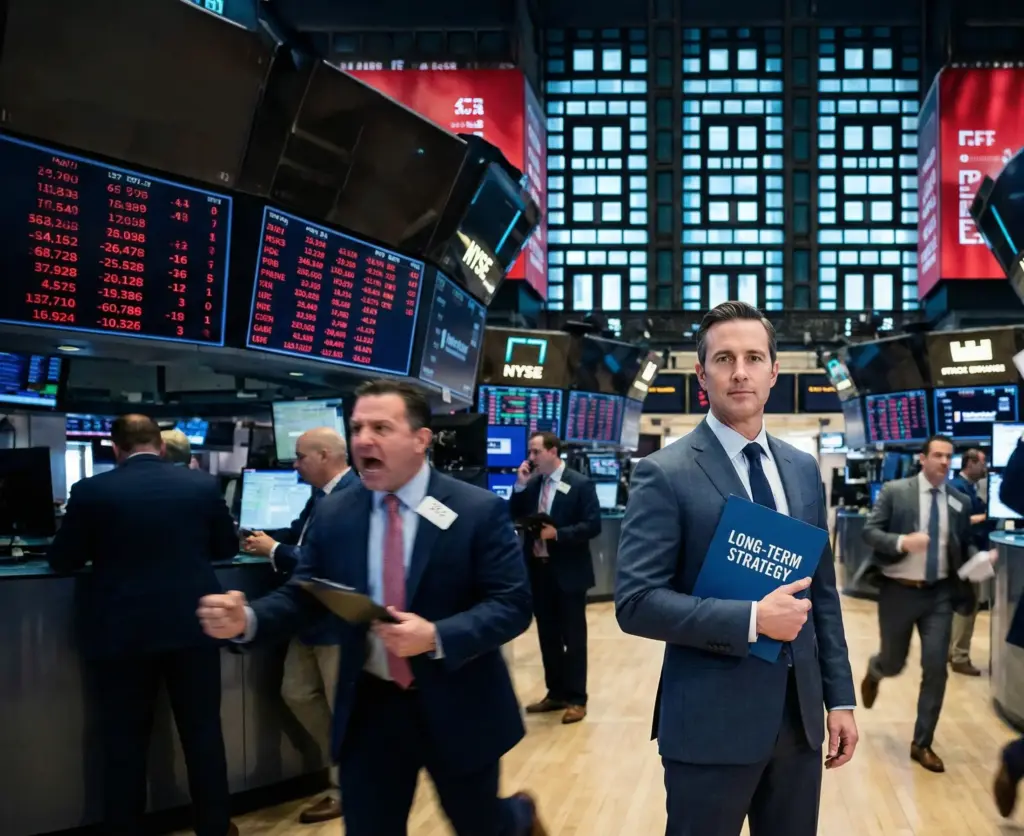
 Value investing is fundamentally different from speculation or momentum trading. While a typical trader might look at stock charts to predict where the price will go in the next hour or day based on trends, a value investor looks at the business itself.

The core philosophy revolves around the concept of Intrinsic Value. This is the “true” worth of a company, based on its tangible assets, earnings potential, dividends, and financial health, independent of its current stock market price. Value investors believe that the market is often irrational—driven by fear and greed—which causes stock prices to detach from their real value.

  • The Disconnect: Sometimes, a perfectly healthy company’s stock price drops because of a general market panic or temporary bad news that doesn’t affect its long-term profitability.
  • The Strategy: A value investor spots this discrepancy. They buy the stock when it is “on sale” (trading below intrinsic value) and hold it until the market corrects itself and the price rises to reflect the company’s true worth.

How do investors determine the "Intrinsic Value" of a stock?

Determining intrinsic value is part art, part science. It involves “Fundamental Analysis”—digging deep into a company’s financial statements. Value investors act like detectives, looking for clues that the market has missed. Here are the primary metrics used:

  1. Price-to-Earnings (P/E) Ratio: This compares the company’s stock price to its earnings per share. A lower P/E ratio compared to industry peers often suggests the stock is undervalued.
  2. Price-to-Book (P/B) Ratio: This compares the market value of the company to its book value (assets minus liabilities). If a stock is trading for less than its book value (a P/B under 1.0), it might be a bargain—essentially selling for less than the cost of its parts.
  3. Debt-to-Equity (D/E) Ratio: Value investors prefer companies with manageable debt. High debt can act as a “Value Trap,” making a cheap stock risky.
  4. Free Cash Flow (FCF): This is the cash a company generates after accounting for cash outflows to support operations. It is the lifeblood of intrinsic value.

Expert Insight: No single number tells the whole story. You must look at the qualitative side too—does the company have a “moat” (competitive advantage)? Is the management team honest and capable?

Need help interpreting the ratios?

Schedule a call with our investment desk to understand how to apply these metrics to your portfolio.

What is the "Margin of Safety," and why is it non-negotiable?

The “Margin of Safety” is the buffer that protects you from your own errors in calculation or unpredictable market shifts. It is the difference between the intrinsic value you calculated and the price you actually pay.

Imagine you calculate a company’s true worth to be $100 per share.

  • Risky Move: Buying it at $95 leaves you very little room for error.
  • Value Investing Move: You wait until the stock price drops to $70. That $30 difference is your Margin of Safety.

If your analysis was slightly off and the company is only worth $90, you still made a profit because you bought it at $70. If you are right and it goes to $100, your returns are substantial. This principle minimizes downside risk, which is the primary goal of any seasoned investor.

How can PhillipCapital DIFC support a Value Investing strategy?

Value investing is a global game. Often, the best bargains aren’t in your local market but could be a manufacturing giant in Japan, a tech firm in the US, or a commodities producer in Europe.

PhillipCapital DIFC acts as your gateway to these opportunities. As a regulated entity in the Dubai International Financial Centre (DIFC), we provide:

  1. Global Market Access: You are not limited to one region. You can hunt for undervalued stocks across major exchanges in the US, Europe, and Asia.
  2. Diverse Asset Classes: Value investing isn’t just for stocks. Distressed bonds or specific commodities can also offer value. We offer access to Equities, Fixed Income, and Futures.
  3. Institutional-Grade Platforms: Our trading platforms (like Phillip9 and Omnesys) offer the historical data and real-time feeds necessary to perform the deep-dive analysis required to spot value anomalies.

Don't limit your hunt for value

Access over 15 global exchanges and diversify your portfolio today.

Is Value Investing risky in a volatile market?

However, the risk lies in “Value Traps.” This happens when a stock looks cheap (low P/E, low price) but is actually cheap for a good reason—perhaps the industry is dying (like film cameras in the digital age) or the company is facing massive litigation.

To mitigate this, you must look beyond the numbers and analyze the Economic Moat:

  • Competitive Advantage: Does the company have a unique product or brand power that competitors can’t steal?

  • Management Integrity: Is the leadership shareholder-friendly with a track record of smart capital allocation?

  • Financial Health: Are the balance sheets clean, or are there hidden liabilities?

Is Value Investing risky in a volatile market?

Patience is the currency of value investing. This is not a “get rich quick” scheme. The market may take months, or even years, to recognize the mistake it made in pricing the stock.

Value investors typically hold stocks for the long term—often 3 to 5 years or more. You are holding the stock until the market price converges with the intrinsic value. During this waiting period, many value stocks also pay dividends, which can provide a steady income stream while you wait for capital appreciation.

Conclusion

Value investing requires discipline, diligent research, and a partner who can give you access to the right markets. It is about ignoring the noise and focusing on the business. At PhillipCapital DIFC, we provide the infrastructure, security, and global reach you need to execute this sophisticated strategy effectively.

Disclaimer:

Trading foreign exchange and/or contracts for difference on margin carries a high level of risk, and may not be suitable for all investors as you could sustain losses in excess of deposits. The products are intended for retail, professional and eligible counterparty clients. Before deciding to trade any products offered by PhillipCapital (DIFC) Private Limited you should carefully consider your objectives, financial situation, needs and level of experience. You should be aware of all the risks associated with trading on margin. The content of the Website must not be construed as personal advice. For retail, professional and eligible counterparty clients. Before deciding to trade any products offered by PhillipCapital (DIFC) Private Limited you should carefully consider your objectives, financial situation, needs and level of experience. You should be aware of all the risks associated with trading on margin.

Rolling Spot Contracts and CFDs are complex instruments and come with a high risk of losing money rapidly due to leverage. 78% of our retail client accounts lose money while trading with us. You should consider whether you understand how Rolling Spot Contracts and CFDs work, and whether you can afford to take the high risk of losing your money.