Types of Derivatives

Futures, Options, Swaps, and Forwards

In the dynamic financial landscape of the UAE, understanding the instruments at your disposal is the first step toward building a resilient portfolio. Derivatives are powerful financial contracts that derive their value from an underlying asset—be it stocks, commodities like Gold, currencies like the AED or USD, or interest rates.

As a DFSA-regulated broker, PhillipCapital DIFC is committed to elevating your market knowledge. In this guide, we break down the four pillars of the derivatives market—Futures, Options, Swaps, and Forwards.

What are Futures Contracts and how are they used in the UAE?

A Future is a standardized contract to buy or sell a specific asset at a predetermined price on a set future date. Unlike “buying the asset now,” you are agreeing to a transaction that will happen later, but the price is locked in today.

In the UAE context, Futures are incredibly popular for two main purposes: Speculation and Hedging.

  • Speculation: Traders might buy a DGCX Gold Future if they believe gold prices will rise, allowing them to profit from the price movement without storing physical gold bars.
  • Hedging: A construction company in Dubai might sell Copper Futures to lock in costs, protecting themselves if material prices spike before a project begins.

At PhillipCapital DIFC, we provide access to global exchanges (like CME and ICE) and local powerhouses like the Dubai Gold & Commodities Exchange (DGCX), giving you access to liquid markets for currencies (like INR/USD), commodities, and indices.

Ready to trade the future?

Access global Futures markets including DGCX Gold and S&P 500 contracts with a regulated broker.

Futures vs Options comparison chart on a trading tablet with a Dubai skyline background.

How do Options differ from Futures?

While Futures obligate you to fulfill the contract, Options give you the right—but not the obligation—to buy or sell. This key difference makes Options a versatile tool for risk management.

  • Call Option: Gives you the right to buy. You might buy a Call on a US Tech stock if you think it will skyrocket but want to limit your risk to just the “premium” you paid for the option.
  • Put Option: Gives you the right to sell. This is often used as “portfolio insurance.” If you own a portfolio of GCC equities and fear a market downturn, buying Put options can offset potential losses in your stock holdings.

Options allow for complex strategies that can profit from volatility itself, not just direction.

What are Swaps and are they available to retail investors?

Swaps are derivatives where two parties exchange cash flows or liabilities from two different financial instruments. The most common type is an Interest Rate Swap, where one party exchanges a floating interest rate for a fixed one to manage exposure to rate fluctuations.

Generally, Swaps are Over-The-Counter (OTC) instruments utilized by institutions, banks, and corporations rather than individual retail traders. For example, a Dubai-based corporation might use a swap to convert a variable-rate loan into a fixed-rate one to predict future expenses accurately.

Note: While standard swaps are institutional, retail traders at PhillipCapital often encounter “Swap Points” or “Rollover fees” in FX trading, which function on similar principles of interest rate differentials between two currencies

What is a Forward Contract and how is it different from a Future?

A Forward is very similar to a Future—it is an agreement to buy/sell at a future date. However, the key difference lies in standardization.

  • Futures are traded on exchanges (like DGCX or CME), meaning they have standardized sizes, expiration dates, and are cleared to remove counterparty risk.
  • Forwards are private, customizable agreements between two parties (OTC). You can customize the exact date and amount.

Because they are private, Forwards carry counterparty risk (the risk the other guy doesn’t pay up). For most individual traders, Futures or CFDs (Contracts for Difference) are the preferred route as they offer the liquidity and safety of a regulated exchange environment.

Looking for customizable exposure?

Experience forward-like flexibility with easy-to-trade CFDs.

Which derivative is right for my strategy?

Choosing the right instrument depends on your goal and capital:

  1. For pure volume & low cost: Futures are often preferred for their tight spreads and high liquidity, especially on indices and commodities.
  2. For strategic flexibility: Options are ideal if you want to define your maximum loss (the premium) upfront while keeping upside potential open.
  3. For short-term flexibility: CFDs (offered by PhillipCapital) allow for smaller contract sizes than Futures, making them suitable for traders who want to hedge specific amounts without buying full-sized contracts.
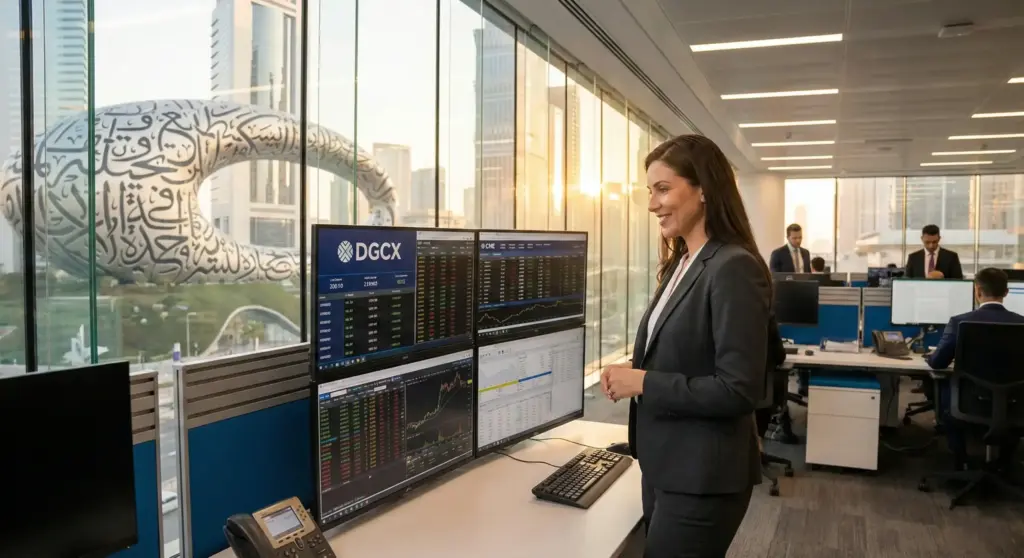
Professional trader analyzing derivatives markets at the PhillipCapital DIFC office.

Why trade derivatives with a regulated broker like PhillipCapital DIFC?

Derivatives involve leverage, which amplifies both gains and risks. Trading with a DFSA-regulated entity ensures:

  • Segregated Accounts: Your funds are kept separate from the company’s operational funds.
  • Transparency: No hidden fees or “phantom” execution.
  • Global Access: One account gives you access to 15+ global exchanges, bridging the gap between Dubai and Wall Street.

Conclusion

Mastering the mechanics of Futures, Options, Swaps, and Forwards transforms how you approach market volatility—turning potential risks into calculated opportunities. Whether you are a corporate treasurer looking to hedge exposure or a savvy trader seeking leverage on the DGCX, the right infrastructure makes all the difference. As a DFSA-regulated broker, PhillipCapital DIFC offers you the security, technology, and global reach needed to trade these complex instruments effectively. Don’t just watch the markets move; position yourself to profit from them with a partner you can trust.

Disclaimer:

Trading foreign exchange and/or contracts for difference on margin carries a high level of risk, and may not be suitable for all investors as you could sustain losses in excess of deposits. The products are intended for retail, professional and eligible counterparty clients. Before deciding to trade any products offered by PhillipCapital (DIFC) Private Limited you should carefully consider your objectives, financial situation, needs and level of experience. You should be aware of all the risks associated with trading on margin. The content of the Website must not be construed as personal advice. For retail, professional and eligible counterparty clients. Before deciding to trade any products offered by PhillipCapital (DIFC) Private Limited you should carefully consider your objectives, financial situation, needs and level of experience. You should be aware of all the risks associated with trading on margin.

Rolling Spot Contracts and CFDs are complex instruments and come with a high risk of losing money rapidly due to leverage. 78% of our retail client accounts lose money while trading with us. You should consider whether you understand how Rolling Spot Contracts and CFDs work, and whether you can afford to take the high risk of losing your money.