Educational Blogs

The Inverse Relationship Between Bond Prices and Yields thumbnail

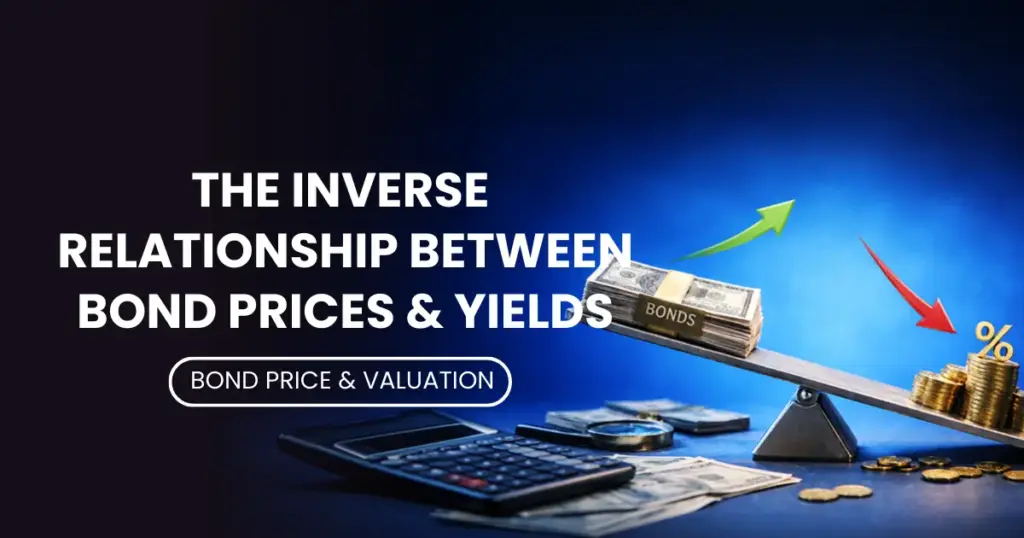
The Inverse Relationship Between Bond Prices and Yields

The Inverse Relationship Between Bond Prices and Yields Table of Contents Understanding the Fundamentals of Fixed Income Why Do Bond Prices and Yields Move in Opposite Directions? The Role of Central Banks and Interest Rates Duration and Convexity: Measuring Sensitivity Strategic Implications for Investors Conclusion Understanding the Fundamentals of Fixed Income What is the core definition of a bond yield compared to its price? To navigate the fixed-income markets effectively, investors must first distinguish between the face value of a bond and its market price. When you purchase a bond, you are essentially lending capital to an issuer—whether a government or a corporation. The price is the amount you pay for that bond today, which can fluctuate based on market demand. The yield, specifically the Yield to Maturity (YTM), is the total return anticipated on a bond if the bond is held until it matures. It is expressed as an annual percentage. While the coupon rate (the interest paid) typically remains fixed, the yield fluctuates dynamically. This distinction is critical because, in the secondary market, bonds rarely trade at their exact face value (par). They trade at a premium or a discount, and this price variance directly dictates the yield an investor effectively locks in. For a deeper dive into the mechanics of these instruments, you can explore our detailed guide on what a bond is and how it works, which breaks down the terminology of coupons, principal, and maturity dates for new investors. Why Do Bond Prices and Yields Move in Opposite Directions? What is the mathematical and logical reasoning behind the “Seesaw Effect”? The inverse relationship between bond prices and yields is often described as a “seesaw.” When prices go up, yields go down, and vice versa. This is not merely a market anomaly; it is a mathematical certainty required to keep the bond competitive with newer issues. Imagine a scenario where you hold a bond issued five years ago with a fixed coupon of 5%. If prevailing interest rates in the economy rise to 6%, no rational investor would pay full price for your 5% bond when they can buy a new one paying 6%. To sell your existing bond, you must lower its price (sell it at a discount) until its effective yield matches the new 6% market rate. Conversely, if market rates fall to 4%, your 5% bond becomes highly valuable. Investors will bid up its price (trading at a premium) until the yield compresses down to match the 4% environment. This dynamic ensures that older bonds remain liquid and tradable against new government and corporate bond issues, maintaining equilibrium in the global capital markets. Master the Fixed Income Market Access Global Bonds & Debentures with PhillipCapital DIFC Explore Bond Trading Products The Role of Central Banks and Interest Rates How do Federal Reserve and Central Bank policies impact this relationship? Central banks, such as the Federal Reserve or the ECB, exert a gravitational pull on bond markets. When a central bank raises its benchmark interest rate to combat inflation, the immediate effect is a reset in the cost of borrowing. New bonds are issued with higher coupons to reflect this higher base rate. As a result, the prices of existing bonds—which carry lower, older coupon rates—must fall significantly to align with the new, higher-yield environment. This period is often characterized by capital depreciation for holders of long-term debt. Conversely, when central banks cut rates to stimulate the economy, existing bonds with higher coupons become prized assets, seeing their prices appreciate. Investors monitoring these macroeconomic shifts often look at Investment Grade vs. Non-Investment Grade bonds to decide where to position their capital, as different credit ratings react with varying volatility to interest rate announcements. Duration and Convexity: Measuring Sensitivity Why does the maturity of a bond amplify price volatility? Not all bonds react to yield changes with the same intensity. This sensitivity is measured by a concept called Duration. In simple terms, duration estimates how much a bond’s price will change for a 1% change in interest rates. Long-term bonds generally have a higher duration than short-term bonds. For instance, a 30-year Treasury bond will see a much sharper price decline than a 2-year Treasury note if interest rates rise by the same amount. This is because the cash flows (coupons) of the long-term bond are further in the future, making them more vulnerable to the eroding effects of inflation and opportunity cost. For professional investors managing complex portfolios, understanding duration (and the curvature of this relationship, known as Convexity) is essential for hedging risk, especially when trading derivatives and futures alongside cash bonds. Strategic Implications for Investors How can investors turn this inverse relationship into an opportunity? Understanding that prices and yields move inversely allows investors to employ specific strategies based on their economic outlook: Riding the Yield Curve: In a stable interest rate environment, investors might buy longer-term bonds to capture higher yields, profiting as the bond rolls down the yield curve closer to maturity. Defensive Positioning: If an investor anticipates a rate hike (which hurts bond prices), they may shorten the duration of their portfolio. This involves shifting capital into short-term bills or notes that are less sensitive to price drops. Capital Appreciation: If an economic slowdown is forecast and rate cuts are expected, investors might lock in long-term bonds. As rates fall, the prices of these bonds will rise, offering significant capital gains on top of the coupon income. Diversification is key here. Integrating fixed income alongside global equities and ETFs ensures that a portfolio can withstand volatility in any single asset class. Expert Guidance for Your Portfolio Speak to our desk for personalized market insights Contact Now Conclusion The inverse relationship between bond prices and yields is the foundational gravity of the fixed-income universe. Whether you are a retail investor seeking stable coupons or a professional trader managing duration risk, acknowledging that higher yields equate to lower prices (and vice versa) is the first step toward clearer market analysis.

The Inverse Relationship Between Bond Prices and Yields Read More »
Growth at Reasonable Price trading strategy thumbnail

Growth at Reasonable Price (GARP)

Growth at Reasonable Price (GARP) Mastering Growth at Reasonable Price (GARP): A Strategic Approach to Balanced Investing As global markets evolve, investors often find themselves torn between two primary philosophies: the high-octane potential of growth stocks and the disciplined safety of value investing. However, there is a sophisticated middle ground that seeks to capture the best of both worlds. Growth at Reasonable Price, or GARP, is an investment strategy designed to identify companies with consistent earnings growth that are not yet overvalued by the market. Table of Contents What defines the GARP investment philosophy? How does GARP differ from pure Growth and Value strategies? What are the key metrics used to identify GARP stocks? Why is the PEG Ratio considered the “Gold Standard” for GARP? How does GARP help in managing portfolio risk? Conclusion: Achieving Long-Term Wealth with GARP What defines the GARP investment philosophy? Growth at Reasonable Price (GARP) is a disciplined equity selection strategy that prioritizes companies demonstrating sustainable earnings growth while trading at sensible valuations. Unlike pure growth investors, who might ignore high Price-to-Earnings (P/E) ratios in favor of rapid expansion, a GARP investor remains price-sensitive. The goal is to avoid “buying the hype” and instead focus on wealth management and structured notes that emphasize fundamental strength. A true GARP candidate typically exhibits higher-than-average growth compared to the broader market but avoids the astronomical valuations often seen in speculative sectors. By seeking out these “under-the-radar” compounders, investors aim for steady capital appreciation with a lower risk of significant drawdowns when market sentiment shifts. How does GARP differ from pure Growth and Value strategies? To understand GARP, one must view it as the bridge between two extremes. Growth investors look for “the next big thing,” often paying a premium for companies with skyrocketing revenues but little to no current profit. Conversely, value investors look for “bargains”—companies trading below their intrinsic value. GARP sits in the “sweet spot.” It avoids the risks highlighted in a growth investing strategy—where high-risk can lead to high volatility—and bypasses the stagnation often found in pure value traps. This balanced approach is essential for identifying quality over speculation. While a value stock might have a P/E of 8 and a growth stock a P/E of 50, a GARP stock might sit comfortably at a P/E of 20, supported by a healthy 20% earnings growth rate. Optimize Your Portfolio Strategy Explore tailored investment avenues with our expert team in the DIFC. Learn More About Our Services What are the key metrics used to identify GARP stocks? Identifying a GARP stock requires a deep dive into fundamental analysis. Investors do not just look at the current price; they look at the trajectory of the business and the efficiency of its operations. Earnings Per Share (EPS) Growth: GARP investors typically look for companies that have grown their earnings by 10% to 20% consistently. Return on Equity (ROE): High ROE indicates that a company is efficiently using its shareholders’ capital to generate profit. Sustainable Margins: Consistent profit margins suggest a company has a competitive “moat” or advantage. For those focusing on global equities, these metrics serve as essential filters to separate speculative volatility from sustainable growth. Why is the PEG Ratio considered the “Gold Standard” for GARP? The Price/Earnings to Growth (PEG) ratio is the primary tool for any GARP practitioner. It is calculated by dividing a stock’s P/E ratio by its earnings growth rate. A PEG ratio of 1.0 suggests that the stock is perfectly valued relative to its growth. A PEG below 1.0 is often considered a “buy” signal, suggesting the market hasn’t fully priced in the company’s growth potential. By using the PEG ratio, an investor can justify paying a slightly higher P/E for a company that is growing rapidly. This mathematical discipline is a core component of institutional services where precision and valuation are paramount for managing large-scale capital. Ready to Trade Global Markets? Access international exchanges with PhillipCapital’s robust trading infrastructure Open an account How does GARP help in managing portfolio risk? Risk management is perhaps the greatest benefit of the GARP approach. During “bull markets,” GARP stocks participate in the upside because of their strong earnings. However, during “bear markets” or periods of high interest rates, they tend to be more resilient than speculative growth stocks because their valuations are grounded in actual profits. By integrating GARP into a broader trading strategy, investors can reduce “valuation risk” while avoiding the “stagnation risk” of declining industries. It provides a cushion of safety without sacrificing the potential for market-beating returns. Conclusion: Achieving Long-Term Wealth with GARP Growth at Reasonable Price is more than just a set of numbers; it is a mindset of moderation and discipline. By focusing on companies that exhibit solid growth prospects while maintaining reasonable P/E and PEG ratios, investors can build portfolios that are both aggressive in their pursuit of returns and conservative in their valuation requirements. For investors navigating the complexities of the global capital markets from the DIFC, the GARP strategy offers a path to sustainable wealth creation. It filters out the noise of market volatility and focuses on the fundamental truth that, over the long term, stock prices follow earnings—but only if the entry price is right. Frequently Asked Questions (FAQs) Is GARP better than pure Value or Growth investing? GARP isn’t necessarily “better,” but it is more balanced. While growth stocks can skyrocket during bull markets and value stocks offer a safety net during downturns, GARP aims for consistent performance across both cycles. It filters out the extreme volatility of high-priced growth and the “value traps” of declining companies, making it a favorite for long-term investors seeking stability. What is a “good” PEG ratio for a GARP investor? Traditionally, a PEG ratio of 1.0 or lower is the gold standard for GARP. A ratio of 1.0 suggests a stock’s valuation is perfectly in sync with its earnings growth. If the PEG is below 1.0, the stock may be undervalued relative to its potential. However, in

Growth at Reasonable Price (GARP) Read More »

Capital Protection Structures thumbnail

Capital Protection Structures

Capital Protection Structures Strategic Wealth Preservation: A Comprehensive Guide to Capital Protection Structures In an era of shifting global economic policies and market unpredictability, the priority for many investors has shifted from aggressive growth to strategic preservation. Capital protection structures have emerged as a cornerstone for those seeking a “middle path”—offering a safety net for principal investment while maintaining a gateway to market-driven returns. Table of Contents What exactly are Capital Protection Structures and how do they function? What are the primary financial components that make these structures work? Who should consider capital-protected strategies for their investment portfolio? What are the different levels of protection available to investors? How do interest rate cycles impact the efficiency of these structures? Conclusion: The Strategic Advantage of Protected Capital What exactly are Capital Protection Structures and how do they function? Capital protection structures are sophisticated financial instruments engineered to ensure that an investor receives at least their initial principal back at the end of a predefined term, regardless of market performance. This is achieved through a structured methodology that splits the investment into two distinct parts: a preservation element and a growth element. The preservation side is typically a low-risk, fixed-income security, while the growth side involves derivatives that track the performance of an underlying asset. When reviewing bespoke investment products and solutions, it becomes clear that these structures are not just about avoiding loss; they are about disciplined participation. By defining the “floor” of the investment, the investor can remain exposed to volatile assets like equities or commodities without the psychological or financial burden of a total capital drawdown. If the underlying market rises, the investor gains; if it falls, the “structure” ensures the initial capital remains intact at maturity. The role of participation rates in growth The “Participation Rate” dictates how much of the underlying asset’s growth the investor actually captures. For instance, a 100% participation rate means you gain 1:1 with the market, whereas a 70% rate means you capture 70% of the upside. This rate is determined at the outset based on the cost of market volatility and current interest levels. What are the primary financial components that make these structures work? The “engine” of a capital-protected product relies on two primary pillars. The first pillar is the Zero-Coupon Bond (ZCB). A significant portion of the initial capital is used to purchase a ZCB that matures at the full face value of the original investment. Because these bonds are bought at a discount, the remaining “leftover” cash forms the second pillar: the Option Component. For clients engaged with institutional-grade financial services, the selection of these components is critical. The “leftover” cash—often called the risk budget—is used to buy call options on an index or asset class. This dual-pillar system ensures that even if the options expire worthless (due to a market drop), the Zero-Coupon Bond has matured to 100% of the original investment value, fulfilling the protection promise. Looking for customizable exposure? Experience forward-like flexibility with easy-to-trade CFDs. Explore CFDs Who should consider capital-protected strategies for their investment portfolio? These structures are particularly effective for “cautiously optimistic” investors. This includes high-net-worth individuals who have already accumulated significant wealth and wish to transition from “wealth creation” to “wealth preservation.” It is also an ideal tool for institutional investors or trustees who are legally mandated to protect the principal of an endowment or pension fund. By following expert educational insights, investors can identify the right time to move capital from pure equity into protected structures. It allows you to stay “in the game” during periods of geopolitical tension or high inflation, providing a mathematical certainty that traditional balanced funds cannot always guarantee. What are the different levels of protection available to investors? Capital protection is not a “one-size-fits-all” concept. Depending on your specific goals, structures can be calibrated to offer different levels of security: 100% Capital Protection: The most conservative tier, ensuring the full return of the initial investment at maturity. Partial Protection (e.g., 90% or 95%): By risking a small portion of the principal (5-10%), the investor frees up more “risk budget” to purchase more options, significantly increasing the participation rate and potential upside. Hard vs. Soft Protection: Hard protection is a guarantee based on the issuer’s credit, whereas soft protection (barrier protection) may only apply if the market doesn’t fall below a specific “knock-out” level. How do interest rate cycles impact the efficiency of these structures? The viability of capital protection is intrinsically linked to the interest rate environment. In a high-interest-rate environment, Zero-Coupon Bonds are much cheaper to purchase because the discount is larger. This leaves more capital available to buy options, resulting in higher participation rates or even “geared” returns. Conversely, in low-interest-rate environments, the bond takes up most of the capital, making it harder to offer high upside potential. Staying updated with regular market updates and analysis allows investors to time their entry into these structures when rates are high to lock in the most favorable growth terms for the coming years. Access our full library of investor education and insights Deepen Your Market Knowledge Subtitle Browse Educational Blogs Conclusion: The Strategic Advantage of Protected Capital Capital protection structures offer a sophisticated solution to the age-old dilemma of risk versus reward. By utilizing a disciplined engineering approach—anchored by fixed-income security and fueled by derivative growth—investors can navigate volatile markets with confidence. These structures provide the peace of mind necessary to stay invested for the long term, ensuring that while the ceiling for growth remains high, the floor for your principal remains solid. Frequently Asked Questions (FAQs) Are “Capital Protected” investments 100% risk-free? While these structures aim to return your initial principal at maturity, they are not entirely risk-free. The protection is a contractual promise by the issuer (usually a bank). If the issuing bank faces a credit default or bankruptcy, the guarantee may be at risk. Additionally, withdrawing funds before the official maturity date can result in penalties or a loss of principal. How do

Capital Protection Structures Read More »

dividend yield thumbnail

understanding dividend yield investment guide

Dividend Yield The Strategic Guide to Dividend Yield: Maximizing Passive Income in Global Markets In the realm of wealth creation, few metrics are as revered—yet as frequently misunderstood—as the dividend yield. For investors navigating the complexities of the Dubai International Financial Centre (DIFC) and broader global markets, dividend yield serves as a vital barometer for evaluating income-generating assets. This guide provides a comprehensive deep dive into the mechanics of dividend yields, their role in total return strategies, and how to distinguish sustainable payouts from “yield traps.” Table of Contents What is Dividend Yield and how is it calculated? Why do investors prioritize Dividend Yield over capital gains? What is the difference between Dividend Yield and Dividend Payout Ratio? What are the risks of a high Dividend Yield? How does Dividend Yield impact a total return strategy? Conclusion: Integrating Yield into a Robust Portfolio What is Dividend Yield and how is it calculated? Dividend yield is a financial ratio that represents the annual dividend income an investment pays out relative to its current share price. It is expressed as a percentage and provides a snapshot of the “cash flow” return an investor receives for every dollar (or dirham) invested in a stock or fund. To calculate the yield, you divide the annual dividends per share by the current price per share. For example, if a company pays an annual dividend of $5 and the stock is trading at $100, the dividend yield is 5%. It is important to note that because the denominator is the stock price, the yield fluctuates daily. When stock prices fall, yields rise, which often attracts value investors looking for entry points in equities and global markets. Understanding these fundamentals is the first step toward mastering stock market basics and building a resilient portfolio. Why do investors prioritize Dividend Yield over capital gains? While capital gains rely on the market’s willingness to pay a higher price for a stock in the future, dividend yield provides tangible, realized profit in the present. This “bird in the hand” philosophy is particularly appealing during periods of market volatility or high inflation. Investors often look toward income-generating assets to create a predictable cash flow, which can be reinvested to take advantage of compounding. Furthermore, companies that consistently pay and grow their dividends are often viewed as financially disciplined. This focus on stability is a cornerstone for those utilizing investment advisory and portfolio management services to preserve capital while seeking consistent growth. For those looking beyond traditional stocks, certain structured notes for UAE investors can also offer yield-enhancement features that complement a dividend-focused strategy. Explore Global Investment Opportunities Access diverse markets and expert insights through our DIFC desk. Explore Trading Products What is the difference between Dividend Yield and Dividend Payout Ratio? It is common for novice investors to confuse these two metrics, but they serve very different purposes. While the Dividend Yield tells you what you are earning, the Dividend Payout Ratio tells you how sustainable that payment is. The payout ratio measures the percentage of a company’s net income that is distributed as dividends. A yield might be an attractive 8%, but if the payout ratio is over 100%, the company is paying out more than it earns—a red flag that a dividend cut is imminent. Sophisticated investors often prefer a moderate yield paired with a conservative payout ratio, ensuring the company retains enough earnings to reinvest in future growth. This level of fundamental analysis is similar to how value investors use the Price-to-Book ratio to evaluate if a company is truly undervalued or simply struggling. What are the risks of a high Dividend Yield? A high dividend yield is not always a sign of a healthy investment. In many cases, an exceptionally high yield is the result of a “yield trap.” This occurs when a company’s stock price has plummeted due to fundamental business failures, causing the yield to spike artificially. If a company’s yield is significantly higher than its industry average, it may indicate that the market expects a dividend slash. Furthermore, high-yield stocks can be sensitive to interest rate hikes. When interest rates rise, fixed-income assets like bonds become more competitive. Investors should compare equity yields against global bonds and debentures to ensure the risk-adjusted return remains favorable. In volatile climates, some investors pivot to structured products that offer “soft protection” barriers, providing a safety cushion that traditional high-yield stocks cannot match. How does Dividend Yield impact a total return strategy? Total return is the sum of capital appreciation plus all dividends and interest earned. Dividend yield plays a massive role in this equation, especially over long horizons. Historically, dividends have accounted for a significant portion of total returns in major indices like the S&P 500. For investors in the UAE, focusing on yield can provide a defensive hedge. By reinvesting these yields, investors can accumulate more shares when prices are low. This strategy is effective across various asset classes, from US stocks and ETFs to the burgeoning Indian equity market. Whether you are looking for growth or income, a balanced approach that accounts for yield ensures your portfolio remains productive even when price growth slows down. Tailored Wealth Solutions Build a resilient portfolio with our expert wealth management team. Learn About Structured Notes Conclusion: Integrating Yield into a Robust Portfolio Dividend yield is a powerful tool for any investor, but it should never be viewed in isolation. A truly effective investment strategy balances the immediate gratification of a high yield with the long-term sustainability of the underlying business. By understanding the relationship between share price, payout ratios, and market cycles, investors can distinguish between genuine value and deceptive traps. As you refine your approach to income investing, remember that the quality of the asset is just as important as the size of the payout. Utilizing professional platforms and expert guidance can help you identify high-quality yields across global markets, ensuring your portfolio remains a source of strength regardless of economic headwinds. Frequently Asked Questions (FAQs)

understanding dividend yield investment guide Read More »

Current Yield vs Yield to Maturity

Current Yield vs Yield to Maturity

Understanding Current Yield vs. Yield to Maturity Understanding Current Yield vs. Yield to Maturity: A Comprehensive Guide for Bond Investors In the sophisticated world of fixed-income investing, understanding how to calculate and interpret returns is paramount. While many investors focus solely on the “coupon rate,” seasoned professionals look deeper into yield metrics to determine the true value of an asset. Two of the most critical metrics used by traders and global institutions are Current Yield and Yield to Maturity (YTM). This guide explores the nuances of these calculations, helping you make informed decisions in the evolving debt markets of the DIFC and beyond. Table of Contents What is the fundamental difference between Current Yield and Yield to Maturity? How is Current Yield calculated and when is it most useful? Why is Yield to Maturity considered the ‘Gold Standard’ for bond valuation? How do market fluctuations impact these yield metrics? Which metric should an investor prioritize for a long-term portfolio? Conclusion: Integrating Yield Analysis into Your Strategy What is the fundamental difference between Current Yield and Yield to Maturity? The primary distinction lies in the scope of the calculation and the time horizon of the investment. Current Yield is a “snapshot” metric. It represents the annual income (interest) an investment generates relative to its current market price. It is a straightforward calculation that does not account for any capital gains or losses that occur if the bond is held until it matures. In contrast, Yield to Maturity (YTM) is a “total return” metric. It is the theoretical rate of return an investor will receive if they hold the bond until its expiration date. YTM is more complex because it factors in the current market price, the par value, the coupon interest rate, and the time remaining to maturity. For those looking to optimize their investment products through fixed-income assets, understanding that YTM accounts for the time value of money is essential for accurate forecasting. How is Current Yield calculated and when is it most useful? Current Yield is calculated by dividing the annual coupon payment by the bond’s current market price. For example, if a bond with a face value of $1,000 pays a 5% coupon ($50) but is currently trading at a discount price of $900, the current yield is 5.55% ($50 / $900). This metric is particularly useful for income-oriented investors who prioritize immediate cash flow over long-term capital appreciation. If you are exploring tailored wealth management solutions to supplement cash flow, the current yield tells you exactly what your “cash-on-cash” return looks like today. However, it is a lagging indicator of total performance because it ignores the eventual profit made when the bond matures at its full face value. Discover Custom Investment Solutions Align your portfolio with expert-led structured strategies. Explore Wealth Management Why is Yield to Maturity considered the ‘Gold Standard’ for bond valuation? Yield to Maturity is widely regarded as the most accurate measure of a bond’s value because it offers a holistic view. It allows investors to compare bonds with different coupons and maturities on an “apples-to-apples” basis. By factoring in the “pull to par”—the process where a bond’s price moves toward its face value as it nears maturity—YTM captures the total economic benefit of the investment.  Professional traders and family offices often use YTM to identify mispriced securities. When the YTM is higher than the current yield, the bond is likely trading at a discount; conversely, when YTM is lower, the bond is trading at a premium. For those utilizing institutional-grade brokerage services, YTM serves as the internal rate of return (IRR) used to determine if a debt instrument meets the specific requirements of a sophisticated investment mandate. How do market fluctuations impact these yield metrics? Bond prices and yields have an inverse relationship. When central banks adjust interest rates, the market price of existing bonds shifts, immediately impacting both yield metrics. If interest rates rise, existing bond prices typically fall to remain competitive with newer issues. This causes the Current Yield to rise (since you are paying less for the same fixed coupon). Simultaneously, the YTM will increase, reflecting the enhanced value of the bond at its new, lower price. Navigating these fluctuations requires a deep understanding of global market risk and return profiles and how macro-economic shifts influence volatility. Understanding these movements is key to “locking in” yields before market cycles turn. Which metric should an investor prioritize for a long-term portfolio? For the majority of long-term investors, Yield to Maturity is the superior metric. It provides a realistic expectation of the annualized return, assuming the issuer does not default and the bond is held until the end. It is the essential metric for compounding wealth over several years. However, Current Yield remains a vital tool for managing liquidity. For instance, when trading via advanced multi-asset platforms, current yield helps you understand the immediate yield-on-cost. This is important for investors who may need to exit positions early or those who require consistent income to fund other global investment opportunities. Master Global Debt Markets Access fixed income, equities, and derivatives with a trusted partner. View Our Investment Products Conclusion: Integrating Yield Analysis into Your Strategy Navigating the complexities of “Current Yield vs. Yield to Maturity” is a hallmark of a sophisticated investor. While Current Yield offers a clear view of immediate income, Yield to Maturity provides the comprehensive “total picture” necessary for long-term capital preservation and growth. By understanding the interplay between these two figures—especially in a fluctuating interest rate environment—investors can better position their portfolios for success. Whether you are seeking immediate income or long-term appreciation, a disciplined approach to yield analysis will ensure your fixed-income strategy remains robust and aligned with your financial objectives in the global capital markets. Frequently Asked Questions (FAQs) Is Current Yield more important than YTM for a short-term investor?  Yes. If you plan to sell a bond within a year, Current Yield is more relevant as it measures your immediate cash flow relative to the

Current Yield vs Yield to Maturity Read More »

How Futures Exchanges Work thumbnail

How Futures Exchanges Work

How Futures Exchanges Work Understanding the Mechanics of Global Futures Exchanges As the global financial landscape becomes increasingly sophisticated, futures exchanges remain the bedrock of price discovery and risk management. For investors looking to hedge exposure or capitalize on market volatility, understanding the structural “engine room” of these marketplaces is essential. Table of Contents What is a Futures Exchange and its Primary Role? How is Trade Execution Standardized? What is the Role of the Clearinghouse in Risk Mitigation? How Does Margin and Daily Mark-to-Market Work? Who are the Primary Participants in a Futures Exchange? Conclusion: The Strategic Value of Exchange-Traded Derivatives What is a Futures Exchange and its Primary Role? A futures exchange is a central financial marketplace where participants buy and sell standardized futures contracts and options on futures. Unlike the decentralized over-the-counter (OTC) markets, an exchange acts as a highly regulated ecosystem that ensures transparency, liquidity, and efficiency. The primary role of the exchange is to provide a platform for price discovery. By bringing together a vast pool of buyers and sellers, the exchange reflects the real-time equilibrium price of assets ranging from gold and crude oil to equity indices. For those exploring diversified investment products in Dubai, the exchange serves as the gateway to global macro trends. It eliminates the need for traders to find a specific counterparty manually, as the exchange’s automated matching engines pair buy and sell orders in milliseconds. How is Trade Execution Standardized? One of the defining features of a futures exchange is standardization. In a private contract, two parties might disagree on quality or delivery dates; however, an exchange removes this ambiguity by pre-defining every variable of a contract except for the price. When you trade through a regulated futures and options broker, you are dealing with contracts that specify the underlying asset, contract size, and fixed expiry dates. This uniformity allows for high-frequency trading and deep liquidity, making it easier for investors to enter and exit positions without significant slippage. This system is what distinguishes these products from more flexible instruments like OTC derivatives and CFDs, which can be tailored to specific needs. Navigate Global Markets with Precision Access world-class exchanges with a trusted, DFSA-regulated partner. Explore Our Futures & Options What is the Role of the Clearinghouse in Risk Mitigation? Perhaps the most critical “hidden” component of a futures exchange is the Clearinghouse. Once a trade is executed between a buyer and a seller, the clearinghouse steps in to become the buyer to every seller and the seller to every buyer. This process is known as novation. By acting as the central counterparty (CCP), the clearinghouse effectively eliminates counterparty risk. If one trader fails to meet their financial obligations, the clearinghouse uses its default fund and margin requirements to ensure the other party is still paid. This institutional guarantee is a core part of futures fundamentals and is why professional traders often prefer accessing international futures markets through regulated entities. How Does Margin and Daily Mark-to-Market Work? To maintain the integrity of the market, futures exchanges operate on a margin system. Unlike equities, where margin is a loan, futures margin is a “performance bond” or good faith deposit. At the end of every trading day, the exchange calculates the gain or loss on your position based on the closing price—a process called Mark-to-Market. This daily settlement prevents the buildup of massive unpaid losses. However, because these products are leveraged, it is crucial to understand the differences between notional and market value. While your deposited margin might be small, your notional exposure to price fluctuations remains at the full contract size, meaning losses can theoretically exceed your initial deposit. Who are the Primary Participants in a Futures Exchange? The ecosystem of a futures exchange is fueled by two main groups whose opposing goals create a balanced market: Hedgers: These are often producers or consumers of physical commodities. They use DGCX futures and gold products to lock in prices and protect themselves against adverse price movements in the local and global markets. Speculators and Investors: This group provides the liquidity that hedgers need. By analyzing long vs short trading strategies, they accept price risk in pursuit of profit, ensuring that there is always a counterparty available for every trade. Tailored Investment Solutions Connect with our experts to align your trading strategy with global benchmarks Contact PhillipCapital DIFC Conclusion: The Strategic Value of Exchange-Traded Derivatives Futures exchanges are far more than just “trading floors”; they are sophisticated regulatory and technological hubs that facilitate global commerce. By providing a standardized environment, eliminating counterparty risk through clearinghouses, and ensuring daily financial transparency, these exchanges allow for efficient capital allocation. For the modern investor, the exchange offers a transparent window into the future value of assets. Whether you are seeking to hedge a corporate currency risk or diversify a retail portfolio, choosing a trusted and regulated broker ensures that you are supported by world-class infrastructure and regulatory oversight throughout your investment journey. Frequently Asked Questions (FAQs) Do I have to take physical delivery of the goods? No, the vast majority of traders never see a physical barrel of oil. Most contracts are either cash-settled or closed out before the expiration date by taking an offsetting position. Only a tiny fraction of participants, typically large industrial hedgers, engage in the actual physical delivery process. Can I lose more than my initial deposit? Yes. Because futures utilize leverage, you are controlling a large contract value with a relatively small amount of capital. If the market moves sharply against you, your losses can exceed your initial margin. This is why strict risk management and maintaining a sufficient account balance are critical. What is the difference between a futures contract and an option? The main difference is obligation. In a futures contract, both the buyer and seller are legally obligated to fulfill the trade at the set price upon expiration. An option, however, gives the buyer the right, but not the obligation, to trade. Why do futures prices differ

How Futures Exchanges Work Read More »

Bond Yield Vs Interest Rates thumbnail

Bond Yield Vs Interest Rates

Bond Yield Vs Interest Rates Understanding the Relationship Between Bond Yields and Interest Rates As a cornerstone of the global financial system, the interplay between bond yields and interest rates dictates the flow of capital, influences corporate borrowing, and shapes investor portfolios. For investors navigating the diverse investment services offered in the UAE and international markets, mastering this inverse relationship is essential for effective risk management and capital preservation. Table of Contents How Do Interest Rates Influence Bond Prices and Yields? What Is the Difference Between a Bond’s Coupon Rate and Its Yield? Why Do Bond Yields Move Inversely to Interest Rates? How Does Inflation Impact the Bond Yield-Interest Rate Dynamic? What Should Investors Consider When Rates Are Rising? Conclusion: Strategic Fixed-Income Positioning How Do Interest Rates Influence Bond Prices and Yields? The relationship between interest rates and bond prices is fundamentally inverse. When central banks—such as the Federal Reserve or the Central Bank of the UAE—adjust benchmark interest rates, they effectively reset the “cost of money” for the entire economy. When interest rates rise, newly issued bonds enter the market offering higher coupon payments to attract investors. Consequently, existing bonds with lower fixed coupons become less attractive. To entice buyers, the market price of these older bonds must drop. Conversely, when interest rates fall, existing bonds with higher fixed coupons become highly sought after, driving their market prices upward. Yield, in its simplest form, represents the return an investor realizes on a bond. As the price of a bond falls, its yield rises (because the fixed interest payment now represents a larger percentage of the discounted purchase price). Understanding this mechanism is vital when reviewing your multi-asset portfolio performance, as it explains why fixed-income valuations may fluctuate despite stable interest payments. What Is the Difference Between a Bond’s Coupon Rate and Its Yield? It is a common misconception among retail investors that a bond’s coupon and its yield are the same. The coupon rate is the fixed annual interest payment established when the bond is issued, expressed as a percentage of the face value. The bond yield, specifically the “Yield to Maturity” (YTM), is a more dynamic metric. It accounts for the coupon rate, the current market price, and the time remaining until maturity. If you purchase a bond at a “premium” (above face value), your yield will be lower than the coupon rate. If purchased at a “discount” (below face value), your yield will be higher. For those engaging in global wealth management, distinguishing between these two is critical. The coupon provides the cash flow, but the yield tells the true story of the investment’s total return potential in the current economic climate. Enhance Your Fixed-Income Strategy Access institutional-grade bond market insights today. Access Global Bond Market Why Do Bond Yields Move Inversely to Interest Rates? The inverse movement is driven by the concept of “Opportunity Cost.” Imagine you hold a bond paying 3% interest. If the central bank raises interest rates, new bonds might start paying 5%. No rational investor would buy your 3% bond at face value when they can get 5% elsewhere. To sell your 3% bond, you must lower the price until the total return (the 3% coupon plus the capital gain when the bond matures at full face value) equals the current market rate of 5%. This “price adjustment” is what causes the yield to climb as rates rise. This phenomenon is a primary driver of volatility in fixed income trading, requiring active duration management to protect against interest rate shocks. How Does Inflation Impact the Bond Yield-Interest Rate Dynamic? Inflation is the silent predator of fixed-income returns. When inflation rises, the purchasing power of a bond’s fixed future payments diminishes. To compensate for this loss of value, investors demand higher yields, which exerts upward pressure on interest rates. Central banks typically respond to high inflation by raising interest rates to cool the economy. This creates a “double-whammy” for bondholders: prices fall due to rising rates, and the real value of the coupons falls due to inflation. Professional investors often look toward diversified investment funds that include inflation-protected securities or shorter-duration assets to mitigate these specific risks during inflationary cycles. What Should Investors Consider When Rates Are Rising? In a rising rate environment, “duration” becomes the most important metric. Duration measures a bond’s sensitivity to interest rate changes. Bonds with longer maturities generally have higher duration, meaning their prices will fall more sharply when rates rise. Investors should consider a “laddering” strategy—staggering the maturities of their bond holdings. As shorter-term bonds mature, the principal can be reinvested into new bonds at higher current interest rates. This proactive approach to asset management ensures that the portfolio is not locked into low yields for an extended period, allowing the investor to benefit from the changing interest rate landscape. Optimize Your Global Portfolio Tailored capital market solutions for professional investors. Contact Now Conclusion: Strategic Fixed-Income Positioning The relationship between bond yields and interest rates is a fundamental pillar of finance that every serious investor must respect. While the inverse correlation between price and yield can introduce volatility, it also creates opportunities for those who understand market cycles. By distinguishing between coupon rates and yields, monitoring inflationary trends, and managing portfolio duration, investors can navigate fluctuating rate environments with confidence. At PhillipCapital DIFC, we provide the expertise and financial brokerage services necessary to help you interpret these market signals and align your fixed-income strategy with your long-term capital goals. Frequently Asked Questions (FAQs) Why do bond prices fall when interest rates go up? When market interest rates rise, new bonds are issued with higher coupons. This makes existing bonds with lower rates less attractive. To sell these older bonds, owners must lower their price until the total return matches the current market rates. Is a higher bond yield always better for an investor? Not necessarily. While a higher yield means more potential return, it often signals higher risk—such as the issuer’s creditworthiness or rising inflation. Additionally,

Bond Yield Vs Interest Rates Read More »

Understanding Exchange Rates thumbnail

Understanding Exchange Rates

Understanding Exchange Rates In an increasingly interconnected global economy, the movement of currencies acts as the pulse of international trade and investment. For investors operating within the Dubai International Financial Centre (DIFC) and beyond, understanding the nuances of exchange rates is not merely an academic exercise—it is a fundamental requirement for risk management and capital preservation. Table of Contents How are exchange rates determined in global financial markets? What is the difference between fixed and floating exchange rate regimes? How do interest rate differentials influence currency value? In what ways do exchange rates impact international investment portfolios? How can investors hedge against foreign exchange risk? Conclusion: The Strategic Importance of Currency Literacy How are exchange rates determined in global financial markets? At its core, an exchange rate is the price of one currency expressed in terms of another. Like any asset in a free market, these prices are primarily driven by the laws of supply and demand. However, the “supply” and “demand” in the Forex market are influenced by a complex web of macroeconomic indicators, geopolitical stability, and market sentiment. At its core, an exchange rate is the price of one currency expressed in terms ofWhen global demand for a country’s goods, services, or financial assets increases, the demand for its currency typically rises, leading to appreciation. Conversely, if a country experiences high inflation, its purchasing power erodes, often leading to a depreciation of its currency relative to others. For sophisticated investors, monitoring economic calendars and market insights is essential to anticipate these shifts. Capital flows, driven by foreign direct investment (FDI) and institutional trading, also play a pivotal role in daily price discovery. another. Like any asset in a free market, these prices are primarily driven by the laws of supply and demand. However, the “supply” and “demand” in the Forex market are influenced by a complex web of macroeconomic indicators, geopolitical stability, and market sentiment. What is the difference between fixed and floating exchange rate regimes? Currency regimes generally fall into two categories, each offering different levels of predictability and risk for the international investor. Floating Exchange Rates A floating rate is determined entirely by the private market through speculation and supply/demand. Most major economies, such as the United States, the UK, and the Eurozone, utilize this system. This flexibility allows the currency to act as a shock absorber for the economy; however, it introduces significant volatility for those holding multi-asset investment portfolios. Fixed (Pegged) Exchange Rates Under a fixed regime, a government or central bank ties its currency’s value to another major currency or a basket of currencies. A prominent example is the UAE Dirham (AED), which is pegged to the US Dollar. This provides immense stability for trade and regional investment, as it eliminates the “currency surprise” when transacting with USD-based assets. Understanding this peg is vital for clients utilizing DIFC-based financial services to fund international ventures. How do interest rate differentials influence currency value? Interest rates provided by central banks are perhaps the most potent drivers of exchange rate fluctuations. There is a high correlation between interest rates and currency demand because higher interest rates offer lenders in an economy a higher return relative to other countries. This creates a phenomenon known as “hot money” flows, where investors move capital to countries with higher yields. For example, if the Federal Reserve increases rates while the European Central Bank remains dovish, the US Dollar often strengthens against the Euro. Investors must analyze these differentials when considering global brokerage opportunities to ensure they are positioned on the right side of the yield curve. It is not just the current rate that matters, but the expectation of future rate hikes or cuts. Maximize Your Global Reach Access international markets with a partner who understands global macro trends. Open An Account In what ways do exchange rates impact international investment portfolios? For a diversified investor, the exchange rate is a “double-edged sword.” Even if the underlying asset—such as a stock or a piece of real estate—increases in value, the gain can be wiped out if the currency in which that asset is denominated weakens against the investor’s base currency. The Impact on Equity Returns If you hold US-denominated equities and the US Dollar appreciates, your returns (when converted back to a local currency or a different base currency) receive a significant boost. However, for corporations, a strong local currency can make exports more expensive and less competitive, potentially hurting the earnings of multinational companies within your portfolio. Diversification Benefits Currency itself can be an asset class. By holding assets in various denominations, investors can achieve a layer of diversification that protects against the devaluation of a single national economy. Leveraging professional wealth management perspectives can help in balancing these currency exposures effectively. How can investors hedge against foreign exchange risk? Risk mitigation is the hallmark of professional investing. To protect against adverse currency movements, institutional and retail investors alike employ several hedging strategies. Forward Contracts: These allow investors to “lock in” an exchange rate for a future date, providing certainty for upcoming transactions. Currency Options: Options give the holder the right, but not the obligation, to exchange money at a set rate, offering protection against downside risk while allowing for participation in favorable movements. Natural Hedging: Some investors align their costs and revenues in the same currency. For those trading in the UAE, the USD peg simplifies this process significantly. By utilizing advanced trading platforms, investors can execute these strategies with precision, ensuring that currency volatility does not undermine their long-term financial goals. Secure Your Investments Protect your portfolio from market volatility with our expert hedging solutions. Contact Our Desk Conclusion: The Strategic Importance of Currency Literacy Understanding exchange rates is far more than tracking daily fluctuations; it is about recognizing the underlying economic forces that dictate the value of capital across borders. From interest rate pivots to the stability provided by pegged regimes like the UAE Dirham, currency dynamics influence every facet of the investment lifecycle. As

Understanding Exchange Rates Read More »

Bond Yield to Maturity thumbnail

Bond Yield to Maturity (YTM)

Bond Yield to Maturity (YTM) Understanding Bond Yield to Maturity (YTM): A Comprehensive Guide for Investors As the global fixed-income landscape evolves, sophisticated investors look beyond simple coupon rates to assess the true value of a debt instrument. Yield to Maturity (YTM) stands as the most critical metric in this assessment, offering a holistic view of a bond’s projected return. For clients engaging in global wealth management, mastering YTM is essential for constructing a resilient, income-generating portfolio. Table of Contents What is Yield to Maturity (YTM) and why does it matter? How is YTM different from Coupon Rate and Current Yield? What are the core components used to calculate YTM? How do interest rate fluctuations impact a bond’s YTM? What are the limitations of relying solely on YTM? How can professional investors use YTM for portfolio optimization? Conclusion: Integrating YTM into Your Investment Strategy What is Yield to Maturity (YTM) and why does it matter? Yield to Maturity (YTM) is the total estimated return an investor can expect to receive if a bond is held until its scheduled expiration date. Unlike nominal yield, which only accounts for interest payments, YTM is a complex internal rate of return (IRR). It assumes that all coupon payments are reinvested at the same rate as the current yield and accounts for the difference between the bond’s current market price and its par value at maturity. For investors navigating fixed income markets, YTM serves as the “gold standard” for comparing bonds with different maturities and coupon rates. It allows for an apples-to-apples comparison, helping you determine whether a discount bond or a premium bond offers a better long-term trajectory for your capital. How is YTM different from Coupon Rate and Current Yield? Understanding the distinction between these three terms is vital for accurate investment advisory services. Coupon Rate: This is the fixed annual interest rate established when the bond is issued. It never changes. Current Yield: This is a simpler calculation (Annual Interest / Current Market Price). It provides a snapshot of the return based on today’s price but ignores the “pull to par”—the gain or loss realized when the bond eventually matures. YTM: This is the comprehensive figure. If you buy a bond at a discount (below its $1,000 face value), your YTM will be higher than the coupon rate because you gain capital appreciation at maturity. Conversely, if bought at a premium, the YTM will be lower than the coupon rate. Explore Fixed Income Opportunities Achieve steady growth with professional bond trading. View Our Services What are the core components used to calculate YTM? Calculating YTM requires a deep dive into the bond’s structure. The formula considers the present value of all future cash flows, equated to the current market price. The key inputs include: Market Price: What you pay for the bond today. Par (Face) Value: The amount the issuer pays back at maturity. Coupon Interest Rate: The periodic payments made to the holder. Time to Maturity: The remaining years until the principal is repaid. Because the YTM formula is an iterative process of trial and error (solving for ‘r’), most investors use financial calculators or professional trading platforms to derive this figure instantly. How do interest rate fluctuations impact a bond’s YTM? There is an inverse relationship between interest rates and bond prices, which directly dictates YTM. When central banks raise interest rates, new bonds are issued with higher coupons. To remain competitive, existing bonds with lower coupons must drop in price. As the market price falls, the YTM rises to meet the prevailing market rates. This volatility is a primary reason why investors utilize multi-asset brokerage services to hedge their positions. Understanding this mechanic helps investors anticipate how their bond portfolio’s total return will shift in a changing macroeconomic environment. What are the limitations of relying solely on YTM? While YTM is powerful, it operates on two major assumptions that may not always hold true: Reinvestment Risk: It assumes every coupon payment is reinvested at the exact same YTM rate. In a falling-rate environment, this may be impossible, leading to a realized return lower than the YTM. Credit Risk: YTM assumes the issuer will make all payments on time. It does not account for the possibility of default. To mitigate these risks, professional investors often look at “Yield to Call” (if the bond is callable) or “Yield to Worst” to prepare for the most conservative outcome. Diversifying into equities and derivatives can also help balance the specific risks associated with fixed-income reinvestment. Consult a Financial Specialist Get personalised insights for your fixed-income portfolio Contact PhillipCapital How can professional investors use YTM for portfolio optimization? Professional investors use YTM as a benchmarking tool for “Yield Curve” strategies. By comparing the YTMs of short-term vs. long-term bonds, one can determine if they are being sufficiently compensated for the risk of time (duration). Furthermore, YTM helps in identifying “undervalued” bonds. If a bond’s YTM is significantly higher than peers with similar credit ratings, it may indicate a buying opportunity—provided the credit fundamentals remain strong. Integrating these insights into your broader capital markets strategy ensures that every dollar is optimized for the highest possible risk-adjusted return. Conclusion: Integrating YTM into Your Investment Strategy Yield to Maturity is more than just a percentage; it is a comprehensive lens through which the value of a debt instrument is revealed. By accounting for the time value of money, reinvestment assumptions, and capital gains/losses, YTM provides the clarity needed to make informed decisions in the complex world of fixed income. Whether you are looking to secure a steady income stream or seeking capital preservation, understanding the nuances of YTM allows you to move beyond basic interest rates and grasp the true earning potential of your investments. Partnering with a sophisticated institution for institutional services can provide the tools and expertise necessary to navigate these calculations and build a world-class portfolio. Frequently Asked Questions (FAQs) Is Yield to Maturity (YTM) the same as the annual interest I will

Bond Yield to Maturity (YTM) Read More »

Understanding Futures Contracts thumbnail

Understanding Futures Contracts

Understanding Futures Contracts Understanding Futures Contracts in Global Markets In the rapidly evolving landscape of global finance, futures contracts stand as one of the most versatile tools for managing risk and capturing market opportunities. As a cornerstone of the derivatives market, these instruments allow participants—from institutional hedgers to sophisticated retail investors—to lock in prices and navigate volatility across diverse asset classes like commodities, currencies, and equity indices. Whether you are looking to protect a portfolio from sudden price swings or seeking to leverage market movements in the international arena, a deep understanding of how these standardized agreements function is essential. This guide provides a professional overview of the mechanics, participants, and strategic importance of futures within a modern investment framework. Table of Contents What is a futures contract and how does it function? How do futures differ from forward contracts? What are the primary components of a futures contract? Who are the main participants in the futures market? What are the risks and rewards of trading futures? Conclusion What is a futures contract and how does it function in modern finance? A futures contract is a standardized legal agreement to buy or sell a specific asset—such as a commodity, currency, or financial instrument—at a predetermined price at a specified time in the future. Unlike discretionary trading, futures obligate the buyer to purchase and the seller to sell the underlying asset unless the position is closed before expiration. These contracts are traded on regulated exchanges, ensuring a high level of transparency and liquidity for investors. In the context of global multi-asset brokerage services, futures serve as a cornerstone for institutional and retail portfolios. They function through a mechanism of daily “marking-to-market,” where the profit or loss is settled at the end of each trading session. This process minimizes default risk and ensures that the exchange remains a secure environment for price discovery. Whether you are looking at equity indices, energy, or metals, futures provide a streamlined way to gain exposure to price movements without needing to own the physical asset immediately. How do futures differ from traditional forward contracts? While both instruments involve the future delivery of an asset, the primary difference lies in standardization and regulation. Forward contracts are private, customizable agreements between two parties (Over-the-Counter or OTC), which introduces a higher degree of counterparty risk. Conversely, futures contracts are standardized in terms of quantity, quality, and delivery dates, and they are cleared through a central clearinghouse. The Role of the Clearinghouse The clearinghouse acts as the intermediary for every trade, becoming the buyer to every seller and the seller to every buyer. This structural integrity is why professional traders often prefer accessing international futures markets through regulated entities. By eliminating the need to worry about the other party’s creditworthiness, futures allow investors to focus purely on market strategy and risk management techniques. Trade with Institutional Precision Leverage world-class infrastructure and deep liquidity. View Trading Solutions What are the primary components of a standardized futures contract? To maintain liquidity and ease of trading, every futures contract follows a strict set of specifications determined by the exchange. Understanding these variables is critical for any investor conducting fundamental and technical analysis on their positions: Underlying Asset: The specific commodity or financial instrument (e.g., Brent Crude, Gold, or S&P 500 Index). Contract Size: The specific amount of the asset (e.g., 100 troy ounces for gold or 1,000 barrels for oil). Expiry Date: The final date on which the contract must be settled or rolled over. Tick Size: The minimum price fluctuation permitted by the exchange. Settlement Method: This can be either physical delivery (actual transfer of the asset) or cash settlement (transfer of the net monetary value). Who are the main participants in the futures market? The futures market thrives on the interaction between two distinct types of participants: Hedgers and Speculators. Hedgers: Protecting Against Volatility Hedgers are typically businesses or producers who use futures to “lock in” prices to protect against adverse price movements. For example, an airline might buy oil futures to hedge against a potential spike in fuel prices. By utilizing bespoke investment solutions, these entities can stabilize their cash flows and manage operational risks effectively. Speculators: Providing Essential Liquidity Speculators, including individual traders and hedge funds, do not intend to take delivery of the physical asset. Instead, they seek to profit from price fluctuations. Their presence is vital as they provide the liquidity that allows hedgers to enter and exit positions easily. Professional speculators often utilize institutional-grade trading tools to execute high-frequency or complex directional strategies. What are the risks and rewards of trading futures? Trading futures offers the advantage of leverage, allowing investors to control a large contract value with a relatively small amount of capital, known as “margin.” This can significantly amplify returns on successful trades. However, leverage is a double-edged sword; it equally amplifies potential losses, which can exceed the initial margin deposit. Effective portfolio diversification requires a disciplined approach to futures. Traders must stay vigilant about margin calls—requests for additional funds if the market moves against their position. Maintaining an authoritative grasp of market trends and utilizing stop-loss orders are essential practices for those navigating the dynamic financial landscape of the DIFC and beyond. Ready to Start Trading?  Open a professional account and trade global assets. Open An Account Conclusion: Harnessing the Power of Futures Understanding futures contracts is a prerequisite for any sophisticated investor looking to navigate global capital markets. By offering a standardized, transparent, and leveraged way to trade everything from commodities to currencies, futures provide unparalleled opportunities for both risk mitigation and capital appreciation. Whether you are a hedger looking to stabilize costs or a speculator seeking market opportunities, the key to success lies in choosing a robust clearing partner and maintaining a rigorous analytical framework. Frequently Asked Questions (FAQs) Can I lose more than my initial investment when trading futures? Yes. Because futures use leverage, you are controlling a large contract value with a relatively small “good faith” deposit (margin).

Understanding Futures Contracts Read More »