Agricultural Futures

Agricultural Futures: Hedging and Trading Strategies

Agricultural futures are among the oldest and most heavily traded financial instruments in the global market. Originally developed in the 19th century to help farmers and commercial buyers manage the unpredictable price fluctuations of crops, these contracts have evolved into a highly sophisticated cornerstone of the modern derivatives market. Today, agricultural futures provide essential risk management capabilities for producers and offer unique, uncorrelated diversification opportunities for global investors. Whether you are a commercial hedger looking to lock in supply costs or a professional investor analyzing global macroeconomic trends, understanding the mechanics of these markets is critical. This guide explores the foundational elements of agricultural futures, detailing how they function, who trades them, and the unique factors that drive their pricing.

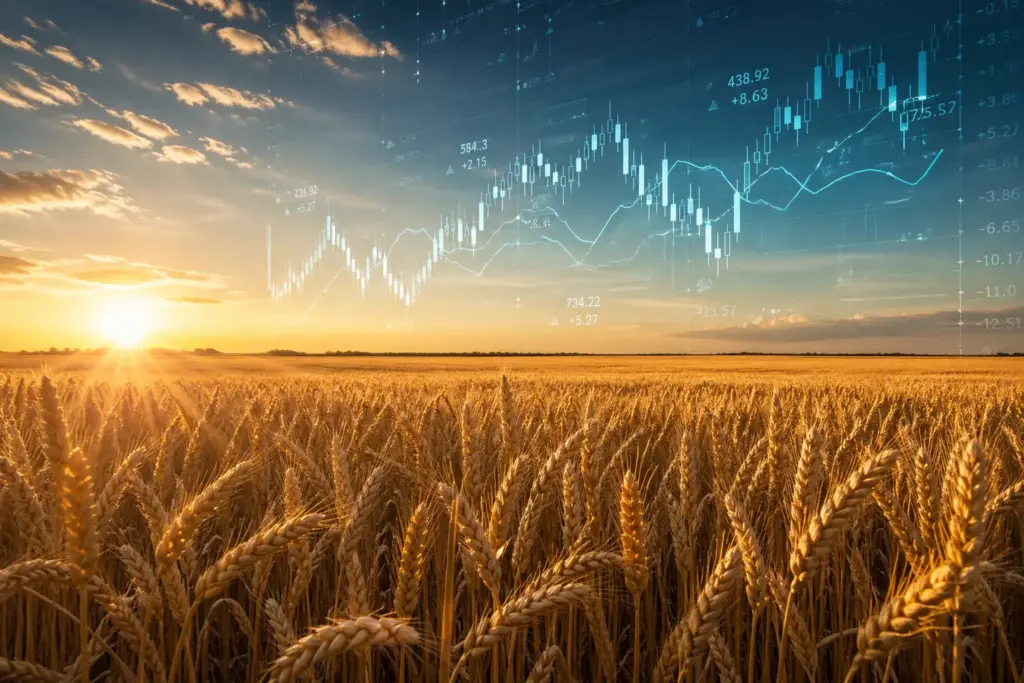
Golden wheat field at sunrise with digital stock market chart overlay in the sky, symbolizing agricultural futures trading

What Are Agricultural Futures and How Do They Work?

At their core, agricultural futures are legally binding agreements to buy or sell a specific quantity and quality of an agricultural product at a predetermined price on a specified future date. These contracts are traded on centralized, regulated exchanges, which ensures high liquidity and standardizes the terms of the trade. For example, a single corn futures contract represents exactly 5,000 bushels of No. 2 yellow corn. This strict standardization allows market participants to trade seamlessly without needing to negotiate individual contract terms or inspect the physical goods themselves.

When an investor enters an agricultural futures trade, they are not immediately paying for or taking delivery of the physical crop. Instead, they deposit an initial margin—a fraction of the contract’s total value—to hold the position. As the market price of the commodity fluctuates daily, the trader’s account is credited or debited accordingly. While some commercial entities do hold these contracts until expiration to take physical delivery of the crops, the vast majority of financial participants close out their positions before the expiration date to settle in cash. For a broader overview of how these agreements operate across different asset classes, exploring the core principles of understanding futures contracts can provide a solid foundation for new investors.

Who Are the Main Participants in the Agricultural Futures Market?

The agricultural futures ecosystem relies on the continuous interaction between two primary groups of participants: hedgers and speculators. Both groups are vital, as their opposing financial goals create a balanced, liquid market that allows for efficient price discovery.

Hedgers are typically individuals or corporations involved in the actual production, processing, or distribution of physical agricultural goods. This group includes farmers, grain elevator operators, food manufacturers, and multinational exporters. Their primary goal is risk mitigation. For instance, a coffee roaster might buy coffee futures to lock in a purchase price months in advance, protecting their profit margins against a sudden spike in global coffee prices.

Speculators, on the other hand, include retail investors, proprietary trading firms, and large commodity trading advisors (CTAs). Speculators generally have no intention of ever handling the physical agricultural products. Instead, they analyze market data and take on the price risk that hedgers are trying to shed, aiming to profit from the directional price movements of the commodities. This dynamic between risk mitigation and profit-seeking is the bedrock of market liquidity, a concept deeply rooted in futures fundamentals. By providing capital and taking the opposite side of hedgers’ trades, speculators ensure that farmers and manufacturers can always find a buyer or seller when needed.

Ready to Diversify with Commodities?

Access global agricultural futures markets with advanced trading infrastructure.

What Are the Most Traded Agricultural Commodities?

The agricultural futures market is broad, but trading volume is heavily concentrated in a few key categories that drive the global food and energy supply chains. These commodities are generally divided into two main classifications: grains and oilseeds, and “soft” commodities.

Grains and Oilseeds: This category dominates agricultural trading volumes. Contracts for Corn, Wheat, and Soybeans are heavily traded due to their dual use as human food and livestock feed, as well as their role in biofuel production. These contracts are predominantly traded on major exchanges like the Chicago Board of Trade (CBOT). Because these crops are planted and harvested on strict seasonal schedules, their futures contracts are highly sensitive to planting intentions and seasonal weather reports.

Soft Commodities: “Softs” refer to agricultural products that are typically grown rather than extracted or mined, and are usually cultivated in tropical or subtropical climates. The most actively traded soft commodities include Coffee, Sugar, Cocoa, and Cotton. Traded primarily on the Intercontinental Exchange (ICE), these commodities are highly susceptible to localized weather events, labor strikes, and changes in export policies in key producing nations like Brazil, India, and the Ivory Coast.

How Do Supply, Demand, and Global Events Impact Prices?

Unlike equities, which are driven by corporate earnings and interest rates, agricultural futures are intrinsically tied to the physical realities of the natural world. The fundamental driver of agricultural prices is the delicate balance between global supply and demand.

Supply is notoriously vulnerable to sudden shocks. Weather phenomena such as El Niño or La Niña can cause devastating droughts or floods in major agricultural basins, drastically reducing crop yields. Additionally, geopolitical events play a massive role. Tariffs, export bans, or conflicts in key producing regions can abruptly cut off global supply lines, causing futures prices to spike. On the demand side, shifting dietary habits, population growth in emerging markets, and the increasing use of crops for renewable biofuels constantly reshape consumption projections.

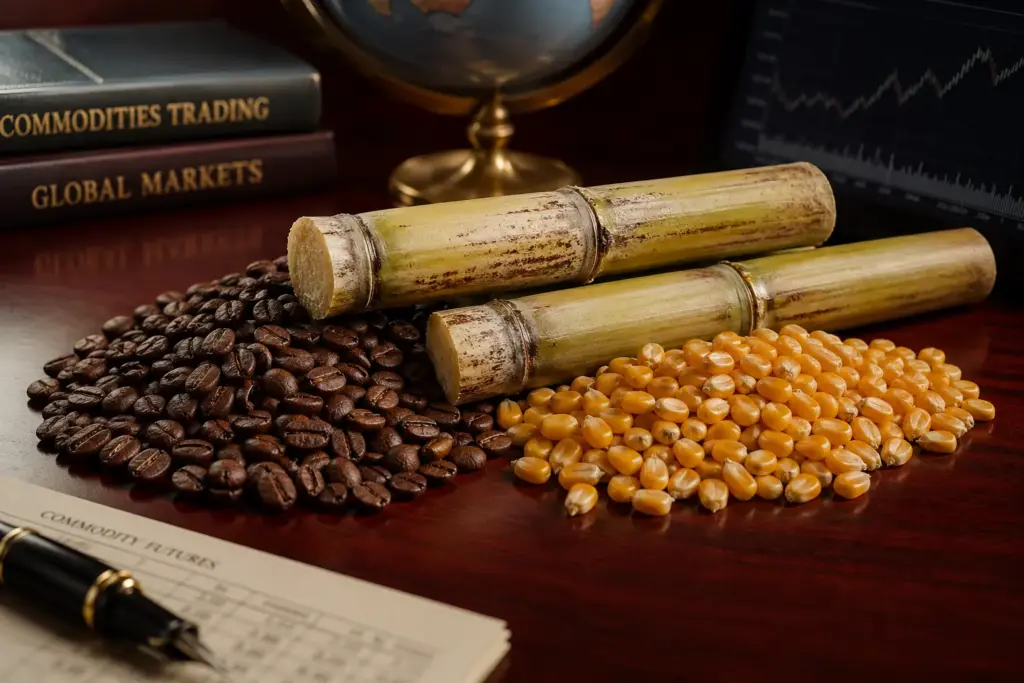
Ultrarealistic macro shot of roasted coffee beans, raw sugar cane, and golden corn kernels on a polished mahogany trading desk symbolizing agricultural commodities trading.

Traders monitor these variables meticulously by analyzing regular crop progress reports, such as the World Agricultural Supply and Demand Estimates (WASDE) released by the USDA. Furthermore, traders must evaluate these fundamental factors alongside the cost of storing and insuring the physical crops over time, a vital calculation that plays a major role in futures pricing and valuation.

Navigate Market Volatility with Precision

Discuss your commodity hedging and trading strategies with our dedicated team.

What Are the Key Benefits and Risks of Trading Agricultural Futures?

Adding agricultural futures to a trading strategy offers distinct advantages, particularly for portfolio diversification. Because agricultural prices are driven by weather and global food demand, they typically have a low correlation with traditional asset classes like stocks and bonds. When equity markets experience downturns, agricultural commodities may remain stable or even rise, providing a natural buffer for an investment portfolio. Furthermore, agricultural commodities have historically served as a strong hedge against inflation, as the prices of raw goods generally rise alongside the broader cost of living.

However, trading agricultural futures carries substantial risks that require disciplined management. The primary risk is the high degree of leverage involved. Because traders only need to post a small initial margin to control a large contract, even a minor adverse price movement can result in significant financial losses. Additionally, agricultural markets are prone to extreme short-term volatility, often triggered by sudden, unpredictable weather forecasts or geopolitical news. To navigate this volatility effectively, it is crucial for investors to understand the market’s forward-looking nature, which can be explored further by comparing the immediate spot price vs futures price.

Conclusion: Key Takeaways

Agricultural futures represent a dynamic and essential segment of the global financial system, offering powerful tools for both commercial risk management and investment speculation.

  • Foundation of Hedging: These contracts allow farmers and commercial buyers to lock in prices, stabilizing the global food supply chain against devastating price shocks.
  • Driven by Fundamentals: Unlike other financial derivatives, agricultural futures are deeply rooted in physical realities, heavily influenced by weather patterns, crop reports, and global supply chain logistics.
  • Diversification and Leverage: For the professional investor, agricultural futures offer a way to diversify portfolios away from traditional equities and hedge against inflation, provided that the risks of leverage are carefully managed.

By understanding the distinct characteristics of grains, oilseeds, and soft commodities, and by utilizing the regulated environment of futures exchanges, investors can strategically position themselves to capitalize on the ever-changing landscape of global agriculture.

Frequently Asked Questions (FAQs)

How do weather-induced supply shocks impact roll yield in systematic agricultural strategies?

Severe weather disruptions typically drive the futures term structure into steep backwardation as commercial buyers scramble for immediate physical supply, surging front-month premiums. For long-only commodity index funds or CTAs, this curve inversion generates a positive “roll yield.” Conversely, during harvest gluts, the market often reverts to structural contango, creating a negative drag that requires sophisticated roll-timing algorithms to mitigate.

How effective is cross-hedging agricultural exposure using energy and fertilizer derivatives?

Cross-hedging is highly effective for crops deeply integrated into the biofuel sector, such as corn and sugar. Institutional traders frequently trade the “ethanol crush spread,” simultaneously taking positions in corn, RBOB gasoline, and sometimes natural gas (a primary input for nitrogen fertilizers). This allows participants to isolate pure agricultural supply-demand imbalances from broader macroeconomic energy volatility.

Why utilize options on agricultural futures rather than linear contracts ahead of WASDE reports?

Outright futures expose portfolios to unlimited linear risk and severe gap openings, which are common when USDA WASDE reports surprise the market. Exchange-traded options on futures provide asymmetrical risk profiles. They allow commercial hedgers to establish price floors (via puts) without margin calls, while quantitative volatility traders can trade the “implied volatility crush” that predictably occurs immediately after the report’s release.

How is the CFTC Commitment of Traders (COT) report used to identify capitulation points in soft commodities?

Sophisticated traders analyze the COT report to track the divergence between “Managed Money” (speculators) and “Commercials” (hedgers). When Managed Money positioning reaches historical, crowded extremes—either net-long or net-short—it often signals an asymmetrical risk of a violent short-covering rally or long-liquidation event. Turning points are typically confirmed when Commercials begin taking aggressively opposing positions to the speculative herd.

Disclaimer:

Trading foreign exchange and/or contracts for difference on margin carries a high level of risk, and may not be suitable for all investors as you could sustain losses in excess of deposits. The products are intended for retail, professional and eligible counterparty clients. Before deciding to trade any products offered by PhillipCapital (DIFC) Private Limited you should carefully consider your objectives, financial situation, needs and level of experience. You should be aware of all the risks associated with trading on margin. The content of the Website must not be construed as personal advice. For retail, professional and eligible counterparty clients. Before deciding to trade any products offered by PhillipCapital (DIFC) Private Limited you should carefully consider your objectives, financial situation, needs and level of experience. You should be aware of all the risks associated with trading on margin.

Rolling Spot Contracts and CFDs are complex instruments and come with a high risk of losing money rapidly due to leverage. 78% of our retail client accounts lose money while trading with us. You should consider whether you understand how Rolling Spot Contracts and CFDs work, and whether you can afford to take the high risk of losing your money.