VIX Futures & Volatility Futures Table of Contents Introduction What...
Read MorePrecious Metals Futures

What Are Precious Metals Futures? A Guide to Gold, Silver, and Beyond
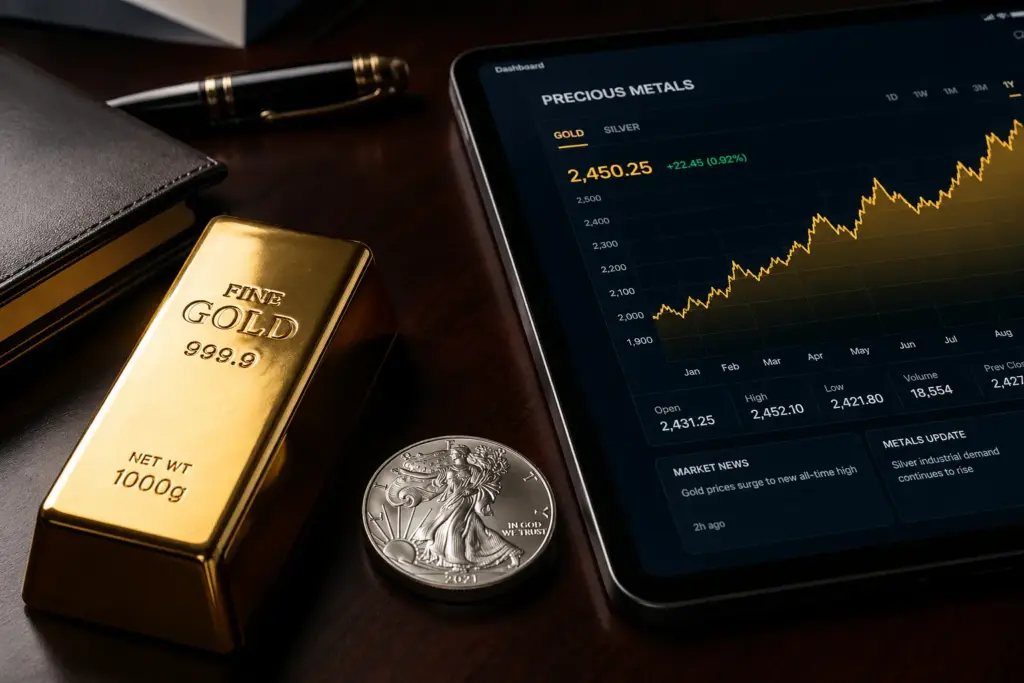
Gold and silver have long been recognized as ultimate stores of value, but buying physical bars is no longer the most efficient way to access these critical markets. Enter precious metals futures: dynamic financial instruments that allow you to capitalize on the world’s most sought-after commodities with unparalleled flexibility. Whether you are a commercial business managing supply costs or an ambitious trader looking to hedge against inflation, futures contracts provide the leverage and market access you need. In this guide, we break down the mechanics of metals trading into clear, simple terms, equipping you with the knowledge to navigate these powerful markets with confidence.
Table of Contents
- What Exactly Are Precious Metals Futures?
- How Do Precious Metals Futures Differ from Spot Trading?
- What Are the Key Types of Precious Metals Futures?
- Gold Futures
- Silver Futures
- Platinum and Palladium Futures
- What Moves the Prices of These Contracts?
- Why Do Investors Choose to Trade These Contracts?
- Conclusion: Key Takeaways
What Exactly Are Precious Metals Futures?
A futures contract is simply a legally binding agreement between a buyer and a seller to exchange an asset at a predetermined price on a specific date in the future. Therefore, precious metals futures are contracts where the underlying asset is a specific quantity and quality of a metal like gold, silver, or platinum.
Instead of buying physical gold bars and paying to store them in a secure vault, traders use these contracts to speculate on price movements or protect their physical inventory from market drops. If you want to dive deeper into the core mechanics of these agreements, exploring the fundamentals of futures contracts can provide a robust foundation for your overall trading strategy.
Ready to Diversify Your Portfolio?
Access global commodities markets seamlessly with PhillipCapital.

How Do Precious Metals Futures Differ from Spot Trading?
When you buy a precious metal in the spot market, you are paying the current, immediate market price for physical delivery right now. In contrast, futures trading is entirely forward-looking. You are locking in a price today for a metal that will be delivered (or more commonly, cash-settled) weeks or months down the line.
Because futures contracts include the cost of storing, insuring, and financing the physical metal over time, their prices often differ from the immediate cash price. Understanding the difference between spot market prices versus futures prices is essential for any investor. Generally, the future price is slightly higher than the spot price to account for these holding costs, a normal market condition known as contango.
What Are the Key Types of Precious Metals Futures?
The metals market is wonderfully diverse, and each asset serves a unique economic purpose. Here are the most commonly traded types:
Gold Futures
Gold is widely considered the ultimate safe-haven asset. Investors traditionally flock to gold futures during times of economic uncertainty, rising inflation, or geopolitical tension. Because it is highly liquid and universally recognized, it remains the most popular precious metal contract traded globally.
Silver Futures
Silver is unique because it acts as both a monetary asset and a crucial industrial component used heavily in electronics, medical devices, and solar panels. This dual nature means silver futures tend to be more volatile than gold, offering distinct short-term and long-term opportunities for observant traders.
Platinum and Palladium Futures
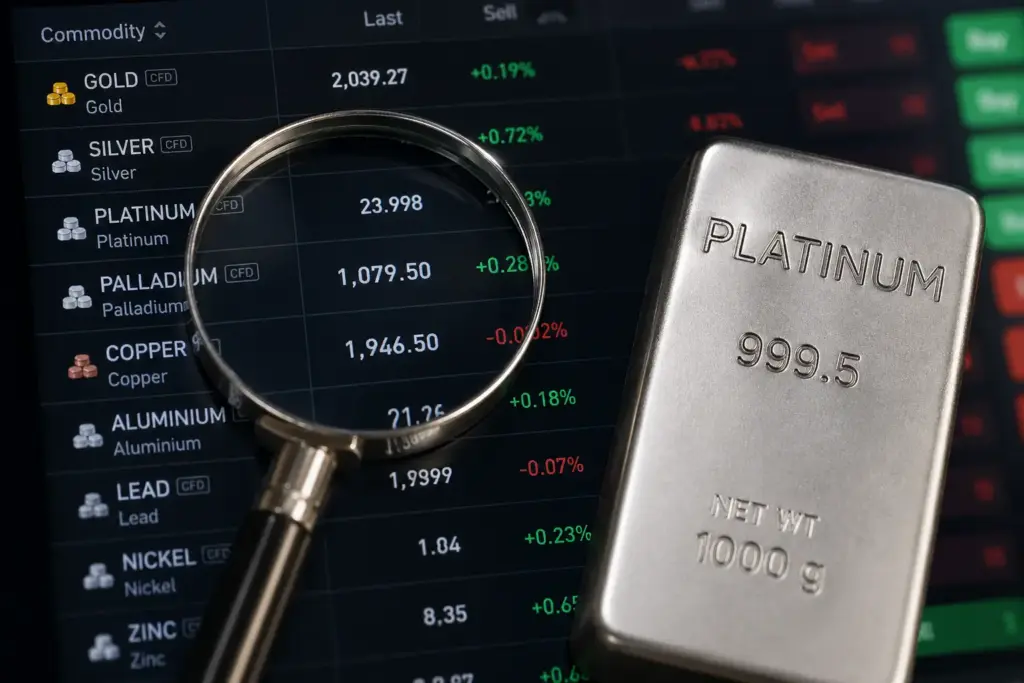
These are primarily industrial metals heavily utilized in the automotive sector, specifically for the manufacturing of catalytic converters. Consequently, the prices of platinum and palladium futures are closely tied to global auto manufacturing health and international supply chain stability.

What Moves the Prices of These Contracts?
The value of any futures contract is driven by real-time supply and demand, but precious metals are particularly sensitive to macroeconomic indicators. Interest rates, inflation data, and the strength of the US Dollar act as massive catalysts for price movements.
Furthermore, market participants constantly evaluate the true cost of holding the asset over time. Strategic investors often monitor the forward-looking basis to measure aggregate market sentiment and determine if the physical metal is facing an immediate supply shortage or if it is overabundant.
Why Do Investors Choose to Trade These Contracts?
There are several strategic advantages to using these instruments instead of buying physical metals:
- Leverage: You only need a fraction of the total contract value (known as initial margin) to open a position. This allows you to control a large amount of metal with significantly less upfront capital.
- Hedging: Commercial businesses, such as jewelers or electronics manufacturers, can lock in purchase prices months in advance to protect their profit margins from sudden, unexpected price spikes.
- Diversification: Precious metals often move independently of traditional stock indices, making them an excellent tool to balance out the risk in a standard equity portfolio.
Secure Your Financial Future Today
Join PhillipCapital and gain expert insights into advanced metals trading.
Conclusion: Key Takeaways
Trading precious metals offers a dynamic pathway to diversify your portfolio and actively manage financial risk. To wrap up, here are the core takeaways from this guide:
- These contracts allow you to trade the future price of gold, silver, and platinum with high capital efficiency, removing the need to secure and store physical metals.
- Gold acts primarily as a traditional safe-haven, while silver, platinum, and palladium are heavily influenced by global industrial demand.
- Always monitor major macroeconomic factors like inflation, central bank interest rates, and currency strength, as they directly dictate metal valuations.
- While the use of leverage in futures can dramatically amplify your potential gains, it also amplifies potential losses, meaning robust risk management is absolutely critical.
Whether you are looking to hedge an existing portfolio or capitalize on global market trends, having a clear understanding of market mechanics will set you up for long-term investment success.
Frequently Asked Questions (FAQs)
No. The vast majority of retail and speculative traders close out their positions before the contract expires. This allows you to settle the trade purely in cash, meaning you never have to worry about transporting or storing physical bullion.
It depends on your trading style. Futures offer significant leverage and near 24-hour market access, making them ideal for active, short-term traders. ETFs are generally better suited for long-term investors who prefer a hands-off approach to adding metals to their stock portfolios.
You do not need to pay the full value of the gold. Futures require an “initial margin,” which is only a small percentage of the total contract size. However, you must keep enough funds in your account to cover daily market fluctuations to avoid a margin call.
Yes. Because futures trading utilizes leverage, both your potential profits and potential losses are amplified. If the market moves sharply against your position, you can lose more than your initial margin deposit, which makes using strict stop-loss orders essential.
Disclaimer:
Trading foreign exchange and/or contracts for difference on margin carries a high level of risk, and may not be suitable for all investors as you could sustain losses in excess of deposits. The products are intended for retail, professional and eligible counterparty clients. Before deciding to trade any products offered by PhillipCapital (DIFC) Private Limited you should carefully consider your objectives, financial situation, needs and level of experience. You should be aware of all the risks associated with trading on margin. The content of the Website must not be construed as personal advice. For retail, professional and eligible counterparty clients. Before deciding to trade any products offered by PhillipCapital (DIFC) Private Limited you should carefully consider your objectives, financial situation, needs and level of experience. You should be aware of all the risks associated with trading on margin.
Rolling Spot Contracts and CFDs are complex instruments and come with a high risk of losing money rapidly due to leverage. 78% of our retail client accounts lose money while trading with us. You should consider whether you understand how Rolling Spot Contracts and CFDs work, and whether you can afford to take the high risk of losing your money.
Precious Metals Futures
Precious Metals Futures What Are Precious Metals Futures? A Guide...
Read MoreAgricultural Futures
Agricultural Futures Agricultural Futures: Hedging and Trading Strategies Agricultural futures...
Read MoreEnergy Futures Trading

Energy Futures Trading Introduction Energy is the lifeblood of the...
Read MoreCommodity Futures

Commodity Futures What Are Commodity Futures? A Comprehensive Guide for...
Read MoreInterest Rate Futures

Interest Rate Futures Mastering Interest Rate Futures: A Strategic Guide...
Read MoreCash Settlement vs Physical Delivery
Cash Settlement vs Physical Delivery in Trading Cash Settlement vs...
Read MoreFutures Settlement Methods
Futures Settlement Methods Introduction Navigating the financial markets requires a...
Read MoreMargin Calls & Mark-to-Market
Margin Calls & Mark-to-Market Table of Contents Introduction to Futures...
Read MoreInitial vs. Maintenance Margin
Initial vs. Maintenance Margin Understanding Initial and Maintenance Margins: A...
Read MoreContango & Backwardation Explained
Contango and Backwardation Explained Contango and Backwardation Explained: Navigating Futures...
Read MoreForward-Looking Basis

Forward-Looking Basis in Futures Trading Table of Contents Introduction What...
Read MoreFutures Pricing And Valuation
Futures Pricing And Valuation Table of Contents What is the...
Read MoreHow Futures Exchanges Work
How Futures Exchanges Work Understanding the Mechanics of Global Futures...
Read MoreUnderstanding Futures Contracts
Understanding Futures Contracts Understanding Futures Contracts in Global Markets In...
Read MoreLong vs Short Positions in Derivatives
Long vs Short Positions in Derivatives A Complete Guide for...
Read MoreOver-the-Counter (OTC) vs Exchange-Traded Derivatives
Over-the-Counter (OTC) vs Exchange-Traded Derivatives A Complete Guide for UAE...
Read MoreTypes of Derivatives: Futures, Options, Swaps, and Forwards
Types of Derivatives Futures, Options, Swaps, and Forwards In the...
Read MoreWhat are Derivatives and Their Purpose
What are Derivatives and Their Purpose The financial world is...
Read MoreEssentials of Derivatives Trading
Essentials of Derivatives Trading The financial world is vast, and...
Read More