Working Capital Analysis

Introduction

When you look at a company’s stock, the price alone tells you very little. What really matters is what’s happening inside the business — and working capital is one of the clearest windows into a company’s day-to-day financial health. It tells you whether a business can pay its bills, fund its operations, and stay solvent even when times get tough.

For investors trading deliverable equities — actual shares that settle into your account — understanding working capital is not optional. It is a core pillar of fundamental analysis that separates informed investors from those who rely on guesswork.

This guide breaks down everything you need to know about working capital analysis in simple, straightforward terms.

Professional male investor analyzing stock charts, balance sheets, and financial ratios on dual monitors inside a modern Dubai financial office with DIFC skyline view.

What Is Working Capital?

Working capital is the money a company has available to run its operations on a daily basis. Simply put, it is the difference between what a company owns in the short term (current assets) and what it owes in the short term (current liabilities).

Current assets include things like cash, accounts receivable (money customers owe the company), and inventory (goods the company has in stock). Current liabilities include short-term debts, supplier payments due, and other obligations the company must settle within a year.

If a company has more short-term assets than short-term liabilities, it has positive working capital — meaning it can comfortably meet its obligations and still have money left to grow. This is generally a sign of financial stability.

Think of it like a household budget. If your monthly income and savings cover your monthly bills with room to spare, you are in a healthy financial position. Working capital does the same thing for a business.

How Is Working Capital Calculated?

The formula is straightforward:

Working Capital = Current Assets − Current Liabilities

For example, if a company has $500 million in current assets (cash, receivables, inventory) and $300 million in current liabilities (short-term loans, payables), its working capital is $200 million.

You can find these numbers directly on a company’s balance sheet, which is published in its quarterly and annual financial reports. As part of understanding fundamental analysis, the balance sheet is one of the three key financial statements every investor should read — alongside the income statement and cash flow statement.

Why Does Working Capital Matter in Fundamental Analysis?

Working capital matters because it reveals whether a company is genuinely healthy or just appearing profitable on paper. A company can show strong revenues and net profit on its income statement, yet still face a cash crisis if its working capital is poorly managed.

Here is why working capital deserves serious attention during your stock analysis:

It signals short-term survival. A company without adequate working capital may struggle to pay suppliers, employees, or creditors — even if it is technically profitable.

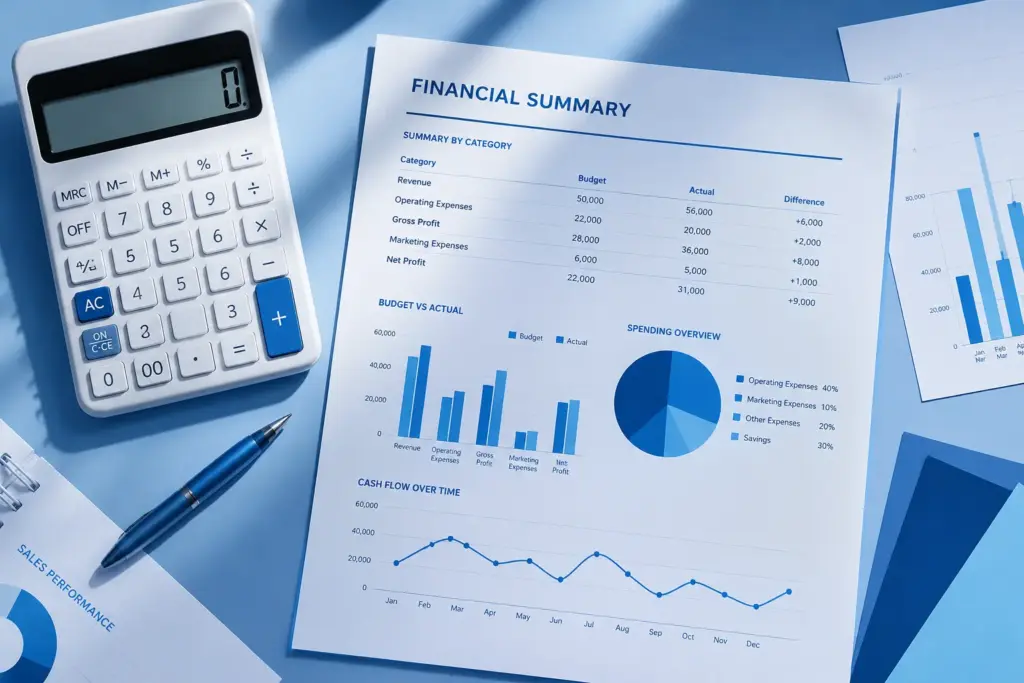
Blue-themed financial analysis workspace with calculator, charts, graphs, and business reports in a clean professional flat-lay setup.

It indicates operational efficiency. Companies that manage inventory well, collect payments from customers quickly, and negotiate reasonable payment terms with suppliers will naturally maintain healthier working capital levels.

It reveals growth readiness. Businesses with strong positive working capital have the financial flexibility to invest in new projects, expand operations, or absorb unexpected costs without needing to borrow. This is especially relevant when evaluating global stocks across different economic cycles and geographies.

It uncovers red flags. A sudden drop in working capital — or a trend toward negative working capital — can be an early warning sign of trouble, even before it shows up in the company’s profit figures.

Start Investing in Fundamentally Strong Stocks

Access global equities from Dubai with a trusted, regulated broker

What Is the Working Capital Ratio (Current Ratio)?

The Current Ratio is a simple formula that puts working capital into a percentage perspective, making it easier to compare companies of different sizes.

Current Ratio = Current Assets ÷ Current Liabilities

Using our earlier example: $500M ÷ $300M = 1.67

How to interpret the current ratio:

  • Below 1.0 — The company’s short-term liabilities exceed its short-term assets. This is a potential liquidity problem.
  • Between 1.0 and 1.5 — Acceptable, but leaves little buffer for unexpected events.
  • Between 1.5 and 3.0 — Generally considered healthy. The company has a reasonable cushion.
  • Above 3.0 — May indicate the company is not using its assets efficiently (e.g., too much cash sitting idle or excess inventory).

It is important to compare the current ratio within the same industry. Retailers, for example, often operate with lower current ratios because they turn over inventory very quickly. Technology companies tend to carry higher ratios. This industry context is crucial when evaluating GCC stocks or any regional market with sector-specific dynamics.

What Is the Quick Ratio, and How Is It Different?

The Quick Ratio — sometimes called the Acid-Test Ratio — is a stricter version of the current ratio. It removes inventory from the equation because inventory can take time to sell and convert into cash.

Quick Ratio = (Current Assets − Inventory) ÷ Current Liabilities

If a company has $500M in current assets, $100M in inventory, and $300M in current liabilities:

Quick Ratio = ($500M − $100M) ÷ $300M = 1.33

The quick ratio is more conservative and useful for industries where inventory is hard to liquidate quickly — such as manufacturing or retail. A quick ratio above 1.0 is generally considered sound. When paired with stock valuations such as P/E ratios and price-to-book values, the quick ratio helps build a much more complete picture of a stock’s true worth.

What Does Negative Working Capital Mean?

Negative working capital occurs when a company’s current liabilities exceed its current assets — meaning it owes more in the short term than it holds in liquid resources.

For most businesses, negative working capital is a serious warning signal. It can mean the company is struggling to pay its debts, may need emergency financing, or is at risk of insolvency if conditions worsen.

Financial analyst using a stylus on a tablet displaying a bar chart comparing current ratio and quick ratio for multiple companies in a modern office environment.

However, context matters. Some highly efficient businesses — such as large supermarket chains and subscription-based companies — deliberately operate with negative working capital. They collect cash from customers upfront (or very quickly) but pay their suppliers much later. This model works as long as cash keeps flowing in consistently. Amazon is a well-known example of a company that operated with negative working capital for years while growing strongly.

For investors looking at deliverable equities, the key is to determine whether negative working capital reflects a business model advantage or a liquidity problem. If you are unsure, look at the trend over multiple quarters. A company moving from positive to negative working capital over time, without a clear structural reason, deserves careful scrutiny.

Invest in Global Stocks with Confidence

Trade US stocks, ETFs, and ADRs through a DFSA-regulated broker in Dubai.

trading account opening uae banner

How to Use Working Capital Analysis When Picking Stocks

Working capital analysis is most powerful when used alongside other fundamental tools. Here is a practical approach:

Step 1 — Check the trend, not just the number. A single working capital figure means little without context. Look at the past four to eight quarters. Is working capital improving, declining, or stable? A consistent downward trend is more alarming than a one-time dip.

Step 2 — Compare with industry peers. A current ratio of 1.2 might be strong in one sector and weak in another. Always benchmark the company against its direct competitors. This comparison becomes especially relevant when evaluating stock market basics across different asset classes and geographies.

Step 3 — Read the notes. Sometimes working capital looks fine, but a large chunk of current assets is tied up in slow-moving inventory or disputed receivables. The footnotes in a company’s financial report often reveal what the headline numbers hide.

Step 4 — Match it with cash flow. A company with positive working capital but consistently negative operating cash flow is managing its books creatively, not necessarily running a healthy business. Cash flow from operations is the ultimate reality check.

Step 5 — Look at the business model. As noted earlier, some business models naturally carry lower working capital. Understanding why a number looks the way it does is as important as the number itself.

What Are the Limitations of Working Capital Analysis?

Working capital is a valuable tool, but it has real limitations that every investor should understand:

It is a snapshot in time. The balance sheet captures one moment — the quarter-end or year-end date. A company could temporarily improve its numbers by collecting receivables aggressively or delaying payments just before the reporting date.

It does not measure long-term solvency. A company might have excellent short-term liquidity but carry heavy long-term debt that threatens its future. Working capital analysis must be paired with a review of long-term liabilities and debt structure, particularly when assessing bonds and fixed-income instruments alongside equities for a diversified portfolio view.

Industry norms vary widely. There is no universal “good” working capital ratio. Comparing across industries leads to misleading conclusions.

It ignores quality. Not all current assets are equal. Cash is king; outdated inventory or uncollectible receivables are much less valuable than they appear on paper.

Want Expert Guidance on Equity Investing?

PhillipCapital DIFC offers professional brokerage and advisory services in Dubai.

Conclusion & Key Takeaways

Working capital analysis is one of the most grounded and practical tools available to equity investors. It cuts through the noise and asks a simple question: can this company survive and operate without financial stress right now?

When combined with other elements of fundamental analysis — such as earnings quality, valuation multiples, and cash flow assessment — working capital gives you a well-rounded view of a stock’s investment merit. It is especially critical when evaluating companies in volatile sectors, emerging markets, or industries undergoing disruption.

Key Takeaways:

  • Working Capital = Current Assets − Current Liabilities. A positive figure generally indicates financial stability; negative working capital requires deeper investigation.
  • The Current Ratio (Current Assets ÷ Current Liabilities) is the standard liquidity benchmark. A ratio between 1.5 and 3.0 is typically healthy for most industries.
  • The Quick Ratio removes inventory for a more conservative liquidity test — useful for sectors where inventory is slow to convert into cash.
  • Trends matter more than single readings. Always analyse working capital over multiple quarters.
  • Context is everything. Compare within the same industry and always read beyond the headline numbers.
  • Working capital has limits. Use it alongside cash flow analysis, debt levels, and valuation metrics for a complete fundamental picture.

Smart investing is built on informed analysis — and understanding working capital is a powerful first step toward making better, more confident equity investment decisions.

Frequently Asked Questions (FAQs)

Is a higher working capital always better for a company?

Not necessarily. A very high working capital can actually mean the company is sitting on too much idle cash or holding excess inventory it cannot sell — both signs of poor capital efficiency. The goal is the right level of working capital, not the highest. A lean, well-managed business that converts assets into cash quickly can outperform a cash-heavy competitor every time.

Can a profitable company have a working capital problem?

Yes, and this surprises many investors. A company can report strong profits while facing a cash crunch — for example, if customers are slow to pay or inventory is piling up unsold. Profit appears on the income statement; liquidity shows up in working capital. That is why smart investors always check both.

How often should I check a company's working capital before investing?

Look at at least four to six consecutive quarters. A single quarter’s figure can be misleading — companies sometimes manage their balance sheet optics around reporting dates. What you are really looking for is the direction of the trend. Consistent improvement signals good management; a steady decline demands a closer look before you commit capital.

Does working capital analysis apply to all types of stocks?

It applies to most, but the benchmarks differ by industry. Retail and manufacturing companies need to be analysed differently from software or financial firms. For instance, a tech company with subscription revenues may naturally carry less working capital than a manufacturer. Always compare a company’s working capital metrics against others in the same sector — not the broader market.

Disclaimer:

Trading foreign exchange and/or contracts for difference on margin carries a high level of risk, and may not be suitable for all investors as you could sustain losses in excess of deposits. The products are intended for retail, professional and eligible counterparty clients. Before deciding to trade any products offered by PhillipCapital (DIFC) Private Limited you should carefully consider your objectives, financial situation, needs and level of experience. You should be aware of all the risks associated with trading on margin. The content of the Website must not be construed as personal advice. For retail, professional and eligible counterparty clients. Before deciding to trade any products offered by PhillipCapital (DIFC) Private Limited you should carefully consider your objectives, financial situation, needs and level of experience. You should be aware of all the risks associated with trading on margin.

Rolling Spot Contracts and CFDs are complex instruments and come with a high risk of losing money rapidly due to leverage. 78% of our retail client accounts lose money while trading with us. You should consider whether you understand how Rolling Spot Contracts and CFDs work, and whether you can afford to take the high risk of losing your money.

peg ratio thumbnail

PEG ratio

PEG Ratio The Advanced Metric for Finding Growth at a...

Read More