26 February 2026 – Daily Market Updates Markets Daily Market...
Read MoreContango and Backwardation Explained
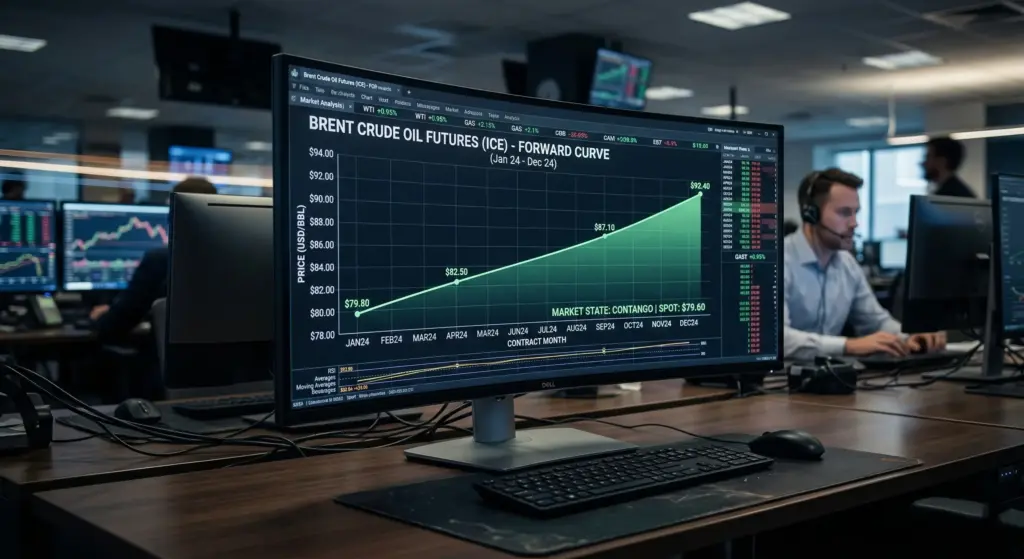
Contango and Backwardation Explained: Navigating Futures Market Curves
In the intricate landscape of global capital markets, institutional and sophisticated retail investors rely heavily on derivative instruments to hedge risks, discover prices, and deploy capital efficiently. Among the most critical concepts for anyone trading in these markets are contango and backwardation. These terms describe the shape of the forward curve—the relationship between the current spot price of an asset and its price for future delivery dates. Correctly interpreting whether a market is in contango or backwardation offers profound insights into global supply and demand dynamics, carrying costs, and market sentiment. This comprehensive guide delves into the mechanics of these market states, exploring what drives them and how professional traders navigate their complexities to optimize portfolio performance.
Table of Contents
- What is the Forward Curve in Futures Trading?
- What Does Contango Mean in Financial Markets?
- What Causes a Market to Enter Backwardation?
- How Do Cost of Carry and Yield Impact Contango and Backwardation?
- How Can Investors Utilize Contango and Backwardation Strategies?
- What is the Convergence of Spot and Futures Prices at Expiration?
- Conclusion
What is the Forward Curve in Futures Trading?
The forward curve is a graphical representation that plots the prices of futures contracts against their respective expiration dates. Rather than looking at a single price point for an asset like crude oil or a stock index, the forward curve provides a multi-dimensional view of how the market values that asset over time. On the x-axis, you have the maturity timeline (ranging from the nearest expiration date to several months or years into the future), while the y-axis represents the contract price.
For professional investors, the shape of this curve is a vital diagnostic tool. It rarely forms a perfectly flat line. Instead, it slopes either upward or downward depending on the aggregate expectations of market participants, prevailing interest rates, and the fundamental supply and demand mechanics of the underlying asset. By analyzing the slope of the forward curve, traders can deduce the market’s implied forecast for future price environments and measure the actual costs associated with holding physical or financial assets over time.

What Does Contango Mean in Financial Markets?
Contango is widely considered the normal, or standard, state of the futures market. A market is in contango when the futures price of an asset is higher than its current spot price, creating an upward-sloping forward curve. As you look further into the future on the expiration timeline, the contracts become progressively more expensive.
This premium on future delivery is not arbitrary. It is heavily driven by the mathematical realities of time-valued money and logistical expenses. When an investor purchases a physical asset today, they incur immediate holding costs, such as warehousing fees, insurance premiums, and the opportunity cost of tying up capital (the risk-free interest rate). Therefore, understanding the relationship between the spot price vs futures price is essential. Buyers in the futures market are willing to pay a premium to lock in a price today while shifting the burden of storing and insuring the asset onto the seller until the future delivery date arrives. In a contango environment, the market is adequately supplied in the short term, and the price curve cleanly reflects the compounded “cost of carry.”
Ready to Access Global Futures Markets?
Trade international commodities, equities, and FX through a fully regulated platform
What Causes a Market to Enter Backwardation?
Backwardation is the inverse of contango and is generally considered a rarer, structurally stressed market state. A market falls into backwardation when the futures price is lower than the current spot price, resulting in a downward-sloping forward curve. In this scenario, market participants are paying a heavy premium for immediate possession of the asset rather than waiting for future delivery.
This phenomenon is almost exclusively driven by an immediate, urgent imbalance in supply and demand. Severe supply chain disruptions, unexpected geopolitical shocks, or extreme weather events can trigger critical shortages of physical commodities. For example, if a global crisis threatens oil production, refineries cannot wait six months for a futures contract to settle; they need the physical oil immediately to keep operations running. This desperation drives the spot price drastically higher than the deferred futures contracts. Actively calculating the forward-looking basis in futures trading allows investors to detect these supply squeezes early, enabling them to adjust their risk exposure ahead of major macroeconomic adjustments.
How Do Cost of Carry and Yield Impact Contango and Backwardation?
The concepts of contango and backwardation are fundamentally anchored in two opposing forces: the “cost of carry” and the “convenience yield.” Cost of carry encompasses the explicit expenses required to hold a physical or financial asset. For commodities like gold or wheat, this includes storage space, transit insurance, and financing rates. For financial derivatives, such as equity indices, it primarily involves the prevailing interest rates used to finance the position. These elements form the core of futures fundamentals, dictating how premiums are calculated across different time horizons. When the cost of carry is the dominant force, the market naturally slopes into contango.

Conversely, the convenience yield represents the non-financial, operational benefit of physically holding an asset right now. If a manufacturer holds physical copper inventory during a severe supply drought, the convenience yield of keeping their production line open far outweighs the storage costs. When the perceived convenience yield spikes and eclipses the cost of carry, the market is aggressively pushed into backwardation. Additionally, in financial futures, high dividend payouts from underlying stocks can artificially push the curve into backwardation, as futures holders do not receive dividend payments prior to expiration.
Master Advanced Derivative Strategies
Speak with our institutional trading desk to optimize your portfolio using global derivatives.
How Can Investors Utilize Contango and Backwardation Strategies?
Understanding the shape of the forward curve is paramount for executing long-term trading strategies, particularly those involving the rolling of contracts. When a trader wants to maintain a continuous position in the market without taking physical delivery of the asset, they must close their expiring contract and purchase a new one further out in time—a process known as “rolling.”
For participants engaging in futures and options trading in the UAE, the state of the market heavily dictates the outcome of this roll. In a steep contango market, rolling a long position results in a “negative roll yield.” The investor is continually forced to sell the expiring, cheaper contract and buy the more expensive deferred contract, slowly eroding capital over time. Conversely, if an investor is holding a long position in a backwardated market, they capture a “positive roll yield,” as they are selling the more expensive front-month contract and buying the cheaper deferred contract. Sophisticated arbitrageurs also leverage these market states by simultaneously buying and selling across the spot and futures markets to extract risk-free profits when the basis temporarily disconnects from mathematical equilibrium.
What is the Convergence of Spot and Futures Prices at Expiration?
Regardless of whether a market spends its lifecycle in steep contango or aggressive backwardation, the laws of financial arbitrage dictate a universal rule: convergence. As a futures contract marches toward its final expiration date, the time value associated with the cost of carry steadily erodes to zero.
Because holding the asset for the “future” eventually turns into holding the asset “now,” the premium (in contango) or the discount (in backwardation) must evaporate. On the final day of settlement, the futures price and the spot price must be practically identical. As outlined in our comprehensive guide on understanding futures contracts, the mechanism of settlement enforces this convergence. If the prices did not align at maturity, arbitrageurs would instantly step in to buy the cheaper asset and sell the more expensive one, forcing the prices together and maintaining the absolute integrity of the exchange marketplace.
Conclusion
Mastering the nuances of contango and backwardation is non-negotiable for investors aiming to navigate the futures markets with precision. These market states are far more than academic terminology; they are real-time barometers of global supply stress, interest rate environments, and institutional sentiment. By thoroughly analyzing the forward curve, investors can accurately price the true cost of time-valued money, avoid the pitfalls of negative roll yields, and structure highly disciplined hedging strategies. Whether you are a corporate hedger securing operational supply lines or a portfolio manager seeking speculative capital appreciation, integrating the dynamics of contango and backwardation into your core analysis will significantly elevate your market edge.
Frequently Asked Questions (FAQs)
A simple trick is to look at the future price compared to today’s spot price. In contango, the future price is higher, meaning the curve points upward. In backwardation, the future price is “going backwards”—meaning the future contracts are priced lower than the current spot price, creating a downward-sloping curve.
Contango is generally considered a sign of a normal, adequately supplied market rather than a strictly bullish or bearish one, as it simply reflects the everyday costs of storing an asset (cost of carry). However, a steep contango can sometimes imply a bearish short-term oversupply, whereas backwardation almost always signals strong, immediate bullish demand and scarcity.
Many commodity ETFs do not hold physical assets; instead, they hold futures contracts. In a contango market, fund managers must continuously sell cheaper expiring contracts and buy more expensive deferred contracts to maintain their position. This constant process creates a “negative roll yield,” causing the ETF’s value to slowly decay over time, even if the underlying asset’s spot price remains completely flat.
Contango is the standard baseline because it inherently costs money to store, insure, and finance physical commodities over time. Futures sellers demand a premium to cover these carrying costs. Backwardation is much rarer because it usually requires an unexpected supply shock or crisis, creating an environment where desperate buyers are willing to pay a heavy premium to take physical delivery immediately rather than waiting for a future date.
Disclaimer:
Trading foreign exchange and/or contracts for difference on margin carries a high level of risk, and may not be suitable for all investors as you could sustain losses in excess of deposits. The products are intended for retail, professional and eligible counterparty clients. Before deciding to trade any products offered by PhillipCapital (DIFC) Private Limited you should carefully consider your objectives, financial situation, needs and level of experience. You should be aware of all the risks associated with trading on margin. The content of the Website must not be construed as personal advice. For retail, professional and eligible counterparty clients. Before deciding to trade any products offered by PhillipCapital (DIFC) Private Limited you should carefully consider your objectives, financial situation, needs and level of experience. You should be aware of all the risks associated with trading on margin.
Rolling Spot Contracts and CFDs are complex instruments and come with a high risk of losing money rapidly due to leverage. 78% of our retail client accounts lose money while trading with us. You should consider whether you understand how Rolling Spot Contracts and CFDs work, and whether you can afford to take the high risk of losing your money.
February 25 – Daily Market Update
25 February 2026 – Daily Market Updates Markets Daily |...
Read MoreFebruary 24 – Daily Market Update
24 February 2026 – Daily Market Updates Markets Daily: Opening...
Read MoreFebruary 23 – Daily Market Update
23 February 2026 – Daily Market Updates Markets Daily —...
Read MoreFebruary 20 – Daily Market Update
20 February 2026 – Daily Market Updates Markets Daily —...
Read MoreFebruary 19 – Daily Market Update
19 February 2026 – Daily Market Updates Markets Daily —...
Read MoreFebruary 18 – Daily Market Update
18 February 2026 – Daily Market Updates Markets Daily A...
Read MoreFebruary 17 – Daily Market Update

17 February 2026 – Daily Market Updates Markets Daily |...
Read MoreFebruary 16 – Daily Market Update
16 February 2026 – Daily Market Updates Markets Daily —...
Read MoreFebruary 13 – Daily Market Update
13 February 2026 – Daily Market Updates Markets Daily |...
Read MoreFebruary 12 – Daily Market Update
12 February 2026 – Daily Market Updates Markets Daily —...
Read MoreFebruary 11 – Daily Market Update
11 February 2026 – Daily Market Updates Markets Daily —...
Read MoreFebruary 10 – Daily Market Update
10 February 2026 – Daily Market Updates Markets Daily: Caution...
Read MoreFebruary 4 – Daily Market Update
4 february 2026 – Daily Market Updates Markets Daily: Broad...
Read MoreFebruary 3 – Daily Market Update
3 February 2026 – Daily Market Updates Market snapshot (as...
Read MoreFebruary 2 – Daily Market Update
2 February 2026 – Daily Market Updates Markets Daily: Volatility...
Read MoreJanuary 30 – Daily Market Update
30 January 2026 – Daily Market Updates Markets Daily: Risk-off...
Read MoreJanuary 29 – Daily Market Update
29 January 2026- Daily Market Updates Quick take Metals rally...
Read MoreJanuary 28 – Daily Market Update
28 January 2026 Daily Market Updates Markets Daily: Global Risk...
Read MoreJanuary 27 – Daily Market Update
27 january 2026 – Daily Market Updates Market overview Equities:...
Read MoreJanuary 22 – Daily Market Update
22 January 2026 – Daily Market Updates Market snapshot (as...
Read MoreJanuary 21 – Daily Market Update
21 january 2026 – Daily Market Updates Daily Markets Briefing...
Read MoreJanuary 20 – Daily Market Update
20 January 2026 – Daily Market Updates Daily Market Briefing...
Read MoreJanuary 19 – Daily Market Update
19 January 2026 – Daily Market Updates Markets Daily: Risk...
Read Morejanuary 14 – Daily Market Update
14 January 26 – Daily Market Updates Market snapshot (as...
Read Morejanuary 13 – Daily Market Update
13 January 26 – Daily Market Updates Markets Daily—Broad Market...
Read More