Bond Yield to Maturity (YTM): Understanding Bond Yield to Maturity...
Read MoreUnderstanding Pips and Basis Points in Financial Markets
Precision is the currency of the financial world. In global capital markets, the difference between profit and loss often comes down to the smallest fractions of a number. For investors and traders navigating the complexities of asset pricing, two units of measurement are fundamental: Pips and Basis Points (bps). While they both measure minute changes in value, they serve distinct functions across different asset classes.
This guide provides an in-depth analysis of these metrics, ensuring you understand how to interpret price movements whether you are trading foreign exchange currencies or analyzing central bank interest rate decisions
What Is a Pip in Forex Trading?
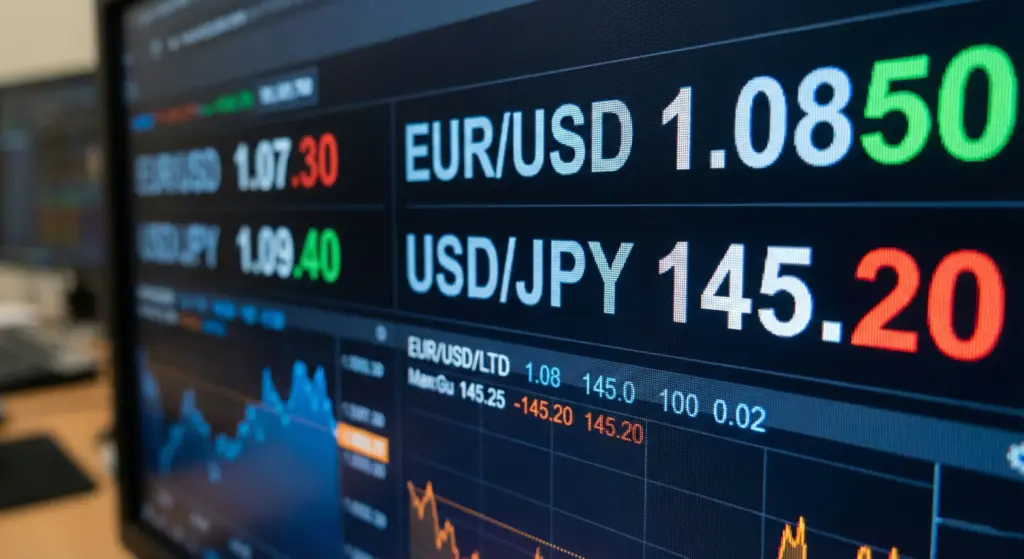
A Pip (Percentage in Point or Price Interest Point) is the standardized unit of change in a currency pair. For most currency pairs, a pip represents a movement in the fourth decimal place of the exchange rate. It is the smallest standard increment by which a currency quote can change, although modern fractional pricing has introduced “pipettes” (the fifth decimal place) for even greater precision.
For example, if the EUR/USD moves from 1.1050 to 1.1051, that 0.0001 rise is equal to one pip.
The JPY Exception
It is crucial to note that currency pairs involving the Japanese Yen (JPY) are an exception to the four-decimal rule. In JPY pairs (like USD/JPY), a pip is represented by the second decimal place. If the USD/JPY moves from 145.50 to 145.51, that 0.01 movement constitutes one pip.
When accessing Spot FX markets, understanding these nuances is critical for setting entry and exit targets. Professional trading platforms, such as those offered by Phillip Capital DIFC, provide real-time pricing where these movements are tracked instantly to ensure accurate execution.

How Do You Calculate Pip Value?
Calculating the monetary value of a pip is essential for position sizing and risk management. The value of a pip depends on three factors: the currency pair being traded, the exchange rate, and the trade size (lot size).
The Formula
For pairs where the US Dollar is the quote currency (e.g., EUR/USD), the calculation is straightforward. In a standard lot (100,000 units of currency), one pip equals $10.
- Standard Lot (100,000 units): 1 pip = $10 USD
- Mini Lot (10,000 units): 1 pip = $1 USD
- Micro Lot (1,000 units): 1 pip = $0.10 USD
For pairs where the USD is the base currency (e.g., USD/CHF), the value floats based on the current exchange rate. Sophisticated investors often use automated calculators available on advanced trading platforms like MetaTrader 5 (MT5) to handle these computations dynamically, ensuring that margin requirements and potential P&L are clear before executing a trade.
Start Trading Global Markets
Ready to apply your knowledge? Access over 40 currency pairs with institutional-grade execution speeds and competitive spreads.

What Is a Basis Point (BPS)?
A Basis Point, commonly referred to as “bps” (pronounced “bips”), is a unit of measure used primarily in finance to describe the percentage change in the value or rate of a financial instrument. One basis point is equal to 1/100th of 1%, or 0.01% (0.0001 in decimal form).
Why Use Basis Points?
The term helps eliminate ambiguity when discussing percentage changes. If a centrally banked rate is 5% and it increases by “1%”, it is unclear if the new rate is 5.05% (a 1% increase of the base) or 6% (an arithmetic increase). Using basis points clarifies this: an increase of 50 bps clearly moves the rate from 5.00% to 5.50%.
This metric is the standard for fixed income markets, bond pricing, and interest rate derivatives. When you read our market analysis reports, you will frequently see changes in US Treasury yields or FED rate decisions expressed in basis points
How Are Basis Points Used in Interest Rates and Bonds?
Basis points are the vernacular of debt markets. They measure the spread between two interest rates, the yield of a bond, or the cost of a loan.
- Central Bank Policy
When the US Federal Reserve or the ECB adjusts interest rates, they do so in basis points. A standard hike might be 25 bps (0.25%), while a more aggressive move would be 50 bps or 75 bps. These adjustments ripple through the economy, affecting everything from mortgage rates to the cost of leverage in CFD trading.

- Bond Yield Spreads
Investors use bps to compare the yield difference between securities. For instance, if a 10-year US Treasury bond yields 4.00% and a 10-year UK Gilt yields 4.25%, the “spread” is 25 basis points. Monitoring these spreads is vital for carry trade strategies and evaluating sovereign risk.
What Are the Key Differences Between Pips and Basis Points?
While both terms refer to small measurements of change, their application differs significantly based on the asset class.
| Feature | Pip | Basis Point (bps) |
|---|---|---|
| Primary Market | Forex (Currencies) | Fixed Income (Bonds), Interest Rates |
| Value Definition | Usually 0.0001 (4th decimal) | Always 0.01% (0.0001) |
| Context Exchange | Rate Price Movement | Yields, Spreads, Interest Rates |
| Example | EUR/USD moving 1.1200 to 1.1205 | Fed Rate moving 5.00% to 5.25% |
For multi-asset investors managing a diverse portfolio—perhaps holding Futures positions alongside currency trades—distinguishing between these units is vital for accurate performance reporting and strategy alignment.
Stay Ahead of Market Moves
Get Daily Market Insights Receive expert analysis on interest rate decisions and currency fluctuations directly from our DIFC desk.
Why These Metrics Matter for Risk Management
Understanding pips and basis points is not just academic; it is the foundation of calculating risk and reward (R:R). Inadequate understanding can lead to incorrect position sizing, where a trader might underestimate the exposure of a trade.
- Spread Costs: The cost of trading is often measured in pips (for FX) or basis points (for loans/bonds). Tight spreads, such as those offered on our major currency pairs, reduce the breakeven point for traders.
- Leverage Calculation: When using leverage, small movements are amplified. A 50-pip move on a highly leveraged account can have a significant impact on equity. Similarly, a 100 bps rise in rates can drastically alter the valuation of a bond portfolio.
- Hedging: Institutional clients often use basis points to calculate the “cost of carry” when hedging exposure with swaps or options.
Effective risk management strategies rely on precise mathematical definitions of these movements to set Stop Loss and Take Profit orders accurately.
Conclusion
Whether you are scalping the EUR/USD for a few pips or positioning a portfolio based on a 25 basis point hike by the Federal Reserve, fluency in these metrics is non-negotiable for professional investors. Pips define the heartbeat of the forex market, while basis points serve as the ruler for the cost of capital and fixed-income yields.
At Phillip Capital DIFC, we provide the infrastructure, technology, and regulated environment necessary to navigate these minute but powerful market movements. By combining deep market knowledge with a robust trading infrastructure, you can turn these small measurements into significant opportunities.
Frequently Asked Questions (FAQs)
No, a pipette is a fractional pip, representing 1/10th of a standard pip. It appears as the fifth decimal place in most currency pairs (e.g., 1.10505) or the third decimal place in JPY pairs. Brokers use pipettes to provide tighter spreads and more precise pricing, but standard profit and loss calculations generally round to the nearest full pip.
Pips are exclusive to the forex market. Stock price movements are measured in dollars (or the local currency) and cents, or simply in points and percentages. For example, if a stock moves from $100 to $101, it has moved 1 point or 100 cents, not pips. However, some indices CFDs may occasionally be referred to in points that traders colloquially liken to pips, but the terminology is distinct.
The easiest way to convert basis points (bps) to a percentage is to move the decimal point two places to the left. For example, 50 bps becomes 0.50%, 100 bps becomes 1.00%, and 5 bps becomes 0.05%. Just remember that 100 basis points always equal a full 1%.
Crypto markets generally do not use pips. Because cryptocurrencies like Bitcoin can vary wildly in price (from fractions of a cent to tens of thousands of dollars), movements are standardly quoted in the currency value (e.g., “Bitcoin is up $500”) or percentage terms. While some crypto CFDs might use point-based systems on specific platforms, “ticks” or direct currency value changes are the standard terminology.
Disclaimer:
Trading foreign exchange and/or contracts for difference on margin carries a high level of risk, and may not be suitable for all investors as you could sustain losses in excess of deposits. The products are intended for retail, professional and eligible counterparty clients. Before deciding to trade any products offered by PhillipCapital (DIFC) Private Limited you should carefully consider your objectives, financial situation, needs and level of experience. You should be aware of all the risks associated with trading on margin. The content of the Website must not be construed as personal advice. For retail, professional and eligible counterparty clients. Before deciding to trade any products offered by PhillipCapital (DIFC) Private Limited you should carefully consider your objectives, financial situation, needs and level of experience. You should be aware of all the risks associated with trading on margin.
Rolling Spot Contracts and CFDs are complex instruments and come with a high risk of losing money rapidly due to leverage. 78% of our retail client accounts lose money while trading with us. You should consider whether you understand how Rolling Spot Contracts and CFDs work, and whether you can afford to take the high risk of losing your money.
Understanding Futures Contracts
Understanding Futures Contracts Understanding Futures Contracts in Global Markets In...
Read MoreCalculating Bond Price And Yield
Calculating Bond Price And Yield Understanding Bond Valuation: A Comprehensive...
Read MoreEnterprise Value And Ev/Ebitda
Enterprise Value And EV/EBITDA Enterprise Value and EV/EBITDA: A Comprehensive...
Read MorePrice-to-Sales Ratio (P/S)
Price-to-Sales Ratio (P/S) Understanding the Price-to-Sales Ratio (P/S) in Modern...
Read MorePrice-to-Book Ratio
Price-to-Book Ratio (P/B) The Essential Guide for Identifying Undervalued Stocks...
Read MoreBond Pricing Fundamentals
Bond Pricing Fundamentals A Guide for Investors Table of Contents...
Read MorePrice-to-Earnings Ratio (P/E)
Price-to-Earnings Ratio (P/E) Table of Contents What is the Price-to-Earnings...
Read MoreBase Currency vs Quote Currency
Base Currency vs Quote Currency Table of Contents What is...
Read MoreShort-Term, Intermediate, and Long-Term Bonds
Bond Maturities Short-Term, Intermediate, and Long-Term Bonds Table of Contents...
Read MoreSector Rotation Strategy
Sector Rotation A Strategic Guide to Investing Through Economic Cycles...
Read MoreHow Structured Products Work
How Structured Products Work A Complete Guide for Investors Table...
Read MoreStock Valuation Methods
Stock Valuation Methods A Comprehensive Guide to Estimating Fair Value...
Read MoreMinor and Exotic Currency Pairs
Minor and Exotic Currency Pairs A Trader’s Guide to Global...
Read MoreLong vs Short Positions in Derivatives
Long vs Short Positions in Derivatives A Complete Guide for...
Read MoreInvestment Grade vs Non-Investment Grade Bonds
Investment Grade vs Non-Investment Grade Bonds A Guide for UAE...
Read MoreStock Market Hours and Session Trading
Stock Market Hours and Session Trading A Global Guide for...
Read MoreOver-the-Counter (OTC) vs Exchange-Traded Derivatives
Over-the-Counter (OTC) vs Exchange-Traded Derivatives A Complete Guide for UAE...
Read MoreBonds: Face Value, Par Value & Coupon Rate
Bonds: Face Value, Par Value & Coupon Rate When venturing...
Read MoreGrowth Investing
Growth Investing The High-Risk, High-Reward Strategy for UAE Investors Growth...
Read MoreComponents of Structured Products
Components of Structured Products A Detailed Guide for UAE Investors...
Read MoreInitial Public Offering Process guide
IPO (Initial Public Offering) Process From Private to Public In...
Read MoreForex Market Structure and Hours
Forex Market Structure and Hours The Complete Guide for UAE...
Read More