Growth at Reasonable Price (GARP)

Mastering Growth at Reasonable Price (GARP): A Strategic Approach to Balanced Investing

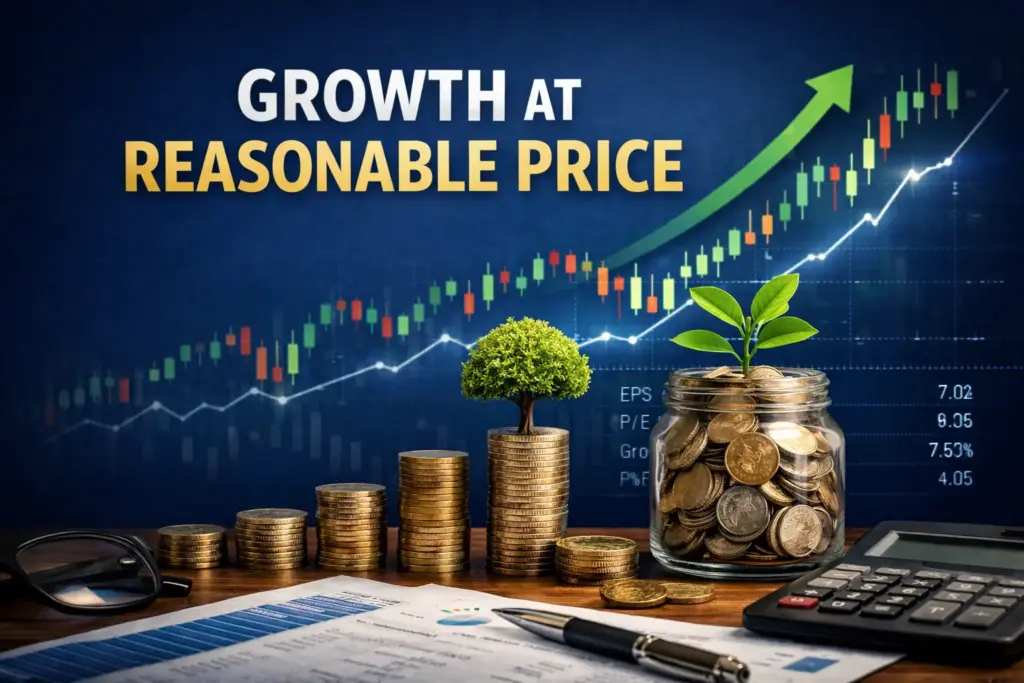
As global markets evolve, investors often find themselves torn between two primary philosophies: the high-octane potential of growth stocks and the disciplined safety of value investing. However, there is a sophisticated middle ground that seeks to capture the best of both worlds. Growth at Reasonable Price, or GARP, is an investment strategy designed to identify companies with consistent earnings growth that are not yet overvalued by the market.

What defines the GARP investment philosophy?

Growth at Reasonable Price (GARP) is a disciplined equity selection strategy that prioritizes companies demonstrating sustainable earnings growth while trading at sensible valuations. Unlike pure growth investors, who might ignore high Price-to-Earnings (P/E) ratios in favor of rapid expansion, a GARP investor remains price-sensitive. The goal is to avoid “buying the hype” and instead focus on wealth management and structured notes that emphasize fundamental strength.

A true GARP candidate typically exhibits higher-than-average growth compared to the broader market but avoids the astronomical valuations often seen in speculative sectors. By seeking out these “under-the-radar” compounders, investors aim for steady capital appreciation with a lower risk of significant drawdowns when market sentiment shifts.

How does GARP differ from pure Growth and Value strategies?

To understand GARP, one must view it as the bridge between two extremes. Growth investors look for “the next big thing,” often paying a premium for companies with skyrocketing revenues but little to no current profit. Conversely, value investors look for “bargains”—companies trading below their intrinsic value.

GARP sits in the “sweet spot.” It avoids the risks highlighted in a growth investing strategy—where high-risk can lead to high volatility—and bypasses the stagnation often found in pure value traps. This balanced approach is essential for identifying quality over speculation. While a value stock might have a P/E of 8 and a growth stock a P/E of 50, a GARP stock might sit comfortably at a P/E of 20, supported by a healthy 20% earnings growth rate.

Optimize Your Portfolio Strategy

Explore tailored investment avenues with our expert team in the DIFC.

What are the key metrics used to identify GARP stocks?

Identifying a GARP stock requires a deep dive into fundamental analysis. Investors do not just look at the current price; they look at the trajectory of the business and the efficiency of its operations.

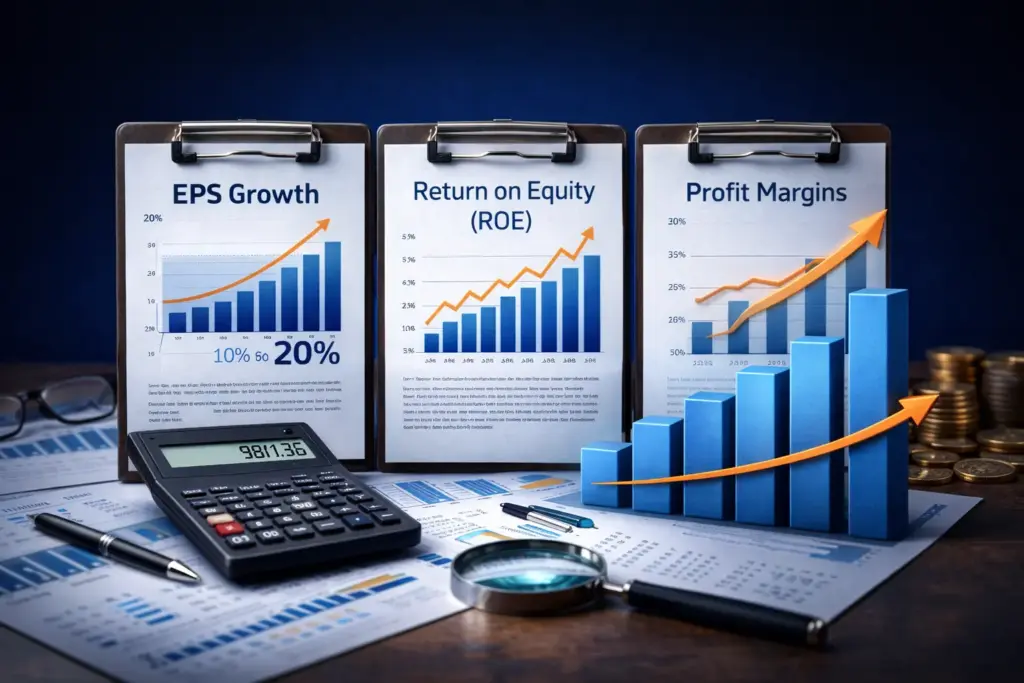
  1. Earnings Per Share (EPS) Growth: GARP investors typically look for companies that have grown their earnings by 10% to 20% consistently.
  2. Return on Equity (ROE): High ROE indicates that a company is efficiently using its shareholders’ capital to generate profit.
  3. Sustainable Margins: Consistent profit margins suggest a company has a competitive “moat” or advantage.

For those focusing on global equities, these metrics serve as essential filters to separate speculative volatility from sustainable growth.

Financial analysis tools and graphs illustrating Growth at Reasonable Price stock metrics.

Why is the PEG Ratio considered the "Gold Standard" for GARP?

The Price/Earnings to Growth (PEG) ratio is the primary tool for any GARP practitioner. It is calculated by dividing a stock’s P/E ratio by its earnings growth rate.

  • A PEG ratio of 1.0 suggests that the stock is perfectly valued relative to its growth.
  • A PEG below 1.0 is often considered a “buy” signal, suggesting the market hasn’t fully priced in the company’s growth potential.

By using the PEG ratio, an investor can justify paying a slightly higher P/E for a company that is growing rapidly. This mathematical discipline is a core component of institutional services where precision and valuation are paramount for managing large-scale capital.

Ready to Trade Global Markets?

Access international exchanges with PhillipCapital’s robust trading infrastructure

How does GARP help in managing portfolio risk?

Risk management is perhaps the greatest benefit of the GARP approach. During “bull markets,” GARP stocks participate in the upside because of their strong earnings. However, during “bear markets” or periods of high interest rates, they tend to be more resilient than speculative growth stocks because their valuations are grounded in actual profits.

By integrating GARP into a broader trading strategy, investors can reduce “valuation risk” while avoiding the “stagnation risk” of declining industries. It provides a cushion of safety without sacrificing the potential for market-beating returns.

Conclusion: Achieving Long-Term Wealth with GARP

Growth at Reasonable Price is more than just a set of numbers; it is a mindset of moderation and discipline. By focusing on companies that exhibit solid growth prospects while maintaining reasonable P/E and PEG ratios, investors can build portfolios that are both aggressive in their pursuit of returns and conservative in their valuation requirements.

For investors navigating the complexities of the global capital markets from the DIFC, the GARP strategy offers a path to sustainable wealth creation. It filters out the noise of market volatility and focuses on the fundamental truth that, over the long term, stock prices follow earnings—but only if the entry price is right.

Frequently Asked Questions (FAQs)

Is GARP better than pure Value or Growth investing?

GARP isn’t necessarily “better,” but it is more balanced. While growth stocks can skyrocket during bull markets and value stocks offer a safety net during downturns, GARP aims for consistent performance across both cycles. It filters out the extreme volatility of high-priced growth and the “value traps” of declining companies, making it a favorite for long-term investors seeking stability.

What is a "good" PEG ratio for a GARP investor?

Traditionally, a PEG ratio of 1.0 or lower is the gold standard for GARP. A ratio of 1.0 suggests a stock’s valuation is perfectly in sync with its earnings growth. If the PEG is below 1.0, the stock may be undervalued relative to its potential. However, in high-growth sectors, many investors consider a PEG up to 1.5 as still being “reasonable.”

Does GARP investing work in a high-interest-rate environment?

Yes, GARP often outperforms pure growth strategies when rates rise. High interest rates typically hurt expensive growth stocks because their future earnings are discounted more heavily. Since GARP stocks are bought at fair valuations and have strong current cash flows, they are generally more resilient to rate hikes and inflationary pressures.

How do I start screening for GARP stocks?

Start by filtering for companies with a 3-to-5 year EPS growth rate between 10% and 25%. Next, layer on a valuation filter by looking for a P/E ratio lower than the industry average and a PEG ratio below 1.2. Finally, ensure the company is high-quality by checking for a Return on Equity (ROE) above 15% and manageable debt levels.

Disclaimer:

Trading foreign exchange and/or contracts for difference on margin carries a high level of risk, and may not be suitable for all investors as you could sustain losses in excess of deposits. The products are intended for retail, professional and eligible counterparty clients. Before deciding to trade any products offered by PhillipCapital (DIFC) Private Limited you should carefully consider your objectives, financial situation, needs and level of experience. You should be aware of all the risks associated with trading on margin. The content of the Website must not be construed as personal advice. For retail, professional and eligible counterparty clients. Before deciding to trade any products offered by PhillipCapital (DIFC) Private Limited you should carefully consider your objectives, financial situation, needs and level of experience. You should be aware of all the risks associated with trading on margin.

Rolling Spot Contracts and CFDs are complex instruments and come with a high risk of losing money rapidly due to leverage. 78% of our retail client accounts lose money while trading with us. You should consider whether you understand how Rolling Spot Contracts and CFDs work, and whether you can afford to take the high risk of losing your money.