Options Strike Price

Introduction

Every options contract is built around one fixed number: the strike price. It decides whether your trade makes money, how much the premium costs, and what happens when the contract expires. Yet many new traders skip past it, focusing instead on the underlying asset’s price movement. Understanding the strike price properly is one of the first real steps toward trading options with confidence rather than guesswork. This guide breaks the concept down in plain language, using simple examples relevant to global futures and options trading.

What Is a Strike Price in Options Trading?

The strike price, also called the exercise price, is the fixed price at which an option holder can buy (with a call) or sell (with a put) the underlying asset. It is set at the moment the contract is created and never changes, no matter how the market moves afterward. For example, if you buy a call option on a stock index with a strike price of 20,000 points, you hold the right to buy at exactly 20,000 points, regardless of where the index later trades. This single number is what separates options from simply speculating on price direction, and it connects directly to the broader mechanics covered in our guide to options fundamentals.

How Is the Strike Price Different From the Market Price?

The strike price is fixed; the market price (or spot price) moves constantly throughout the trading day. Their relationship at any given moment determines whether an option is worth exercising. If a call option’s strike sits below the market price, exercising it is profitable. If it sits above, exercising it makes no sense. This gap between the two prices is what eventually becomes intrinsic value, a concept explained in detail in our breakdown of intrinsic value and time value.

How Do You Choose the Right Strike Price?

Selecting a strike price is really a decision about risk, cost, and probability. A strike price closer to the current market price usually costs more in premium but has a higher chance of finishing profitably. A strike further away is cheaper but needs a bigger market move to pay off. Traders typically weigh three factors: how strongly they expect the price to move, how much premium they’re willing to risk, and how much time the contract has left. Conservative traders often lean toward strikes near the current price for more predictable outcomes, while traders seeking leverage may choose strikes further out for a lower cost, higher-risk position. This decision becomes easier once you’re comfortable with how call options and put options behave differently around their respective strikes.

Trade Global Options With Confidence

Access calls, puts, and strike selection across 15+ regulated global exchanges

Professional trader analyzing options strike price charts and payoff diagram on multiple monitors in a modern Dubai financial office overlooking the DIFC skyline.

How Does Strike Price Affect the Option Premium?

The strike price is one of the biggest drivers of what you pay for an option. Strikes that are already favorable relative to the market price (in-the-money) command higher premiums because they carry real, immediate value. Strikes that are unfavorable (out-of-the-money) are cheaper because they rely entirely on future price movement to become valuable. This is why two options on the same underlying asset, expiring on the same date, can have very different prices simply because of where their strikes sit. Traders assessing this trade-off often find it useful to review how notional exposure compares to the actual premium paid.

How Does Strike Price Relate to ITM, ATM, and OTM?

The strike price is the reference point for classifying every option’s “moneyness.” When the strike is favorable compared to the market price, the option is in-the-money (ITM). When it sits almost exactly at the market price, it’s at-the-money (ATM). When it’s unfavorable, it’s out-of-the-money (OTM). These classifications shift constantly as the underlying price moves, and understanding them is essential before choosing a strategy. Our detailed guide on in-the-money, at-the-money, and out-of-the-money options walks through this relationship with worked examples for both calls and puts.

Diversify With DGCX-Listed Derivatives

Trade currencies, metals, and indices with 24/5 execution.

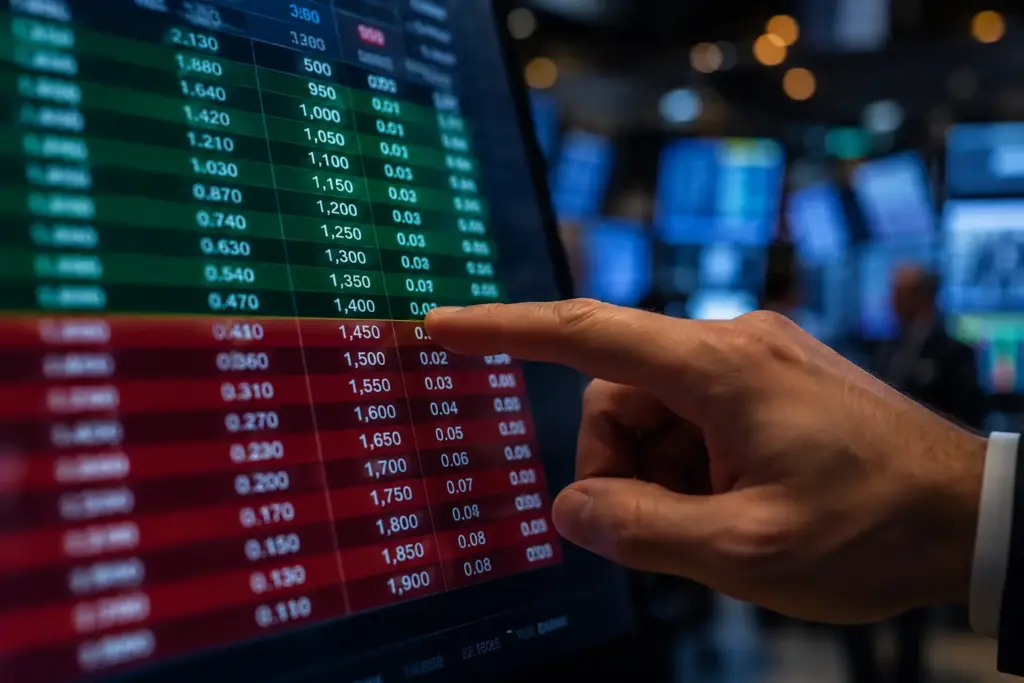
Close-up of a trader pointing at a digital options strike price ladder displaying in-the-money and out-of-the-money option strike prices on a professional trading screen.

What Happens to the Strike Price at Expiry?

At expiry, the strike price makes its final and most important comparison against the settlement price of the underlying asset. If a call option’s strike is below the settlement price, it typically gets exercised automatically. If it’s above, the contract expires worthless. The same logic applies in reverse for put options. Because this outcome is binary and final, many traders choose to close their position before expiry rather than let the strike price decide the result on the last day.

Conclusion: Key Takeaways

The strike price is the anchor point of every options contract — fixed, unchanging, and central to how the trade unfolds.

  • The strike price is the price at which you can buy (call) or sell (put) the underlying asset, and it never changes over the life of the contract.
  • Its relationship with the market price determines intrinsic value, premium cost, and moneyness classification.
  • Choosing a strike price is a trade-off between cost, risk, and probability of success.
  • At expiry, the strike price decides whether the option is exercised or expires worthless.

A solid grasp of strike price mechanics makes every other options concept — premiums, moneyness, and expiry outcomes — far easier to understand.

Ready to Put This Knowledge Into Practice?

Open an account with a DFSA-regulated broker built for global derivatives trading.

trading account opening uae banner

Frequently Asked Questions (FAQs)

Can an option have time value but zero intrinsic value?

Yes — and this is actually very common. Any option that is at the money or out of the money has zero intrinsic value, but it will still carry time value as long as expiry hasn’t arrived. Traders pay that time value because there is still a chance the price moves in their favour before the contract expires. Once expiry hits, time value becomes zero regardless.

Why does time value drop faster closer to expiry?

This is theta decay at work. In the early life of an option, time value erodes slowly because there is still plenty of opportunity for the market to move. As expiry approaches, that window shrinks rapidly — and so does the time value. The final 30 days before expiry typically see the steepest decay. This is why holding an out-of-the-money option right up to expiry is a high-risk strategy.

Does higher volatility increase time value?

Yes. When the market expects larger price swings — measured as implied volatility — time value rises. More expected movement means a greater probability that an option could end up in the money, so traders are willing to pay more for that possibility. This is why options premiums spike before major events like earnings announcements or central bank decisions.

 Is intrinsic value the same as profit on an option?

Not exactly. Intrinsic value tells you the exercise value of the option right now — but your actual profit depends on what you paid for the premium. If you paid $9 for a call option that now has $5 of intrinsic value, you are still at a loss. Profit is only realised when the market price moves far enough to cover your full premium cost, including the time value you originally paid.

Disclaimer:

Trading foreign exchange and/or contracts for difference on margin carries a high level of risk, and may not be suitable for all investors as you could sustain losses in excess of deposits. The products are intended for retail, professional and eligible counterparty clients. Before deciding to trade any products offered by PhillipCapital (DIFC) Private Limited you should carefully consider your objectives, financial situation, needs and level of experience. You should be aware of all the risks associated with trading on margin. The content of the Website must not be construed as personal advice. For retail, professional and eligible counterparty clients. Before deciding to trade any products offered by PhillipCapital (DIFC) Private Limited you should carefully consider your objectives, financial situation, needs and level of experience. You should be aware of all the risks associated with trading on margin.

Rolling Spot Contracts and CFDs are complex instruments and come with a high risk of losing money rapidly due to leverage. 78% of our retail client accounts lose money while trading with us. You should consider whether you understand how Rolling Spot Contracts and CFDs work, and whether you can afford to take the high risk of losing your money.