Options Exercise & Assignment Table of Contents Introduction What Does...
Read MoreOptions Exercise & Assignment

Table of Contents
- Introduction
- What Does It Mean to “Exercise” an Option?
- What Is “Assignment” in Options Trading?
- How Does the Exercise Process Actually Work?
- What Triggers Assignment for an Option Seller?
- Automatic Exercise: What Happens If You Do Nothing?
- Key Risks to Understand Before Expiration
- Frequently Asked Questions
- Conclusion: Key Takeaways
Introduction
If you have already learned the difference between a call option and its mechanics, the next logical step is understanding what actually happens when an option reaches the end of its life. Two words come up constantly in this stage of the options journey: exercise and assignment. These terms describe the two sides of the same coin — one belongs to the buyer, and the other belongs to the seller. Getting comfortable with how exercise and assignment work is essential before you place your first trade through a regulated broker, because it directly affects your obligations, your account balance, and sometimes even whether you end up owning shares you never intended to hold. This guide breaks the process down in plain language, building on the foundation covered in our options fundamentals guide.
What Does It Mean to "Exercise" an Option?
Exercising an option means the buyer (the holder) chooses to use their contractual right. A call option holder who exercises is choosing to buy the underlying asset at the strike price. A put option holder who exercises is choosing to sell the underlying asset at the strike price. This right only makes financial sense when the option has value relative to the current market price of the asset. Exercise is entirely the buyer’s choice — nobody can force a holder to exercise an option they own. If the contract has no value at expiration, the smart move is simply to let it expire worthless rather than exercising into a losing position. This is one of the key advantages of options over other derivatives: your downside as a buyer is limited to the premium you paid, while the decision to exercise remains firmly in your hands.

What Is "Assignment" in Options Trading?
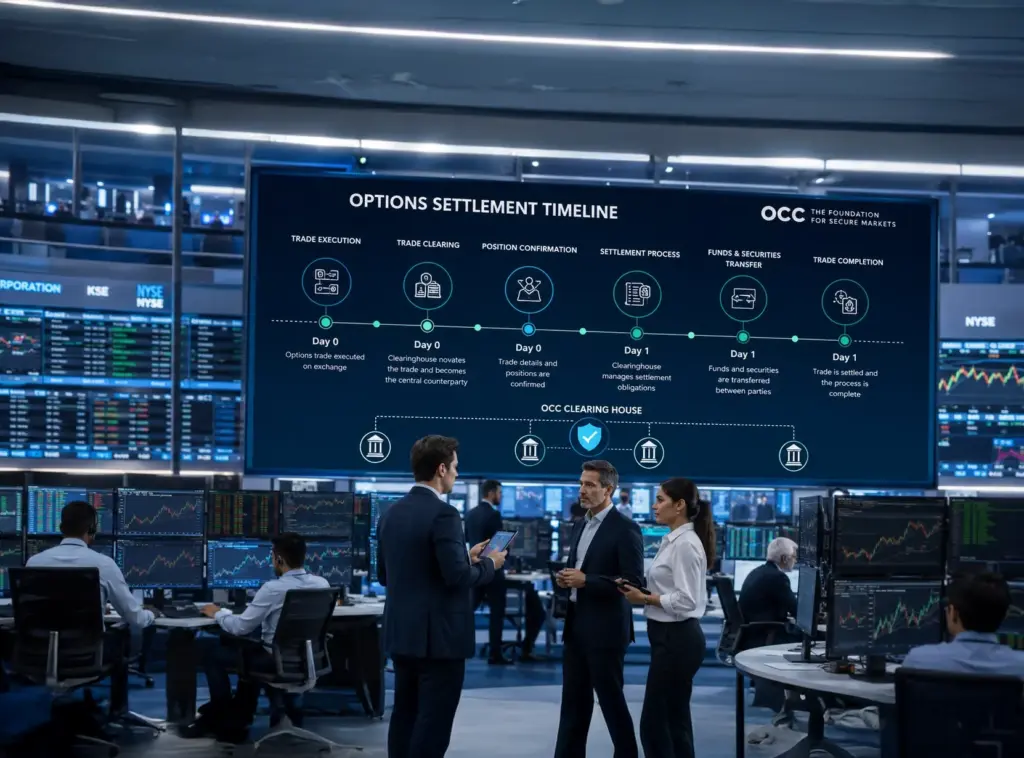
Assignment is the mirror image of exercise, and it happens to the seller (writer) of the option, not the buyer. When a holder decides to exercise, the exchange’s clearing house randomly selects an investor who is short that same option and “assigns” the obligation to them. A trader who sold a call option must then deliver the underlying asset at the strike price if assigned. A trader who sold a put option must buy the underlying asset at the strike price if assigned. Unlike exercise, assignment is completely outside the seller’s control — it is a random process managed by the clearing house once a matching exercise notice is submitted. This is why anyone trading exchange-listed derivatives through platforms covering Futures & Options trading should always keep sufficient funds or shares available, since an assignment notice can arrive with very little warning.
How Does the Exercise Process Actually Work?
The mechanics behind exercise are more structured than most new investors expect. Once you decide to exercise, your broker submits an exercise notice to the exchange, typically before a defined cut-off time on the trading day. The exchange’s clearing house then matches this notice against outstanding short positions in the same contract and assigns the obligation accordingly. Settlement follows shortly after, and depending on the underlying asset, this can mean physical delivery of shares or units, or a cash settlement based on the difference between the strike price and the settlement price. For contracts traded on exchanges such as the CME or Dubai’s own DGCX, the exact settlement method is defined in the contract specifications, so it is worth reviewing these details, alongside available DGCX Products, before entering a position close to expiration.
Trade Options With Confidence
Access global exchanges through a DFSA-regulated broker built for serious investors.
What Triggers Assignment for an Option Seller?
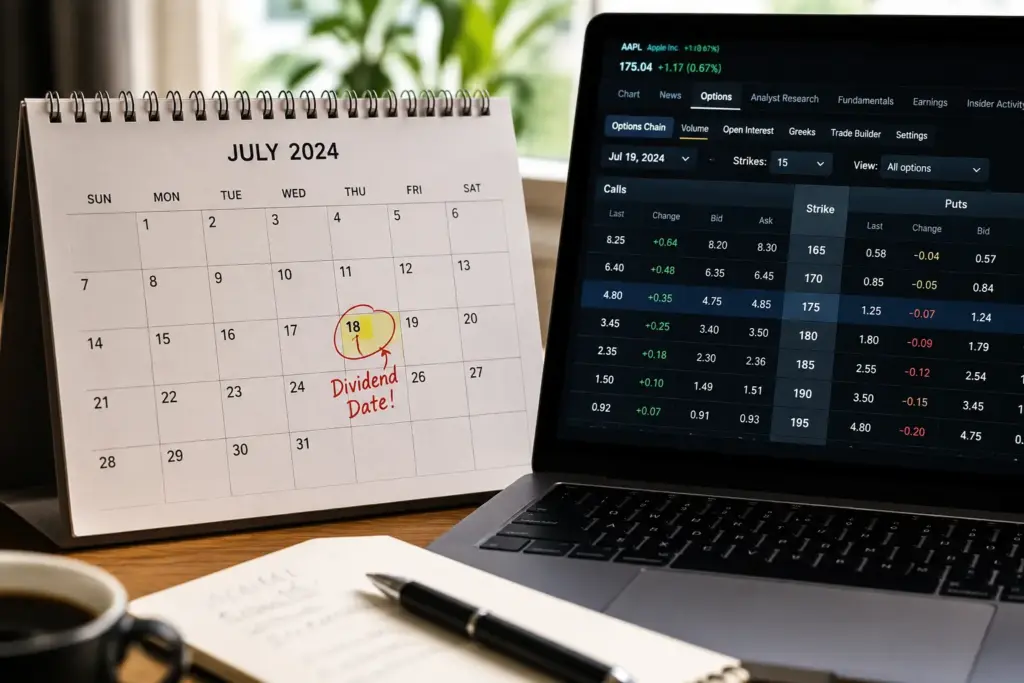
Assignment is not random noise — it typically clusters around specific, predictable situations. The most common trigger is an option being deep in-the-money as expiration approaches, since holders are far more likely to capture value from contracts that are clearly profitable. Dividend dates are another common trigger for call sellers, because holders of American-style calls may exercise early to capture an upcoming dividend payment on the underlying stock. Investors trading DGCX-listed commodity or index derivatives should also be aware that contract specifications determine whether early exercise is even possible, since some products only permit exercise at expiration. Understanding your exposure here connects closely with knowing the notional value of an options contract, since assignment obligates you to transact at the full notional amount, not just the premium you originally collected.

Automatic Exercise: What Happens If You Do Nothing?
Many new investors assume that ignoring an expiring option means nothing happens — this is not accurate. Most exchanges apply an automatic exercise rule for options that are sufficiently in-the-money at expiration, even if the holder submits no instruction at all. This protects investors from accidentally losing value through inaction, but it also means a trader who forgets about a position could suddenly be assigned a large stock purchase or sale they were not prepared to fund. Conversely, option sellers should never assume a slightly in-the-money position will simply expire worthless; if it crosses the automatic exercise threshold, assignment will follow. This is exactly why disciplined position monitoring near expiration weeks is treated as a core part of prudent trading, not an optional extra.
enhance Your Market Exposure
Discover how soft protection floors can double your upside potential.
Key Risks to Understand Before Expiration
Options exercise and assignment carry practical risks beyond the basic mechanics. Sellers of uncovered (naked) options face potentially unlimited exposure upon assignment, since they may be forced to buy or deliver an asset at an unfavourable price relative to the market. Liquidity and margin requirements can also shift rapidly once an assignment notice lands, sometimes requiring same-day funding. Retail investors trading through the same account used for Contracts for Difference and Spot FX should keep these obligations separate in their planning, since option assignment settles independently of other open positions. Reviewing contract specifications, expiration calendars, and margin requirements well ahead of time remains the single most effective way to avoid an unwelcome surprise.
Frequently Asked Questions (FAQs)
No. Assignment can only happen to an investor who is short (has sold) that specific option contract. If you have only bought options, you can never be assigned; you can only choose to exercise.
Not always. Some options, particularly index and certain commodity contracts, settle in cash rather than through physical delivery, meaning only the profit or loss is exchanged rather than the underlying asset itself.
Early exercise is uncommon and usually only makes sense in specific situations, such as capturing a dividend on the underlying stock or when the option has very little remaining time value left to lose.
Your broker will notify you, generally before the next trading session begins, along with the resulting change to your account, such as new shares purchased or sold at the strike price.
Conclusion: Key Takeaways
Exercise and assignment are the final, practical steps in the life of every options contract, and understanding them is what separates a well-prepared investor from one caught off guard at expiration. To summarise: exercise is a right that belongs entirely to the option buyer, while assignment is an obligation randomly passed to an option seller once exercise occurs. Automatic exercise rules mean investors cannot simply ignore expiring positions, and dividend dates, deep in-the-money contracts, and margin requirements all shape when assignment is most likely to occur. Before trading any exchange-listed options, review the contract specifications carefully and ensure your account is funded for the obligations that could follow.
Open a Regulated Trading Account
Get started with a DFSA-regulated broker trusted since 1975.

Disclaimer:
Trading foreign exchange and/or contracts for difference on margin carries a high level of risk, and may not be suitable for all investors as you could sustain losses in excess of deposits. The products are intended for retail, professional and eligible counterparty clients. Before deciding to trade any products offered by PhillipCapital (DIFC) Private Limited you should carefully consider your objectives, financial situation, needs and level of experience. You should be aware of all the risks associated with trading on margin. The content of the Website must not be construed as personal advice. For retail, professional and eligible counterparty clients. Before deciding to trade any products offered by PhillipCapital (DIFC) Private Limited you should carefully consider your objectives, financial situation, needs and level of experience. You should be aware of all the risks associated with trading on margin.
Rolling Spot Contracts and CFDs are complex instruments and come with a high risk of losing money rapidly due to leverage. 78% of our retail client accounts lose money while trading with us. You should consider whether you understand how Rolling Spot Contracts and CFDs work, and whether you can afford to take the high risk of losing your money.
American vs European Options
American vs European Options Table of Contents Introduction What Is...
Read MoreOptions Expiration Dates
Options Expiration Dates Table of Contents Introduction What Is an...
Read MoreIntrinsic Value and Time Value
Intrinsic Value and Time Value Introduction When you buy or...
Read MoreIn-the-Money, At-the-Money, Out-of-the-Money Options
In-the-Money, At-the-Money, Out-of-the-Money Options Introduction If you have started exploring...
Read MoreCall Options Explained
Call Options Explained Table of Contents Introduction What Exactly Is...
Read MoreOptions Fundamentals

Options Fundamentals Table of Contents Introduction What Is an Option...
Read MoreVIX Futures & Volatility Futures

VIX Futures & Volatility Futures Table of Contents Introduction What...
Read MorePrecious Metals Futures

Precious Metals Futures What Are Precious Metals Futures? A Guide...
Read MoreAgricultural Futures

Agricultural Futures Agricultural Futures: Hedging and Trading Strategies Agricultural futures...
Read MoreEnergy Futures Trading

Energy Futures Trading Introduction Energy is the lifeblood of the...
Read MoreCommodity Futures

Commodity Futures What Are Commodity Futures? A Comprehensive Guide for...
Read MoreInterest Rate Futures

Interest Rate Futures Mastering Interest Rate Futures: A Strategic Guide...
Read MoreCash Settlement vs Physical Delivery

Cash Settlement vs Physical Delivery in Trading Cash Settlement vs...
Read MoreFutures Settlement Methods
Futures Settlement Methods Introduction Navigating the financial markets requires a...
Read MoreMargin Calls & Mark-to-Market
Margin Calls & Mark-to-Market Table of Contents Introduction to Futures...
Read MoreInitial vs. Maintenance Margin
Initial vs. Maintenance Margin Understanding Initial and Maintenance Margins: A...
Read MoreContango & Backwardation Explained
Contango and Backwardation Explained Contango and Backwardation Explained: Navigating Futures...
Read MoreForward-Looking Basis

Forward-Looking Basis in Futures Trading Table of Contents Introduction What...
Read MoreFutures Pricing And Valuation
Futures Pricing And Valuation Table of Contents What is the...
Read MoreHow Futures Exchanges Work
How Futures Exchanges Work Understanding the Mechanics of Global Futures...
Read MoreUnderstanding Futures Contracts
Understanding Futures Contracts Understanding Futures Contracts in Global Markets In...
Read MoreLong vs Short Positions in Derivatives
Long vs Short Positions in Derivatives A Complete Guide for...
Read More